The Portuguese colonial era in India began in 1502 and ended in 1961 with the annexation of Goa by India. Goans, all of a sudden found themselves in a different situation. They started breathing free air in a democratic atmosphere. Many Goans felt at this time that Goa had traded Portuguese colonialism for Indian colonialism. There is a section of the Goan population who think the same way. With the liberation of Goa, the walls between Goa and the rest of India were demolished and we became part and parcel of our motherland India.
Goa was declared a separate State on May 30, 1987. After attaining Statehood, Goa’s political environment was polluted due to the misdeeds of some of its politicians who had become power hungry, greedy and selfish. They mastered the art of toppling governments and projected Goa as politically notorious. The most important goal of attaining Statehood for Goa was the preservation and promotion of Goan culture and in doing so to strengthen Goan identity. Unfortunately this has not taken place because the political will in Goa has failed to extract the benefits of Statehood. Allowing the destruction of ‘Goan Identity’ is nothing short of permitting the ruin of the Goan soul.

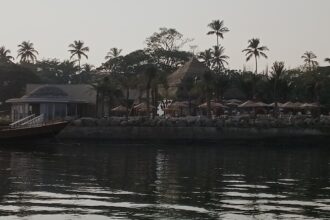
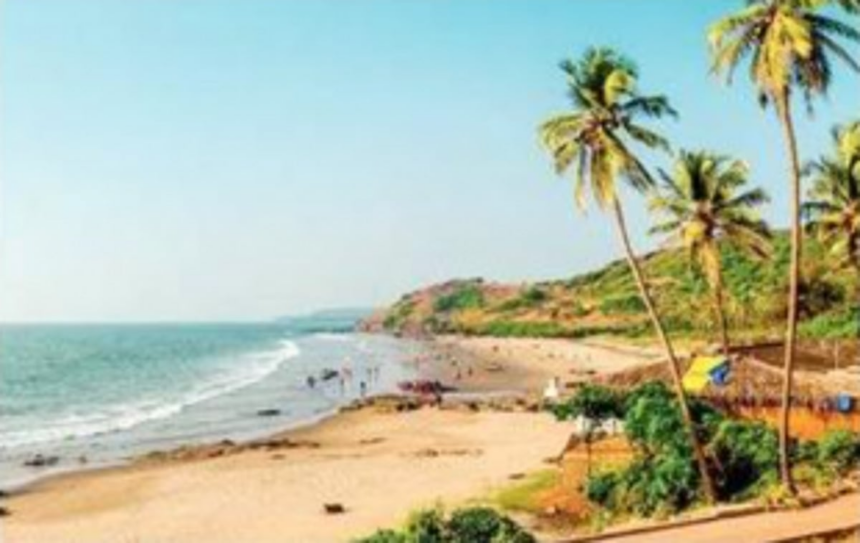
Goa may have only 160km of a coastline compared to Maharashtra’s 720 kms and Karnataka’s 320 kms. Yet Goa is called the ‘Pearl of the Orient’. Goa is bestowed with pristine beaches and miles of golden sands. Lush greenery and unique cultural synthesis of the east and west makes it a paradise on earth. Goa is a treasure trove of culture, music, dances and art forms that can be enjoyed during local festivals and celebrations. Goa is a tourist destination for all seasons. But rapid urbanisation/destruction of greenery is changing that image faster. Over commercialisation has ruined it. Goa’s carrying capacity in terms of its size, facilities available and ecological fragility should be considered. Mega construction projects have transformed the landscape of Goa.
It is said that it is easy to remove a Goan from Goa, but not Goa from a Goan. There are more Goans outside Goa than in Goa. Goans are found the world over and it would be difficult to name a country without a Goan. Goans have been always migrating due to lack of an employment option. Goa has a vast international Diaspora. Even today, our young people are migrating to so called “greener pastures” clutching their Portuguese Passports. The consequent demographic change is a major cause of concern.
Today the number of non-Goans in Goa has increased to such an extent that it poses a threat to the preservation of the social and cultural ethos of Goans. At the same time Goans need these people. Construction and development work in Goa would come to a grinding halt without them. Most domestic help of households is from people of other States. Almost every flower and fruit vendor is from out of the State. It is, hence a sort of dilemma that the Goan community faces today. They are performing important functions for us which the “Niz Goykar” will not put his hands too. Why then do we call them “Bhaile” or “Ganthi” when they are serving our community. It is high time we look upon them in humanness. Goa is changing not because of these outsiders but more because of sale of land by our people to the land mafia. Goa is undergoing drastic demographic changes, the consequences of which a majority of Goans have not realised. We have Andhra, Kerala, Kolkata, Guajarati, Kannada, Punjabi and many more Associations in Goa. Their aim is to preserve and promote their States’ culture. Panchayat elections have been won by people from outside Goa.
The onset of tourism on a large scale has produced pressures on both society and environment. In 1987, a small group of Goans greeted tourists arriving in Goa from Germany with cow dung and ‘go Home Posters’. Unsustainable tourism is catastrophic to any society causing irreparable damage to the environment and its people. Today, 25 years later we have alert Goans who have created local/community based groups.
Community must not mean a shedding of our differences, nor the pretence that these differences do not exist. Goa has been the home of religious harmony and the symbol of unity in diversity. However, the recent spate of events has created an unnecessary tension. Communalism has shown its head far too often in this State, desecration of Crosses continue to stir religious sentiments. Goa witnessed violent clashes between Hindus and Muslims at the Ram Namavi celebrations in April 2022. A citizens led fact-finding report revealed that the communal violence was orchestrated by Hindu right-wing groups.
A liberated mind is one that does not entangle itself in petty things. What Goa urgently needs is mechanism to hold back Goans in Goa and incentivise those who have left to come back home. Goans and those who govern the State have yet to wake up to the seriousness – current and future – of the situation. Liberation Day is a time to take stock, to take stock of Goa, yesterday, today and tomorrow. A time to ponder on the past, assess the present and plan for the future. We must all work hard for the development of our State. Goa is at the crossroads; her future is in our hands, to make or to mar.
(The writer is a social scientist and a Sr. practicing criminal lawyer)