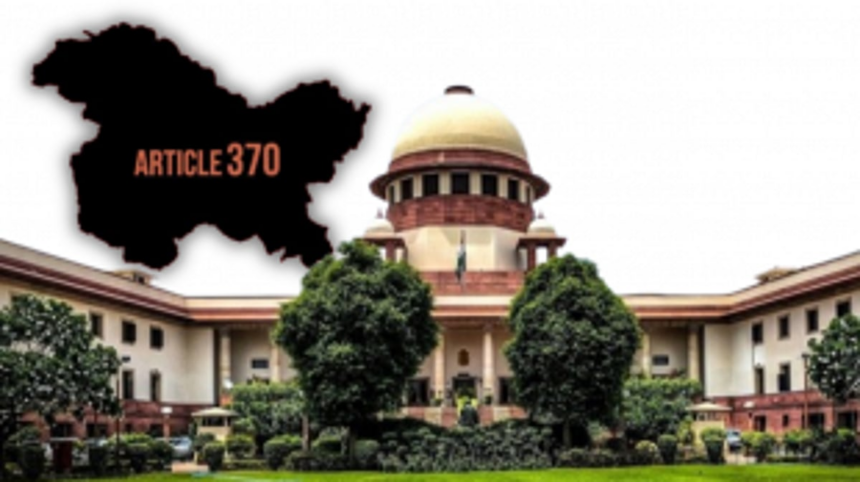
The Supreme Court is scheduled to announce its verdict on December 11, addressing multiple pleas challenging the abrogation of Article 370 of the Constitution, which granted special privileges to Jammu and Kashmir. Chief Justice D.Y. Chandrachud, leading a constitution bench, had reserved judgment on September 5, following a series of petitions challenging the government’s move to revoke Article 370 and reorganize the state into two union territories.
The five-judge bench, including Justices Sanjay Kishan Kaul, Sanjiv Khanna, Bhushan R Gavai, and Surya Kant, is set to deliver the verdict.

Petitioners argued that Article 370 had acquired permanent status post the dissolution of the Jammu and Kashmir Constituent Assembly in 1957, raising questions about the constitutionality of its abrogation. Senior advocate Kapil Sibal emphasized that Article 368, pertaining to Parliament’s power to amend the Constitution, did not apply to Article 370.
Represented by Attorney-General R. Venkataramani, Solicitor-General Tushar Mehta, and advocate Kanu Agrawal, the government contended that Article 370 was always meant to be temporary. They argued that its abrogation was a crucial step towards the complete integration of J&K with the Union of India.
The government highlighted positive outcomes since August 2019, emphasizing the imminent elections as a sign of progress towards restoring full statehood post-normalization.
The abrogation of Article 370 in August 2019 was a historic yet controversial move, revoking the special autonomous status granted to Jammu and Kashmir. The region, with its own constitution, flag, and autonomy over internal matters, except defence, communications, and foreign affairs, underwent significant changes.
Led by Prime Minister Narendra Modi and Union Home Minister Amit Shah, the government justified the move, citing increased integration, economic development, and equal rights for all citizens.
The decision triggered legal challenges, with petitions questioning its constitutional validity filed in the Supreme Court. Supporters saw it as a step towards integration, while critics argued it violated federalism and undermined the region’s special status.
The impending Supreme Court verdict will provide a crucial resolution to the long-standing legal debate surrounding the abrogation of Article 370, shaping the future trajectory of Jammu and Kashmir’s constitutional status.