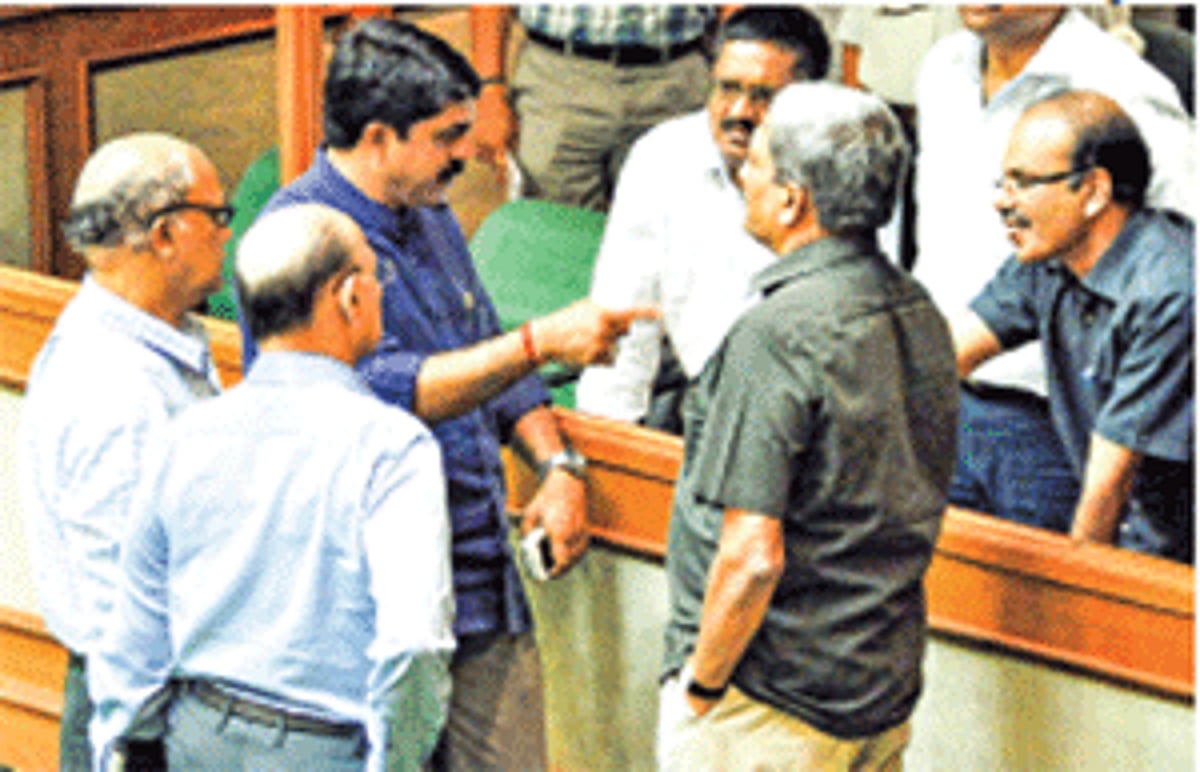
So much so that the councillors have made it clear to GSDUA officials to first sanction the funds for the Swachh Bharat campaign.
They recalled that outgoing Chief Secretary B Vijayan had promised funds to the civic body to start the door-to-door waste collection programme, but added that the civic body had to spend the funds from its coffers which were earmarked for development.
GSUDA Consultant Gaurav Pokle, however, told the city fathers that the civic body will receive the funds only if the municipality submits a detailed project report and the estimates for the project. Besides, he said the civic body can generate funds through Public-Private Partnership (PPP) as well as through Corporation Social Responsibility (CSR). The GSUSA consultant made it clear that the civic body should also involved the citizens at large to make the cleanliness drive a success.
“The civic body has to achieve certain goals before the midterm in December 2015. The Swachh Bharat campaign is not just a one-time affair, but a sustained drive to ensure cleanliness and sanitation in the State,” Pokle said.
For better monitoring of the scheme, GSUDA has created three zones, South, central and North to interact with the municipal bodies, with the major municipalities of Margao, Vasco and Ponda, clubbed into one zone for better interaction and coordination.
Margao Municipal Chairperson Gonzaco Rebello said the civic body is all geared up to implement the cleanliness programme in the city provided the government arranges the necessary funds. “Funds is a big problem faced by the civic body,” he added.
Administration officer in the GSUDA Atmaram Kalenekar, who guided the city fathers on the sanitation aspect of Swachh Bharat, said the civic body can take advantage of the toilets proposed to be allotted to individuals and the community as part of
the campaign.