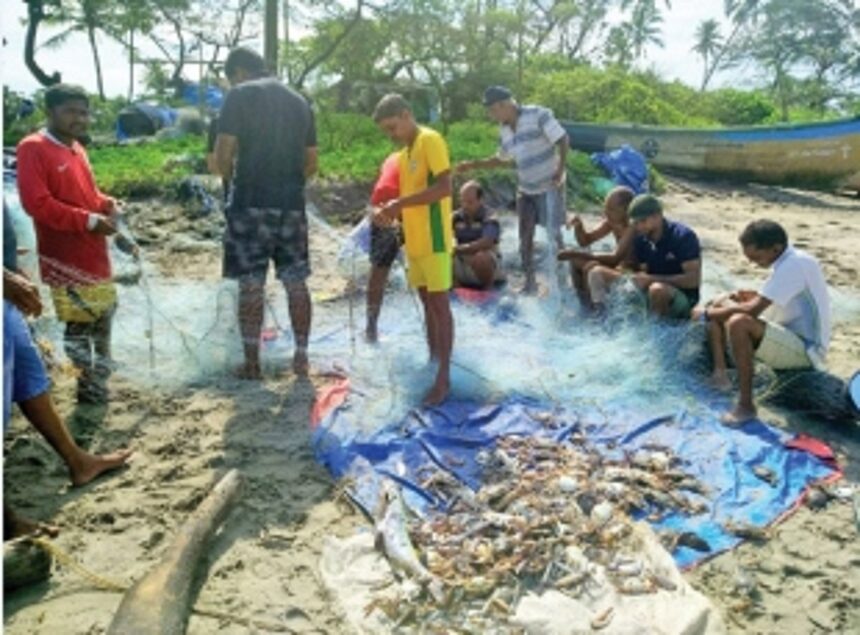
Arambol is a beautiful village with a long coastline that
supports a thriving community of fishermen. Nestled in Pernem taluka, this
village receives a lot of tourists flocking to the beach side but hardly anyone
pays attention to the
traditional lifestyle of these villagers. In a bid to change that, the villagers of Arambol are organising their first
ever cultural festival, Ramponnkaranchem Fest, which will open their doors to the public, so that they may
experience their life, the excitement of the first catch, the equipment used for fishing and much more.
What’s also interesting
is that you can help the fishermen pull the catch from the sea and then cook
the fish and relish it with your lunch. The fest will take place at Arambol beach on September
17, 2017 from 10:30am
onwards.
Fr Pio Almeida, the Parish Priest of Our Lady of Mount
Church, Arambol, approached Marius Fernandes, the man behind the various
festivals across Goa, to showcase the strengths of the village, which include fishing, music, food and
sports. After much planning, the villagers are all set to present their first
festival. The festival will begin with the prayer dance, followed by a welcome
dance, Kunbi dance, Nistekaranchem dance, dekhni, mando and
Ghumatacho Naaz led by Carlos Gonsalves and O’luv to conclude. The
dancers have been trained by Vailankanni D’Souza. The activities on the beach
will include a football camp by Ansu Rodrigues, a female coach who has been
training children in the village. The fishermen will showcase their skills by
going twice into the sea and the participants will have to pull the nets back to the
shore. Veteran fishermen will help participants identify the various types of
fish. An exhibition of various types of fishing nets, fishing gears and
traditional kitchenware related to fishing will be on display.

Xavier Mascarenhas, the moderator of the Church parish council, will be compering the festival on Sunday. “There is
great unity among the villagers and we hold on to our culture and tradition.
Every section of the village is involved in the traditional occupations of fishing, farming and cashew plantations. In the fishing
community itself, Arambol villagers have their own fishing boats and nets and
the owners themselves will be on the boat,” says Xavier.
Mateus Monteiro and his sons, Jude and Avelino, are carrying on the family
business with pride.
Their day starts at 4am when they all head out to the beach with their boat for
fishing. Once the fish is brought to the shore, the catch is sorted according
to types. “They are 60 boats in Arambol that go out for fishing every
day, with at
least four people on board each. Right now, we get a catch that includes Indian mackerels, sardines, prawns, crabs,
silver belly (vellio) and other smaller fish types. My wife sells the
fish in the market,” says Mateus. Besides working together, the fishermen also
celebrate St Peter’s feast on June 29, 2017 in a grand way as he is known as
the patron of fishermen.
The food that will be served for the festival will include kanji or pez as
the welcome dish and nees (rice
water) as it is known
as a cooler. “The food is all part of the village and the villagers. The
fishermen carry pez with them when they head to the seas and as a part
of their tradition, it will be served to the people attending the festival. The lunch will include Goan rice,
lady finger curry, pickle, melgor, dry fish, fried fish and toranchi
shir (slice of raw mango). After lunch, black tea and shankarpali will be served. Chonne
(boiled grams) will be served before lunch because these grams were
consumed to keep diabetes under control,” explains Marius Fernandes.