The Government’s view:
Projects needed for Goa’s developnment Goa’s
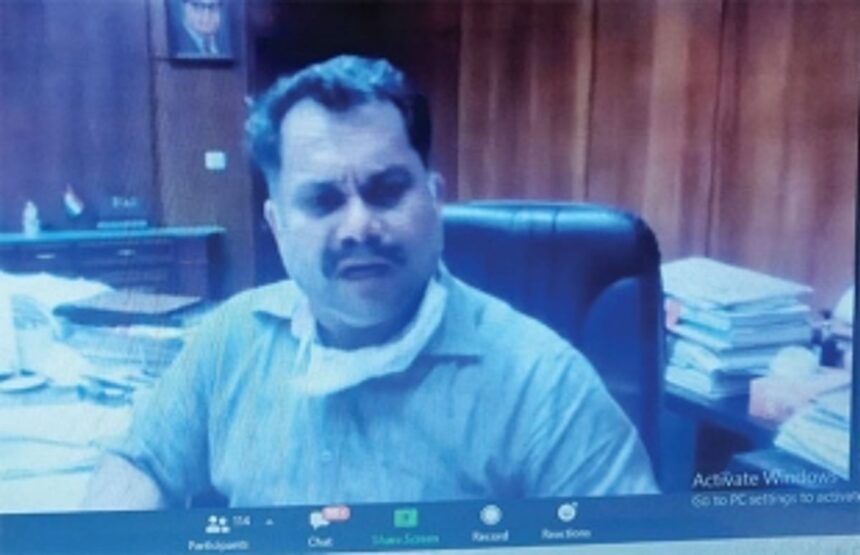
environment and power minister, Nilesh Cabral categorically stated that the
three, proposed linear infrastructure projects were necessary for Goa’s
development. Cabral said that Goa was power deficient and presently relied on a
power feed from the national grids in Dharwar in Karnataka and Kolhapur in
Maharashtra. According to the minister, the proposal for an additional 440 KV
power supply was tabled way back in 2011. The minister said that the proposed
plan involved construction of 42 power towers which would transfer power from
the national grid to the proposed sub-station at Sangod in Goa. Explaining the need
for a four-lane expressway, Cabral said that the vehicle population was rising
and road accidents had been rising every year on the Anmod ghat section.
He said a proposal to expand the present ghat section was first tabled in the
year 2014. Speaking about the
proposed rail project, Cabral said that the present speed of trains in the ghat
section was only 40kmph, resulting in burning of a lot of fossil fuel.
According to him, the double tracking would increase the speed of the trains
and the introduction of electric engines would reduce carbon emissions. Protection of
environment was important and could not be reduced to a formula– Fr Bolmax Pereira
Activist Fr Bolmax Pereira
who spoke next, quoted from Justice Chandrachud’s judgement on the MOPA project
which said, “protection of environment was important and could not be reduced
to a formula.” The priest also wanted to know who the ‘real beneficiaries’ of
these three infrastructure projects would be. Cabral in his response said the
proposed power station at Sangod would ensure 24/7 power supply to all of South
Goa. He also said that all motorists in Goa and outside Goa would benefit from
a faster and safer, four-lane highway. He also said that Goans from the
hinterland could reach offices in the towns faster due a quicker rail system. Power lines are
destroying hundreds of fruit trees affecting livelihoods- Capt Viriato
Fernandes, Goencho Awaz

Captain Viriato
Fernandes, convenor, ‘Goencho Avaaz’ said that the environment impact
assessment (EIA) report on roads completely ignored a study of the flora and
fauna of the region. He also pointed out that the power lines were destroying
hundreds of fruit trees drastically affecting the livelihoods of farmers. In
response, Cabral said that road EIA had been compiled by researchers from the
Indian Institute of Sciences (IIS) and he had no reason to doubt their
competence. He also explained that the power towers were cutting through the
orchards to avoid destroying more forest cover. Part of the national,
Sagarmala project and had to be completed as a part of the nation building
exercise- Nitin Kunkolienkar, ex
Chairman GCCI
Nitin Kunkolienkar,
former chairman of the Goa chamber of commerce and industry (GCCI) and Advocate
Amit Palekar who spoke next, both batted for the three
infrastructure projects, stating that they were essential for Goa’s industrial
growth and development. According to Kunkolienkar the proposed four-lane highway
and the double tracking of the railway was part of the national, Sagarmala
project and had to be completed as a part of the nation building exercise. Trust deficit exists
on these projects: One industry view
Blaise Costabir,
chairman, Confederation of Indian Industry ( Goa chapter) who quizzed the
minister first, pointed to the serious “trust deficit” that existed between the
people of Goa and the state government. Costabir wanted to know why
infrastructure projects that had been tabled in 2015 were being hurriedly
pushed through in 2020 over online video conferences. Costabir questioned
the absence of a ‘tree transplanting’ policy after the chopping of 3,000 trees
to create the Margao-Panaji expressway. Costabir cited the example of Bhutan
which supplied power to India and yet had not disturbed its own forest cover,
as all power towers had been constructed above their tree line. He also
questioned the need for double tracking of the railway when as many as nine
trains successfully plied on the existing broad gauge line. Responding to
Costabir, Cabral said that he was ready to constitute a committee with
representatives from all stakeholder groups in the state to monitor the
re-planting and monitoring of new saplings in the protected forests. This is the worst EIA
I have seen- Parag Rangnekar, member, Goa State Biodiversity Board
Parag Rangnekar,
member, Goa State Biodiversity Board who spoke next, pointed to the ‘trust
deficit’ that prevailed in the state. He recounted the December 2019 meeting
between members of the board and the chief minister in which the EIA reports of
the three infrastructure projects were not circulated in advance and the draft
of the minutes were not circulated for comments. According to
Rangnekar, the quality of the EIA reports, especially the Road EIA was
sub-standard. Categorically stating, ‘this is the worst EIA I have seen,’ the
environmentalist said the EIA had failed to study the enormous flora and fauna
that existed in the two protected forests. Quoting the WildLife Act of 1972,
Rangnekar said that no major infrastructure projects were allowed inside
protected forests. In response to
Rangnekar, Cabral said that if the environmentalists opined that the EIAs were
substandard, he would report this sentiment to the central government and urge
them to be more careful in the future. Double track rail
project was aimed at converting Goa into a coal hub– Secretary, ‘Goencho Ramponkaracho
Ekvott’
Olencio Simoes,
secretary, ‘Goencho Ramponkaracho Ekvott’ alleged that the double track rail
project was aimed at converting Goa into a coal hub. He also lamented on the
complete lack of public consultation on the proposed infrastructure projects.
Likewise, noted environmentalist Rajendra Kerkar lamented the absence of a
cumulative EIA for all three projects and Royla Fernandes from the Aam Aadmi
Party (AAP) in Benaulim feared an impending climate change disaster in Goa. Cabral answering the
trio admitted that the three infrastructure projects were part of the Sagarmala
project of the central government. He pointed out how Prime Minister Modi had
stressed the need to make India self-reliant in coal production and opened up
several coal blocks across central and northern India to achieve this goal.
According to the minister, Goa had to contribute to the Sagarmala project. “We
are all inter-connected to each other,” Cabral said. The views if
environmentalists and grass-root stakeholders clearly highlighted the sentiment
of the ground and why these projects were not viewed as good for Goa.