For many years I have been following, with amazement, a variety of initiatives in the private domain to respond to the needs of poor and/or suffering people. They are of incalculable value, for the direct good they do, and also as an inspiration to other people.
There are initiatives over 150 years old, promoted by the Tata Family, such as scholarships; the creation of the Tata Institute of Sciences (1911), with a great Intellectual and Scientific tradition (today known only as the Indian Institute of Sciences, since there’s no need to demarcate itself from the coloniser), as at the time of its foundation. The Tata Memorial Hospital (1941), as a tribute to Meherbai Tata, who died of leukaemia, after receiving treatments in European institutions, as there was nothing in India for the purpose. Dorabji Tata, her husband, decided in 1932 to create a cancer hospital, with the most modern services, open to anyone, who is assisted and treated free of charge. Today, the Hospital, together with the Research Centre, is named the Tata Memorial Centre.

Many more initiatives continued to emerge from the same family, as 66% of the ownership of “Tata Sons” -which participates in the capital of numerous companies of the Tata Group, with 25 to 100%-, is statutorily in the hands of philanthropic trusts, to ensure that the dividends of “Tata Sons” are channelled to “charities”.
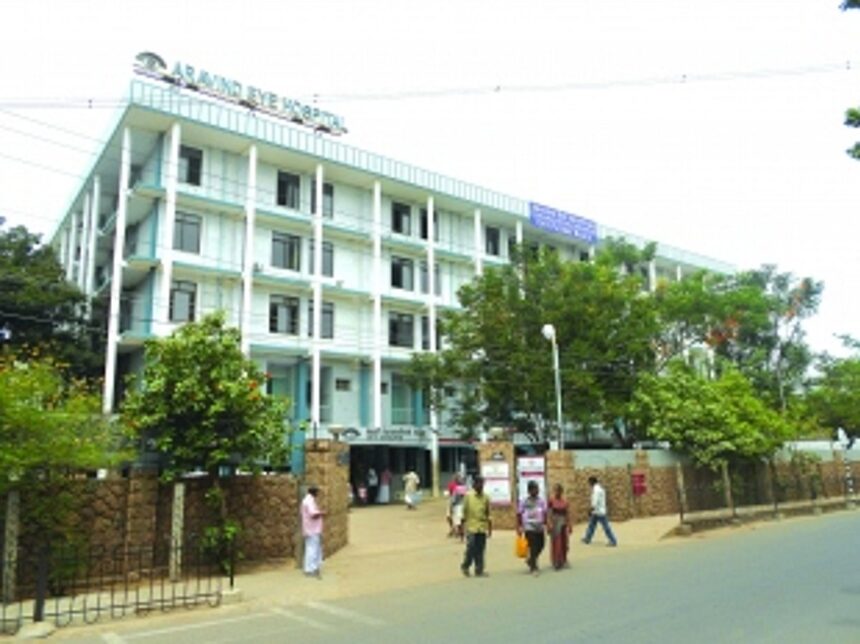
Dr V and Aravind Eye Care System.
Fortunately, more and more initiatives are coming up from “normal” people, without or with the wealth of the Company’s shares they constituted, in addition to their “know-how”, their mastery of professional life.
In 1978 an ophthalmologist, Dr Venkataswami (Dr V), upon retiring as surgeon at the Public Hospital, at the age of 58, decided to put a clinic to continue his cataract surgeries, because there were many blind people in India, without possessions to pay a surgery. The eye lens, become opaque and when replaced by an IOL-plastic intraocular lens, it makes the person see well again.
Those who do not see, feel themselves useless because they cannot do any work; that is why, in general, the survival time after blindness not reaches 3 years, as he is careless, and feels a burden to the family. With surgery, when he regains his sight, he becomes a different person, capable of working and earning something; his life has now meaning and dignity, and he becomes a support for the family budget.
Dr V then starts an 11-bed clinic, invites his sister and brother-in-law, both ophthalmologists and surgeons. He then puts another hospital with 30 beds, for poor people who cannot afford to pay; they receive all the treatments free of charge.
Both clinics work well, and Dr. V makes the bold decision to ask for a Bank loan to build a Hospital from scratch in Madurai. He decides to fix there a proportion of 40% of people paying their bill and the other 60% served without paying anything.
It is easy to imagine that a blind person, from the outskirts of the city, has difficulties to reach the hospital; or he/she has to go accompanied (and this one misses a day of work). Therefore, Dr V creates the Eye-Camps, where they track those who have complaints, providing prescription glasses or other dressings; those needing surgery are taken to the hospital. After the surgery they are taken back to the Eye-Camp location.
With it comes the second hospital and then the third… Today there are 14 hospitals in operation: 13 in the Tamil Nadu and 1 in Andhra Pradesh; and more 91 Vision Centres for consultations, with telemedicine. Aravind carries out various training activities for their staff at all levels; and many seminars for ophthalmologists who want to learn from them.
As mentioned, the natural lenses become opaque and the vision blurred, until it is completely lost. The surgery replaces it by an IOL lens. Such lenses were imported from the US, costing around $200 each. This would make Dr V’s dream to restore sight to anyone in conditions, with the surgery, impracticable. The cost of medical action, the noblest part, could cost around $35.
Therefore, he had the idea of making lenses in Madurai and went in search of some social entrepreneur in the US, dedicated to issues of blindness, who wanted to invest in the acquisition of technology for the production of lenses. Luckily he finds one and the factory is now fully operational in Madurai, producing 3 million lenses a year, far more than Aravind needs.
The Champalimaud Foundation (Portugal) announced in 2005 a prize of 1 million euros. The President of the Foundation had announced the award in New Delhi, alongside the then President, Dr Abdul Kalam. And, by chance, the first prize, in 2006, was awarded to Aravind Eye Care System, for the magnificent work it had been doing.
Right after the Champalimaud Award, Aravind received the Melinda and Bill Gates award; and, shortly after, the one of the Konrad Hilton Foundation. Note that the decision of the international Jury with several Nobel prize winners, was only announced after the President of the Foundation Champalimaud had visited Madurai and the Aravind Eye Care System, to see what they were doing and how good they were doing.
Aravind currently has:
– 14 Hospitals (7 Secondary and 7 Tertiary); in addition, it has 91 Vision Centre. It has 300 doctors and a full staff of just over 5,000 people.
– In 2019-20, 4.6 million patients were examined, with 515,000 cataract surgeries.
– Today, 47% do not pay or have very high discounts, as the wealth profile has improved.
– 3,102 Eye Camps held, where 532,000 people were attended.
It is interesting to see how an initiative of one person without resources in addition to his medical preparation, today serves millions of people, without excluding no one, for having not have how to pay.
[The author is Professor at AESE-Business School (Portugal) and at the I I M Rohtak (India)]