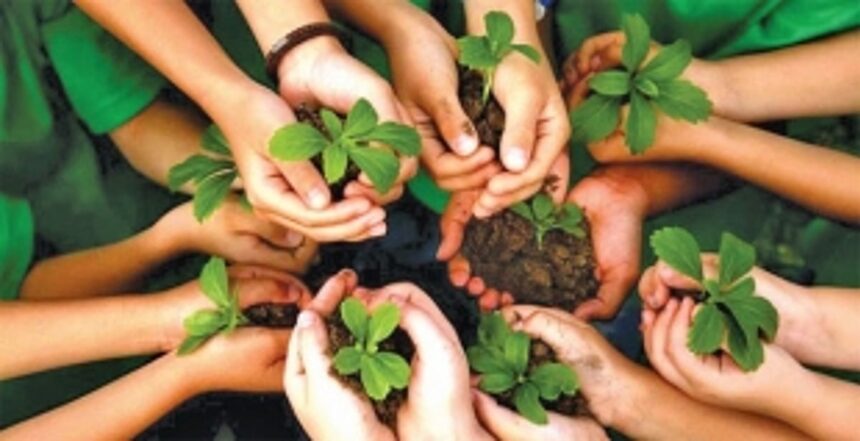
Van Mahotsav 2018
Venue: India

Start
Date: Sunday, July 1, 2018
End
Date: Saturday, July 7, 2018
Van Mahotsav
is a yearly tree-planting development in India, which started in 1950. The name
‘Van Mahotsav’ implies festival of forests. It has increased critical national
significance and has resulted in a large number of saplings being planted
crosswise over India over the course of time. It is presently a seven-day
celebration, observed throughout the country in the first week of July.
We
as human beings need to understand that trees and plants provide our
necessities like food, clean air to breathe, and shade on a hot sunny day. We
are dependent on them. What will we do if trees and plants are replaced by
concrete buildings? We can’t survive eating the same concrete structures we are
building to become super rich overnight. What will be left for our future
generations? Van Mahotsav is a good initiative, but it is not enough when you
take into consideration the rate at which the green cover is depleting. We need
to make people realise the importance of trees for our survival. You can simply
start with saving fruit seeds and throw them in open areas just before the
rains. Secondly, we can also join hands with a lot of organisations that are
active in seed bombing, an effective way to increase green cover.
KONRAD
RODRIGUES, musician
Most
people don’t have time or don’t feel the need to plant a tree themselves. Van
Mahotsav plays a role in nudging our conscience regarding our responsibility
towards the environment. Besides the Van Mahotsav week, one can take care of
the plants and trees they already have, throughout the year. We can give a
stem-cutting to our friends and neighbours too. Most importantly, if at all we
have to cut down a tree, planting ten in place of one should be the rule of
thumb.
ANUSHKA
RODRIGUES, entrepreneur
For
me, ever since World Day Against Desertification (the process by which fertile
land becomes desert, typically as a result of drought, deforestation or
inappropriate agriculture), I’ve made sure I reduce my use of plastic. I refuse
plastic straws at restaurants and cafés. I carry my own bottle of water and
avoid buying bottled water whenever possible.
ALROY
FERNANDES, RJ and
emcee
One-day
initiatives are a good way to raise awareness and create action towards a
particular cause. However, if there is no follow through for the rest of the
year, we end up with one-hit wonders that make a big splash yet cause no
ripples of change. The only way to ensure change is to continue to speak about
these issues so that eventually, people will sit up and take notice of what is
happening around them. It is also important to provide courses of action that
can be implemented on a daily basis by most individuals.
MICHELLE
GOUVEIA, entrepreneur