In a remarkable display of technical prowess, the Indian Space Research Organisation (ISRO) triumphed over initial setbacks and conducted a flawless test for the Crew Escape System, a pivotal component of the upcoming Indian human space flight, Gaganyaan.
Originally slated for an 8 a.m. launch, the mission was postponed to 8:45 a.m. due to adverse weather conditions. Unfortunately, a technical snag in the rocket’s ignition at 8:45 a.m. forced a temporary halt to proceedings. However, ISRO’s scientists swiftly identified and rectified the anomaly, enabling them to return to the launchpad at the Satish Dhawan Space Centre in Sriharikota for a successful lift-off at 10 a.m.

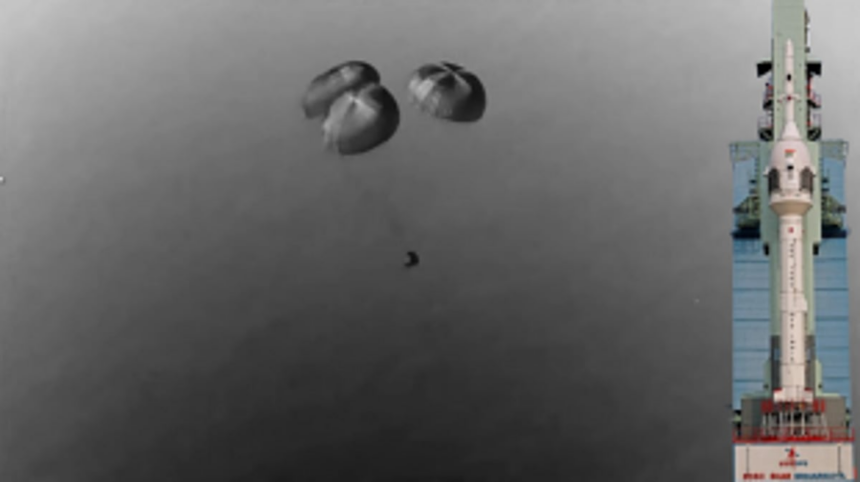
What followed was a seamless launch of the Test Vehicle, a rocket designed by ISRO to evaluate various systems for the forthcoming Gaganyaan mission. Notably, the test included a critical crew module aborting the mission. During the test, the crew escape system was initiated, successfully separating the crew module from the rocket at an altitude of roughly 17 kilometres.
The crew module completed a triumphant splashdown in the Bay of Bengal, approximately 10 kilometres off the Sriharikota coast. The touchdown occurred with precision, adhering to the planned velocity and timeline, taking just over nine minutes from the 10 a.m. lift-off. The Indian Navy played a pivotal role in this achievement, employing a dedicated vessel and diving team to recover the crew module from the sea.
ISRO Chairman S. Somanath expressed his satisfaction, saying, “We have successfully accomplished the TV-D1 mission. The primary aim of this mission was to validate the Crew Escape System through a test vehicle demonstration. The vehicle reached Mach 1.2 (the speed of sound), simulating an abort scenario for the Crew Escape System. Subsequently, the Crew Module separated from the Crew Escape System, deployed parachutes and gently touched down in the sea. All the required parameters have been met, and we have confirmed the accuracy of the data.”