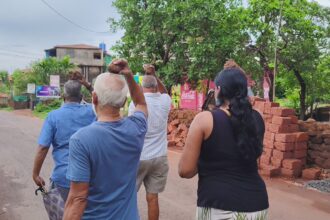
Historically, Divar’s three wards, Navelim, Malar, and Goltim, were often divided and engaged in frequent disputes. Now unified under the single identity of Divar, the villagers celebrate these bygone rivalries with a colourful procession filled with fluttering flags and the lively tunes of brass bands, during Bonderam.
What started as a small children’s parade has evolved into a major event that unites the whole community and attracts enthusiastic participation from all.

Christianity established its presence on Divar long before the arrival of the Jesuits. As early as 1515, the island already had a chapel dedicated to Our Lady. Tradition recounts that when Afonso de Albuquerque, on his journey back from Persia, sailed past the Aguada cape, he was so moved by the sight of this chapel that he knelt in prayer, offering thanks to Our Lady.
By 1541, the Church of Our Lady of Piety had been built at Piedade. However, it was only in 1560 that the Christian faith truly took root on the island, following the determined efforts of the Jesuits who arrived that year with renewed missionary zeal.
In a letter dated January 14, 1561, Jesuit Provincial Father António de Quadros, SJ, informed King Dom Sebastião of Portugal about two Jesuit missionaries stationed in Divar. These priests worked tirelessly to teach the principles of Christianity to the people. Brother Domingos Fernandes, SJ, who was based mainly in Chorão also made periodic visits to Divar. Though the locals initially resisted conversion, they soon expressed a strong desire to adopt the Christian faith.
Brother Domingos then went to the City of Goa to relay this good news to the authorities. In response, eight Jesuits were promptly dispatched to Divar to continue the work of teaching Christian doctrine. That same year, in a grand ceremony attended by the Viceroy and his entire entourage, more than 1,510 islanders were baptised amid great joy and celebration.
Several inspiring accounts accompany Divar’s Christianisation. One tells of a Brahmin’s son who became gravely ill and, after all cures failed, was taken by his father to the Church of Our Lady of Piety. There, the father fervently prayed to the Mother of Jesus for help, and the boy miraculously recovered. In gratitude, the man brought his son to the College of Saint Paul, asking that he be baptized, declaring that the child now belonged to the Mother of Jesus. The entire Brahmin family subsequently embraced Christianity.
Another account concerns a resident of Divar who had fled to the territory of Adilshah to avoid conversion. Years later, struck by serious illness, he asked his family to bring him back to Divar so he could be baptised. He received baptism shortly before his death two days later and requested to be buried among Christians.
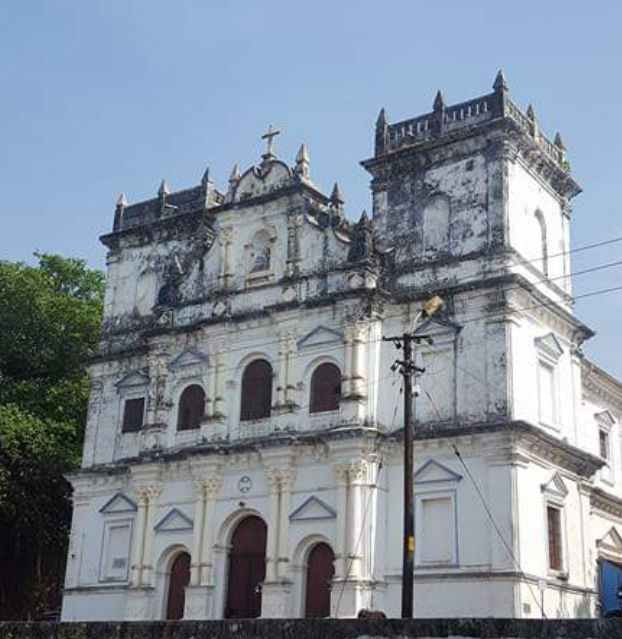
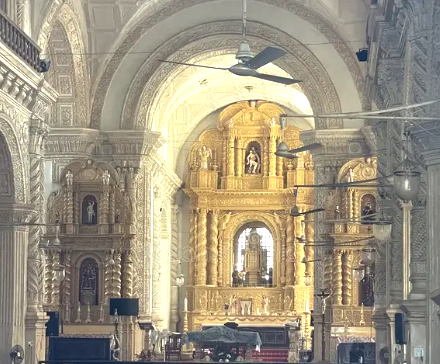
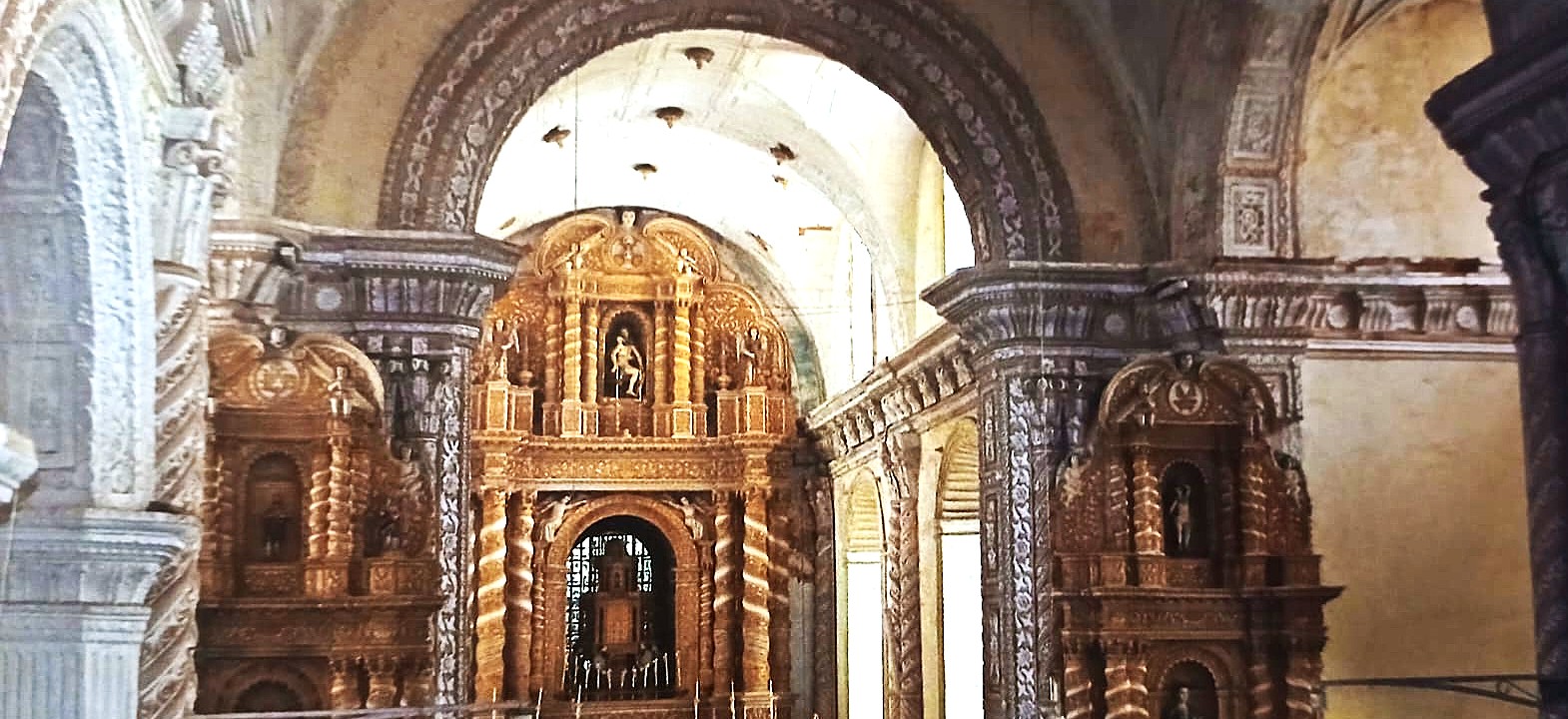
The Church of Our Lady of Piety underwent reconstruction in 1625. Work on the present vaulted structure began in 1700 and was completed in 1724, and is among 5 Goan Churches built in style called as Indian Baroque.
The church was designed by Padre Antonio João de Frias, but built under his sucessor, Padre Jerónimo de Frias.
Padre Antonio João Frias was later Parish Priest of Talaulim and designed the Church of Santa Anna of Talaulim.