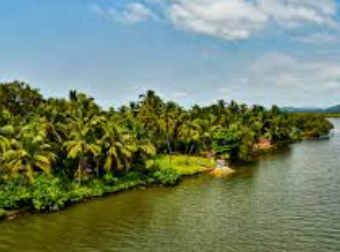
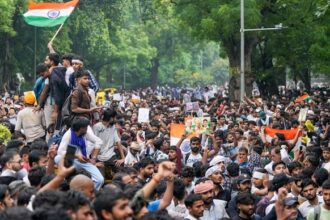
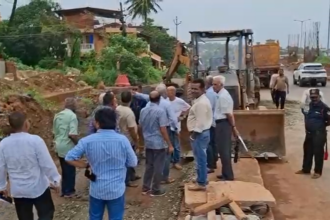
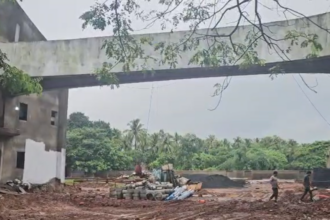
Alarmed by the deteriorating state of River Sal and its tributaries, vil lagers of Verna and neigh bouring areas have made an urgent appeal to the Goa government seeking im mediate and coordinated intervention to restore the river’s natural flow and eco logical health. The appeal, titled “Urgent Appeal for Action towards Restoration of River Sal and its Tributar ies,” has been addressed to several state departments and agencies including the Directorate of Environment (DoE), Goa State Biodiver sity Board (GSBB), Water Resources Department (WRD), Goa State Pollution Control Board (GSPCB), Goa State Waste Manage ment Authority (GSWMA), and the Departments of Agriculture (DoA), Health (DoH), Panchayats (DoP), Science, Technology and Environment (DSTE), and Education (DoEdu), among others. Copies of the appeal were also sent to the Collec tor South Goa and the Goa Human Rights Commission (GHRC). In their detailed letter, the villagers said they have re peatedly approached their panchayat members and MLAs to draw attention to the “appalling state” of the River Sal and its tributar ies that flow from Verna through Nuvem and down stream villages, where parts of the highway have ob structed the river’s natural pathways. They pointed out that responsibility for the issue has been repeatedly shifted among departments, leaving them to believe that protecting the river has be come their fight alone. The villagers said their message to all concerned authorities was made in the hope of working together for “ur gent, immediate and deci sive action.” The letter describes River Sal as the only water body originating in Goa, feeding streams as far as Betul. It emphasises that the river’s ecological and cultural im portance is immeasurable, and that it is widely con sidered the lifeline of Goa. The villagers warned that its neglected condition now threatens to destroy this invaluable natural resource and eliminate an irreplacea ble ecosystem. The villagers outlined the current situation as “dire,” citing several alarming con ditions that have developed over time. They said un authorised constructions are discharging sewage di rectly into the river and its tributaries from source to downstream, while unreg ulated industrial activity without adequate oversight has led to hazardous and bio-chemical waste entering aquifers and streams, pos ing long-term risks to public health and biodiversity. The dumping of solid waste, in cluding plastic and debris, continues unchecked with no clear policy or infrastruc ture to address the problem. They also noted that fallen trees remain uncleared, blocking the nullahs and preventing natural water flow, while stagnant pools have replaced once-flowing channels, turning into mos quito-breeding grounds and obstructing fish regenera tion. The villagers further warned that during the monsoon, these blockages cause the river to overflow into agricultural fields, con taminating local produce. They said the situation has reached a point where it is unsafe to enter the river to carry out even basic mainte nance or repair work, with many residents reporting skin problems from contact with the water. “Who will take responsibility for this escalating damage?” the vil lagers asked in their appeal. Referring to their recent participation in a session on Mission Sarovar Punha Nirman—an initiative to reimagine and restore lakes through interdepartmental cooperation—the villagers urged that River Sal be in cluded in such interdiscipli nary action. They requested an immediate ground as sessment and the initiation of nature-based solutions, including the clearing of all blockages, in consultation with villagers and scientists. Stating their readiness to collaborate and provide ground-level inputs for res toration efforts, the villagers appealed to the authorities not to ignore their call for action. They also requested the concerned departments to visit Verna and assess the situation firsthand, reiter ating that they would con tinue to raise the issue until concrete measures are tak en to revive the river’s flow and health
River Sal in Crisis: Verna Residents Demand Urgent Government Intervention to Save Goa’s Lifeline