SHASHWAT GUPTA RAY
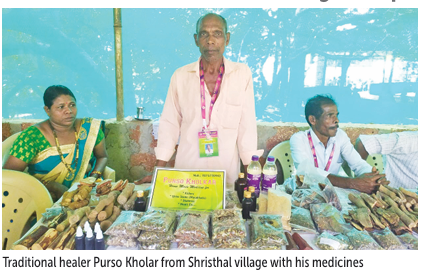
QUEPEM: The tribal habi tats of South Goa’s Canaco na taluka are a rich reposi tory of traditional medicinal knowledge. However, this heritage is facing extinction due to changing agricultur al practices, urbanisation and a growing disinterest among local youth in pur suing traditional medicine, underscoring the urgent need for government in tervention to conserve the State’s ethnomedicinal leg acy, a study has found. The study documents the knowledge of the Velip and Dhangar tribal communi ties of Goa. Through field based interviews with 10 traditional healers — five from each community — the researchers recorded 50 medicinal plant species, 12 animal-based remedies, mul tiple preparation techniques, and treatments for 31 different ailments across three villages: Cotigao, Gaondongrim and Shristhal. Titled ‘Ethno medicinal practices of selected tribal communities in Goa – traditional healing wisdom and cultural heritage’, the study highlights the richness of indige nous healthcare systems and em phasises the need for documenta tion, conservation and institutional recognition to preserve this knowledge system in the face of moderni sation and ecological pressures. The research was authored by Mangesh and Shounat Gaonkar, for mer students of the Department of Zoology at Government College of Arts, Science & Commerce, Quepem, under the guidance of former senior professor Rajender Rao Kulkarni. It has been published in the International Journal of Zo ology and Applied Biosciences. “Qualitative observations from traditional healers in dicate a gradual decline in the availability of medicinal plants. One important contributing factor is the shift in agricultural practices. During cashew pre-harvest cultiva tion and land clearing, younger generations often remove medicinal plants along with unwanted vegetation due to a lack of plant identification knowledge. In contrast, the older generation traditionally preserved useful medici nal species and selectively removed only non-beneficial plants. This indicates that the issue is not solely physical land reduction, but also the erosion of traditional ecologi cal knowledge,” Mangesh Gaonkar told Herald. Healers also reported increasing difficulty in accessing certain medicinal plants due to deforestation, habitat dis turbance and the expansion of developmental activities. However, precise land-use change statistics were beyond the scope of the study and would require ecological map ping and GIS-based assessment. “Our study further observed that the majority of active practitioners are elderly individuals with many years of experience. The younger generation, however, is not in terested in carrying forward this legacy. This suggests a generational gap in the continuation of traditional healing practices. Several factors contribute to youth moving away from this system, including the strict lifestyle discipline required of healers — such as maintaining a lifelong veg etarian diet in many cases, observing religious rituals and spiritual responsibilities — as well as a growing preference for formal education and modern employment opportuni ties, and greater social acceptance of modern biomedical systems,” he said.

The findings indicate that tribal regions function as repositories of valua ble traditional healthcare knowledge. Therefore, protection of these eco logical zones is crucial to preserving medicinal bio diversity. “Recognition and in stitutional support for traditional healers, such as Vaidya Mitra certifica tion, can help sustain this knowledge. Conservation of forest habitats directly supports healthcare tra ditions. Medicinal heal ers have appealed to the government for legal per mission to collect small quantities of medicinal plants from forests for treatment purposes. While some healers possess a Vaidya Mitra card, many are not fully aware of the legal procedures and sometimes face fines from the Forest Department,” Shounat Gaonkar said. Most medicinal heal ers charge minimal fees, and some do not charge at all. Due to the limited income from this practice, sustaining their livelihood becomes difficult, further reducing the younger gen eration’s interest in con tinuing the tradition. “There is usually no proper follow-up or feed back from patients. As a result, healers often as sume that the treatment has worked, but there is no systematic documentation or confirmation. There should be a scientific system to re cord the success of their treatments. Protecting this pre cious knowledge heritage is in the best interest of society,” he said.