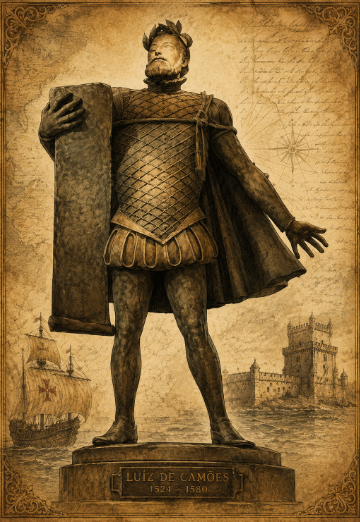
Every year on June 10, Portugal celebrates its national day, officially known as the Day of Portugal, Camões and the Portuguese Communities (Dia de Portugal, de Camões e das Comunidades Portuguesas). The occasion commemorates the life and literary achievements of Luís Vaz de Camões, widely regarded as Portugal’s national poet and one of the greatest figures in Portuguese literature.
For many Goans, the name Camões is familiar through the language institute that bears his name, yet few are aware of the profound influence Goa had on the poet’s life and work. According to translator Landeg White, Camões spent nearly 15 years in Goa and other parts of Asia, with many scholars believing that his years of exile in the East shaped the literary genius for which he is remembered today.

A leading figure of the Renaissance period, Camões is best known for his epic masterpiece “Os Lusíadas” (The Lusiads), considered Portugal’s national epic. The work celebrates the Portuguese voyage to India led by Vasco da Gama while chronicling Portugal’s maritime achievements, colonial expansion and cultural identity. Goa occupies a significant place in this narrative as one of the most important centres of the Portuguese Empire in Asia.
Camões lived an adventurous life. He served as a soldier in Africa and Asia and is often described as the first major European poet to cross the equator. His experiences across continents deeply influenced his writings, which explored themes of heroism, patriotism, love and the complexities of human existence. His command of the Portuguese language and lyrical style continue to inspire readers and scholars around the world.
Arriving in Goa in 1553 on military service, Camões experienced the difficult life of an ordinary Portuguese soldier. Many soldiers of the era lived in modest conditions and often sought opportunities outside the colonial military establishment. Historians believe these experiences brought Camões closer to the realities of local society and enriched his literary perspective.
Despite his brilliance, Camões endured financial hardship throughout much of his life. After returning to Portugal in 1570, he reportedly lived in poverty and relative obscurity. Tradition holds that his Goan companion, Barbara, cared for him during his final years in Lisbon until his death in 1580. His literary legacy, however, has since earned worldwide admiration.
Goa continues to preserve reminders of its association with the poet. A monumental bronze statue of Camões was erected in Old Goa around 1960 but was removed during the 1980s amid political sensitivities surrounding the commemoration of the fourth centenary of his death. Today, the statue is housed within the Archaeological Museum in Old Goa.
Several legends also surround Camões’ extraordinary life. Among the most famous are accounts that he was imprisoned in Goa, stranded in Mozambique, lost an eye in battle in Morocco and survived a shipwreck off the Cambodian coast while clutching a manuscript of Os Lusíadas to save his life’s work.
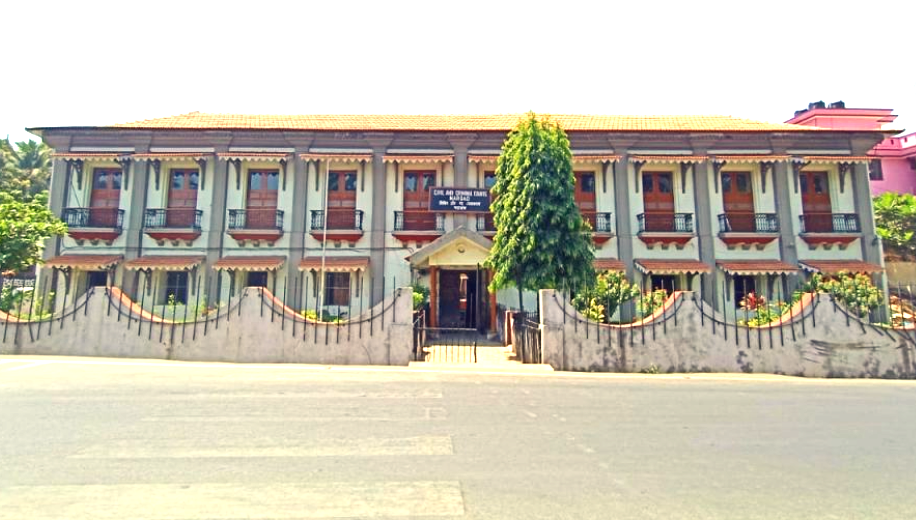
One enduring piece of Goan folklore links Camões to Margão. The old Civil and Criminal Court building, which originally functioned as a jail during the Portuguese era, is believed by some to stand on the site where the poet was imprisoned after criticising colonial officials. In one of his writings, Camões famously described Goa as “the mother of villains and the stepmother of honest men,” a remark said to have angered Viceroy Pedro Mascarenhas.
While the existing courthouse dates to the 18th century well after Camões’ time, the story continues to form part of Goa’s rich oral tradition, illustrating the enduring fascination with one of Portugal’s greatest literary icons.
As Portugal Day is observed each year, the remarkable connection between Camões and Goa serves as a reminder of the state’s unique place in global literary and colonial history, linking two cultures through the life and works of a poet whose legacy has transcended centuries.