Actually, in any other era in Indian politics since 1947, Education Minister Dharmendra Pradhan would have long since resigned (or been replaced) after public opinion turned against him, following an extraordinary string of debacles from paper leaks to testing failures
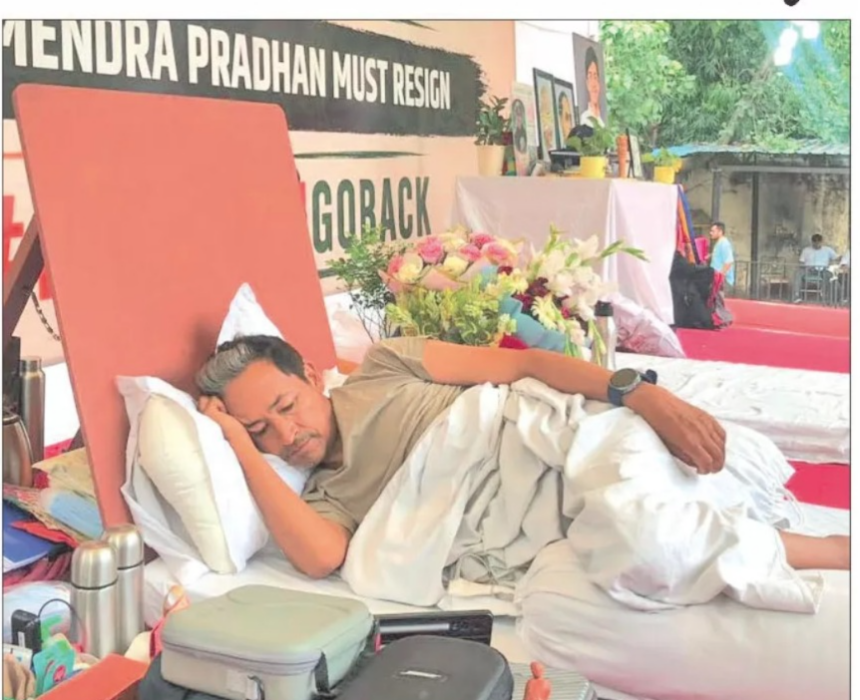
They will just kill or jail whoever criticises the government,” warned the great Manipuri civil rights activist Irom Sharmila Chanu, a few hours before the Delhi Police stormed Sonam Wangchuk’s protest site at Jantar Mantar yesterday morning. “There is no real democracy in India,” she told Rokibuz Zaman of Scroll.in, “the demand is big, but as the people are not united [and only a few hundred people showed up in solidarity despite the capital being home to millions] the impact of the protest on the government is not there. That’s why the government doesn’t care. The government does not get threatened by a protest of a single person. The government just waits and sees, avoids and lets it go.”

Sharmila says “a protest will be successful only if there is a mass united agitation” but in 2026 it is painfully apparent that even showing up in force is no guarantee anyone will listen in this anarchic era of impunity in Indian governance. Things have become very bad at the Centre — just see how the police commissioner was replaced overnight to enable the sneaky detainment of Wangchuk — but they’re even worse in Goa, where the politicians in power continually menace and threaten their own electorate, secure in the comfort they will get away with it.
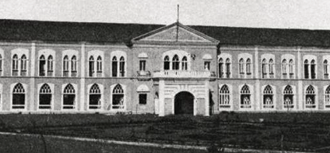
It has led to disaster, the total collapse of rule of law, with huge crimes being committed against the public interest in plain sight every single day. See what the casinos are getting away with in Panjim, entirely illegally but with absolute connivance, or the shocking destruction of Kala Academy (where the slab collapsed precisely three years ago) by the same administration making empty promises ahead of the next election.
“These days, it has become the norm for government ministers, civil servants, or recently retired decision-makers to write about their departments with impressive expertise,” wrote Pratap Bhanu Mehta in his keen-eyed column earlier this week. He observed how powerful stakeholders “outline lofty goals, even share citizens’ concerns. But the one thing missing in all that writing is the fixing of accountability. You will read hundreds of op-eds on air pollution, including by policymakers. But no one will name or shame as it were. For example, no one will pointedly say who decided to relax pollution norms for coal-fired power plants and why. Who makes the decisions to give clearances to build roads and buildings in ecologically sensitive zones? I was recently at a meeting where there was eloquent holding forth on ‘ease of doing business, especially for MSMEs’. But not one policymaker could actually name and explain why particular regulations were put in place or even who put them.”
Mehta points out that “across an astonishing range of policy challenges, from war to pollution, exam scandals to crumbling cities, we encounter seemingly causeless phenomena; sentences without subjects. At the international level our Prime Minister sets the tone. ‘This is not an era of war,’ he intones with sagacity, without ever naming who the actors are who start the wars. You might think this is diplomatic finesse. But it turns out to be a full-blooded technique of ruling. If there are no agents behind the action, no one needs to be held accountable. Your success is not stopping the war, condemning aggression, or upholding the law. Your success is that you can immobilise the need for responsibility altogether without appearing immoral. Now, just think how useful this strategy is domestically.
Sentences without grammatical subjects or in the passive voice can easily make passive citizens. Exam leak. Happens. Cities flooding. Happens. Himalayas crumbling. Happens. Stampedes. Happen. Air Pollution. Happens. Just as we know this is not an era of war, but we don’t name who starts it, we also know this is not an era of crumbling cities, polluted air and rivers, disenfranchisement and corruption, and any other evil you can mention. But no one makes it happen.” The bottom line is “before institutions can be repaired, we must acknowledge who specifically broke them. If you want to stop war, you have to name and shame those who start them.”
It is that almost anachronistic insistence on the government taking responsibility for its own actions that made Cockroach Janta Party and Sonam Wangchuk’s protest in New Delhi potent enough to trigger the police being sent in.
Actually, in any other era in Indian politics since 1947, Education Minister Dharmendra Pradhan would have long since resigned (or been replaced) after public opinion turned against him, following an extraordinary string of debacles from paper leaks to testing failures. But who can “bell the cat” in the Cabinet of the compromised? It is amply clear that not only Pradhan has failed miserably, but if he goes —and it seems clear he must — then who is next? Is the entire house of cards about to fall apart? These are the calculations being made in New Delhi this weekend, and recent history tells us paranoid over-reaction is likely to follow.
Here it is important to listen to what Sharmila says. Wangchuk has been detained after 20 days, but she spent 16 years on hunger strike in Manipur from 2000, including force-feeding by the state for 500 weeks. By that time, this icon of resistance had become disillusioned — “nothing had changed in people’s mindsets” — and decided “I really wanted to change myself” via marriage to Desmond Coutinho, her unlikely ‘Afrikander’ Goan suitor from London, with whom she had twin daughters at the age of 47, and moved to Kodaikanal. Looking back, she told Zaman at she felt her fellow Manipuris were willing “to sacrifice me. Because they saw that I was the only one who was protesting, all the responsibility and burden was on my head despite it being a collective cause. The people were only singing my glory that I was protesting for years. But the people did not help when I needed help.”
Similarly, “it is not Sonam’s burden alone and people should not expect him to be martyred. It is a collective cause and demand, and everyone should join him and if everyone comes to the street, the security forces won’t be enough and the government will have to address the issue. For collective causes, persistence and united voices are needed for social change. You cannot just let the individual protestor become a martyr.”
(Vivek Meneses is a writer and co-founder of the Goa Arts and Literature Festival)