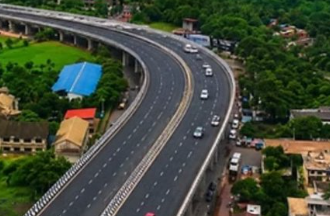
The Goan voter appears to be at a political crossroads ahead of the next election. There is grow ing disillusionment with both the BJP and Congress, leaving many vot ers asking a fundamental question: If not the BJP, then who? After nearly 15 years of BJP rule, an ti-incumbency and voter fatigue are in creasingly visible. Many voters are tired of the same political faces and want change. The BJP may point to roads, bridges and in frastructure development as achievements, but a section of voters, particularly mi norities, remains deeply concerned about what they perceive as com munal politics, corrup tion and a politics of division. The proposed anti-conversion legis lation is another major concern among minorities.
Many fear that such a law could create uncertainty over their abil ity to freely practise and profess their faith. Lack of adequate laws to protect Goa’s land and environment has also added to the sense of alienation among sections of the minority community. But rejecting the BJP does not neces sarily mean embracing Congress. Congress faces a serious credibility problem because of political defections in the past. Goan voters have repeat edly seen politicians seek their votes, make promises and take oaths, only to cross over to another party after being elected. When an elected represent ative changes party, voters naturally ask: What happens to the mandate they were given? This loss of trust could prove costly for Congress. The result is a strange political situa tion: a voter may be unhappy with the BJP but still unwilling to vote for Con gress.

This creates an opening for a third political force. Goa Forward, AAP and other smaller parties could potentially attract voters searching for an alternative. But the big gest obstacle is opposition unity. Goa’s political culture has often been dominat ed by personal ambitions, rivalries and competition between leaders. Everyone wants to lead, and bringing differ ent political forces together on one platform has historically Herald Insight been difficult. There is another factor that could dramatically influence the election: rebels and de nied tickets. The BJP may have to deny tickets to some sitting legislators and aspirants. Those denied tickets may not quietly retire from poli tics. They could contest as independents or join other parties. Congress could face a similar problem. The consequence will be vote frag mentation. A third-party candidate does not need to win by margins of thousands of votes to change an election. In a closely con tested constituency, even 500 or 1,000 votes can determine the winner. Goa has already witnessed elections where can didates have won by extremely narrow margins because votes were divided among several parties. This means that calls for a united op position may sound attractive, but elec toral mathematics could produce the opposite. The BJP also faces an internal contra diction. Much of today’s BJP leadership in Goa consists of politicians who once belonged to Congress. Leaders such as Digambar Kamat, Subhash Shirodkar, Alex Sequeira, Mauvin Godinho, Vishwa jit Rane, Sankalp Amonkar, Rudolf Fer nandes, Atanasio ‘Babush’ Monserrate, Nilkant Halarnkar are among the long list of politicians who crossed over from Congress to the BJP. This raises another question: Where is the original BJP? BJP workers may accept these leaders organisationally, but whether they will enthusiastically vote for every political defector is another matter.
The loyalty of the grassroots cadre could become im portant in closely fought constituencies. Congress, meanwhile, must convince voters that its candidates will remain loyal to the mandate they receive. Given the history of defections, that will not be an easy task. Therefore, the next Goa election may not simply be a contest between BJP and Congress. It could be an election about trust, anti-incumbency, political fatigue and the search for an alternative. The BJP has organisation and admin istrative advantages, but faces anti-in cumbency and other concerns among sections of the electorate.
Congress remains the traditional opposition, but carries a heavy trust deficit as men tioned earlier. Smaller parties have an opportunity, but their biggest challenge is fragmentation. Ultimately, the Goan voter may be faced with a difficult choice: reject the BJP, distrust Congress, or take a chance on a third alternative. The party or political alliance that successfully captures this growing space could hold the key to the next govern ment in Goa. The real question, therefore, is not simply who will win Goa? It is: What will the Goan voter do when he does not want BJP, does not trust Congress, and does not believe the opposition can unite?