Dolcy D’Crus

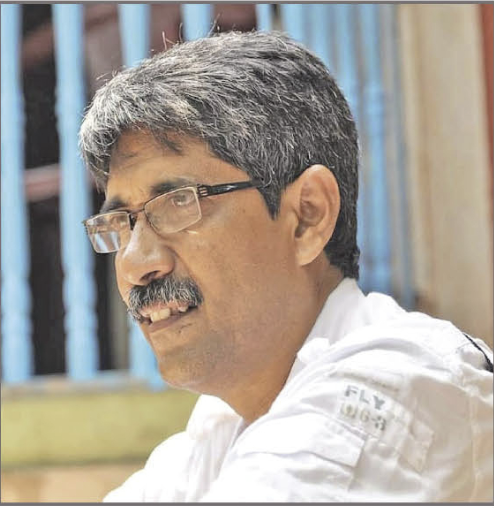
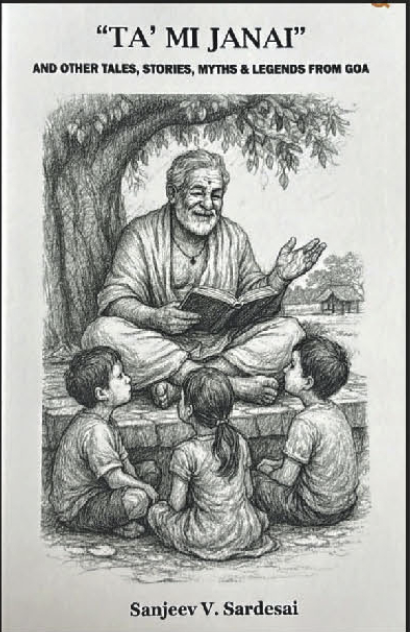
More than just a book of stories, heritage heritage researcher and author Sanjeev Sardesai’s debut book, ‘Ta’ Mi Janai, is a tribute to Goa’s intangible heritage and a reminder that folklore often carries history, science and cultural wisdom within its narratives. The title ‘Ta’ Mi Janai’ comes from the Pernem dialect of Konkani and simply means “I know.” The phrase holds special significance for Sanjeev because it reminds him of his childhood, when stories were an integral part of family life. His grandmother would narrate tales that had travelled across generations, while his father had his own way of keeping the tradition alive. “My grandmother used to tell stories. But over a period of time, I have forgotten them. My father also used to tell stories especially, when we were sick at home, he would tell a story just to put us to sleep. These are now folklores,” says Sanjeev.
The book published by Qurate Books Private Limited, will be released by freedom fighter, Padma Shri Libia Lobo Sardesai on July 20, 5 pm at Clube Tennis de Gaspar Dias, Miramar. While the book is filled with myths and legends, Sanjeev insists that readers should not dismiss them as mere fiction. “There are facts and there are myths, which are oral histories, which people, recite to children. I have got different sections in the book, covering stories about kings and queens, animals, villages, food, festivals and family traditions. Many conclude with a moral, while others attempt to explain, in simple language, the possible origins of local place names across Goa,” he says.
Myths often preserve observations made by ancient societies. “People centuries ago witnessed geological, environmental or astronomical events. Instead of recording them as scientific reports, they wrapped them in beautiful stories that people would remember. Nobody remembers every formula they learnt in school but everyone remembers a good story,” he explains. Preserving stories is becoming increasingly urgent because the culture of storytelling itself has almost disappeared. Sanjeev informs, “In earlier days, we lived in joint families. Grandparents, uncles, aunts and cousins all lived together. At night, the elders would gather the children around and tell stories before bedtime. As families became smaller and people moved away in search of education and employment, those traditions slowly faded. Today, most families are nuclear. Children don’t hear these stories anymore, and even many elders have forgotten them.”
The problem is even more significant among the Goan diaspora. Goans today live across Australia, the United Kingdom, the United States, Africa and many other parts of the world. Their children often grow up with little connection to the stories that shaped earlier generations. He explains, “I decided to write the book in English as children abroad can read it themselves, or parents can read these stories to them. It is one way of reconnecting them with Goa.”
Spread across 194 pages, ‘Ta’ Mi Janai’ contains 50 stories spanning a wide range of subjects. Readers will encounter the legend of the Seven Sister Deities and their lone brother, the curse of the Queen of Chandor, the story of St Anthony and the snake at Siolim, Saptakoteshwar and the Festival of Goats, Harmal and the Mountain of Ash, the Wise Fools of Moira, and stories explaining the origins of several Goan villages. The collection also includes tales connected with Goan cuisine, such as the birth of bebinca and cafreal, alongside stories about the Kadamba dynasty, Ribandar’s salt pans and the Namazgah in Bicholim. To complement the stories, Sanjeev has included black-and-white illustrations throughout the book, created with the assistance of ChatGPT.
Sanjeev’s interest in stories began much earlier in life. He credits his elder sister, Shanta, who is sixteen
years older than him, for encouraging his imagination. While working in Panjim during the late 1960s, she would stop at Bhate brothers’ bookshop, Varsha Book Stall, every fortnight and buy him Phantom and Mandrake comics before taking the ferry home to Betim. He says, “I would eagerly wait for those comics. Those stories certainly influenced my love for storytelling.
The decision to document Goa’s oral traditions, however, came after attending a UNESCO India seminar on intangible cultural heritage in 2015. Heritage experts urged communities to preserve traditions that cannot be found in monuments or museums-languages, dialects, farming practices, recipes, songs, proverbs and oral narratives. “What is the meaning of intangible heritage? It is our style of farming, our language, the different dialects that we have and the wise sayings, that we call opars or oparis. The way we cook our recipes, the way we sing our songs. These are all our intangible heritage. And because the people are going away from the land, these things are getting lost, Sanjeev says. “There was once a traditional dance called Adao, performed in Taleigao during Carnival. Today hardly anyone remembers it. If we don’t document these traditions, they simply vanish,” he adds.
‘Ta’ Mi Janai’ is Sanjeev’s contribution towards preserving that heritage, but he hopes it is only the beginning. He is already planning a sequel and intends to launch a handwriting competition for senior citizens aged 65 and above, inviting them to write down stories they remember from their villages.
The selected entries will be compiled into another anthology, ensuring that contributors become part of Goa’s literary and cultural archive. He says, “I want stories from Canacona to Pernem, from Hindus, Christians and even Goans living overseas can contribute, as long as the stories belong to Goa.
Through Ta’ Mi Janwai, Sanjeev hopes younger generations will discover that behind every legend lies a glimpse of Goa’s history, its landscape, its people and its enduring spirit. “If you read these stories, you understand a significant part of Goa itself, concludes Sanjeev.
The book will be available at Broadway Book Centre, Panjim, Varsha Book Stall, Panjim, Dogears Bookshop, Margao and online on Amazon.