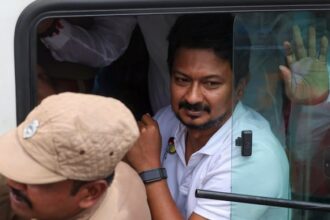
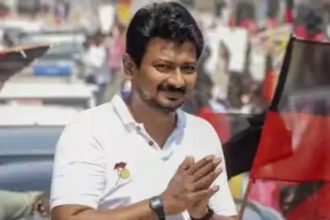
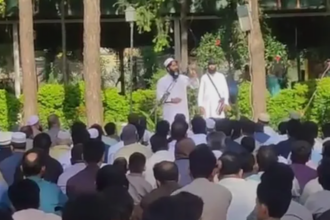
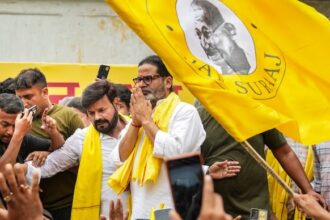
The Cockroach Janta Party (CJP) and its supporters faced a major police crackdown on Monday as thousands gathered in New Delhi to participate in the party’s planned march towards Parliament. Security around the Parliament complex was significantly tightened, with all entry gates closed to prevent demonstrators from approaching the high-security zone. Amid the standoff, the government initiated talks with the protesters. CJP chief spokesperson Saurav Das later announced on social media that a delegation had met senior BJP leader JP Nadda and submitted a written memorandum outlining the party’s key demands.
The developments have once again raised questions about the legal framework governing public protests in India, particularly demonstrations near sensitive government institutions such as Parliament.

The right to protest peacefully is protected under Article 19 of the Constitution of India. Specifically, Article 19(1)(a) guarantees citizens the freedom of speech and expression, while Article 19(1)(b) grants the right to assemble peacefully without arms. These constitutional protections form the legal foundation for public demonstrations, marches and rallies across the country.
However, these rights are not absolute. Article 19 also permits the government to impose “reasonable restrictions” in the interest of maintaining public order, safeguarding the sovereignty and integrity of India, ensuring national security, protecting public morality and preventing offences such as incitement, contempt of court and defamation. As a result, while citizens have the constitutional right to protest, authorities are empowered to regulate the time, place and manner in which demonstrations are held.
In practice, protests are generally permitted only after obtaining prior approval from the local police. Authorities often designate specific venues for demonstrations and may invoke Section 163 of the Bharatiya Nagarik Suraksha Sanhita (previously Section 144 of the Code of Criminal Procedure) to prohibit unlawful assemblies in sensitive areas or during periods of heightened security.
India has repeatedly defended this constitutional framework on international platforms. During the 47th Session of the United Nations Human Rights Council in Geneva in 2021, India’s representative highlighted the country’s long democratic tradition of peaceful marches and public assemblies, noting that such movements played a crucial role in the freedom struggle. The government also stated that it seeks to balance citizens’ right to peaceful assembly with its responsibility to protect public safety and maintain law and order.
The Supreme Court has also clarified the scope of the right to protest through several landmark judgments. In Himat Lal K. Shah vs Commissioner of Police (1973), the court recognised freedom of assembly as a fundamental component of democracy, while observing that governments may regulate public spaces but cannot arbitrarily prohibit peaceful gatherings.
In the Mazdoor Kisan Shakti Sangathan vs Union of India (2018) case, the Supreme Court upheld restrictions around high-security areas such as Parliament House, North and South Block, while laying down guidelines for regulating demonstrations. The judgment also reinforced Jantar Mantar’s status as a designated protest venue in the national capital.
Later, in the Amit Sahni vs Commissioner of Police (2020) judgment arising from the Shaheen Bagh protests, the Supreme Court ruled that demonstrations cannot occupy public roads indefinitely or disrupt the rights of other citizens. The court emphasised that protests must be held only at designated locations and cannot cause prolonged inconvenience to the public.
Together, these constitutional provisions and judicial rulings underline that while peaceful protest remains a protected democratic right in India, it is subject to lawful restrictions aimed at balancing individual freedoms with public order, security and the rights of others.