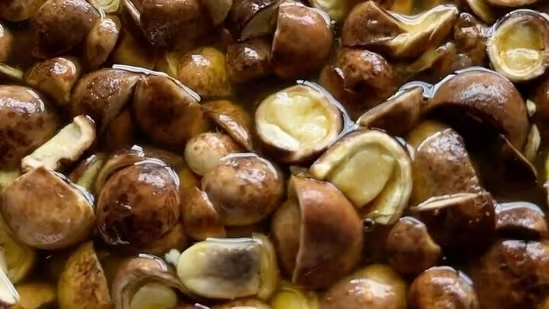
A seasonal forest delicacy long treasured by indigenous communities in eastern India is finding nationwide fame thanks to social media. Rugda mushroom, also known as putu, boda or rugra, has gone viral on Instagram, where recipe videos featuring the rare ingredient have garnered millions of views, introducing many people to a food that has traditionally been available only for a few weeks during the monsoon.
Rugda (Astraeus hygrometricus) grows naturally beneath the forest floor in sal forests across Jharkhand, Odisha, Chhattisgarh and parts of West Bengal. Unlike common mushrooms such as button or oyster varieties, rugda cannot be commercially cultivated because it depends on a natural symbiotic relationship with the roots of sal trees. Scientists have yet to develop a viable farming method, making every rugda mushroom available in markets a wild forest harvest.

Its rarity has made rugda one of eastern India’s most sought-after seasonal foods, with prices generally ranging between ₹1,000 and ₹3,000 per kilogram, depending on availability and rainfall. The mushroom is harvested by indigenous communities, including the Munda, Ho, Oraon, Santhal and Kharia tribes, who carefully dig it out by hand after spotting small cracks on the forest floor.
Often referred to as “vegetarian mutton,” rugda is prized for its firm, meat-like texture that absorbs spices well and is commonly cooked in rich curries. Nutrition experts say it is rich in plant-based protein, fibre, vitamins and antioxidants, though consumers are advised to source fresh mushrooms and cook them thoroughly during the monsoon.