European football’s governing body, UEFA, has warned it will boycott all FIFA competitions, including the FIFA World Cup, unless the global football body abandons its proposal to sell a minority stake in the commercial rights to its tournaments to private investors.
The decision, backed unanimously by UEFA’s 55 member associations, represents one of the most serious confrontations between UEFA and FIFA in decades. If neither side backs down, the dispute could create a major divide in world football, potentially affecting the future of FIFA’s flagship tournaments.

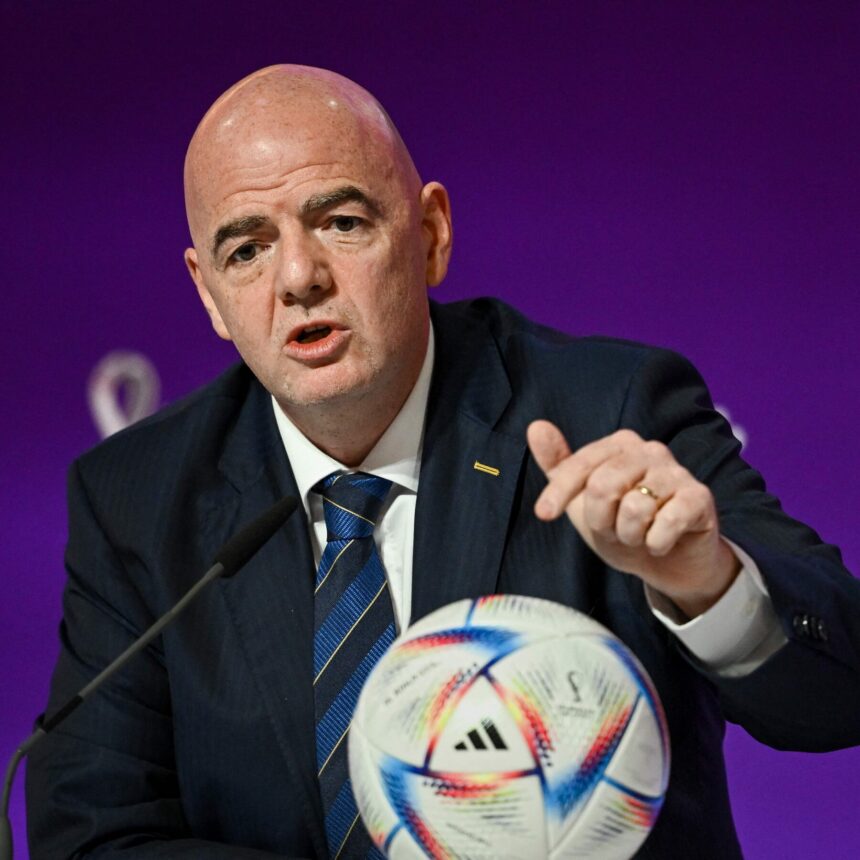
At the centre of the controversy is FIFA president Gianni Infantino’s proposal to establish a new commercial entity known as FIFA Forward Enterprise (FFE). The subsidiary would take charge of the commercial rights to FIFA competitions, including broadcasting, sponsorship, ticket sales and licensing.
Under the proposal, FIFA would continue to hold a majority stake and retain control over governance. However, it plans to sell up to a 20 per cent minority, non-controlling stake in FFE to external investors. The business has been valued at approximately $20 billion, meaning FIFA could raise around $4.2 billion through the sale.
FIFA argues that the additional funding would significantly strengthen football development programmes around the world. To secure backing for the proposal, it has offered each of its 211 member associations funding of up to $40 million if the plan is approved before the September 19 deadline. An initial payment of $20 million would become available from January 1, 2027.
Infantino has defended the proposal as part of his broader vision of “democratising football worldwide”. He has maintained that bringing in outside investment would increase FIFA’s financial capacity while allowing the organisation to retain full authority over governance and decision-making.
UEFA, however, has taken a sharply different view. European football officials fear that introducing private investors into FIFA’s commercial structure could prioritise financial returns over the interests of the sport. They argue that such a move risks undermining the traditional governance model of football and could give commercial considerations greater influence over future decisions.
The unanimous backing from UEFA’s member associations underscores the scale of opposition within European football. The organisation has warned that unless FIFA withdraws or substantially revises the proposal, it is prepared to boycott all FIFA competitions, including the men’s and women’s World Cups.
Such a move would have far-reaching consequences. European nations have historically dominated FIFA tournaments both competitively and commercially, and their absence would significantly diminish the prestige, viewership and financial value of global competitions.
With the September 19 deadline approaching, negotiations between the two governing bodies are expected to intensify. Whether FIFA can persuade UEFA to support the proposal or whether the dispute escalates into an unprecedented boycott could shape the future governance and commercial landscape of international football for years to come.