Adv Suraj Uttam Malik
In the Goa-Konkan region, the fifth month of the lunar calendar, Shravan, is observed as one of the most festive seasons of the year. Aytar Pujan is one such festival that celebrates and venerates the region’s floral wealth. The term ‘Aytar’ means Sunday, and the festival is essentially a worship of the Sun God. It is traditionally celebrated on each Sunday of Shravan.

How does one worship a celestial object?
The concept of Aytar Pujan reflects the far-sighted vision of our ancestors. During Shravan, a brief respite from the continuous torrential rainfall allows sunlight to reach grasses and herbs, enabling them to flourish to a certain height Sunlight is essential for plant growth, and this understanding is beautifully reflected in the festival. In Goan villages, married women traditionally collect specific herbs that sprout during the monsoon and worship them as an offering of gratitude to the Sun. More fascinatingly, many of these flowers, leaves, and plants are named after tools and objects traditionally associated with agriculture.
Aytar Pujan is a unique festival through which traditional knowledge of medicinal herbs is shared and preserved across generations. Closely associated with the principles of Ayurveda, the festival incorporates several plants with known medicinal properties. Many of these medicinal herbs used in the ritual have also been scientifically documented and discussed in research studies, highlighting the significance of this traditional practice.
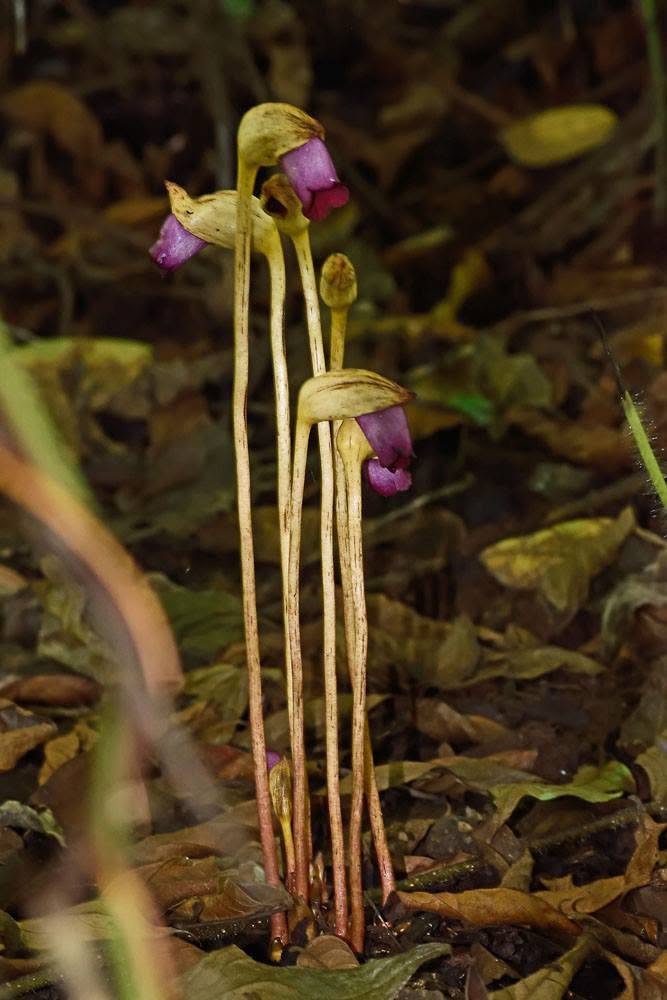
Forest ghost flower (Aeginetia indica) is known as ‘Aytarache Dovale’ because it has a long stem and a bowl-like structure at the tip that resembles a traditional wooden spoon called Dovale.
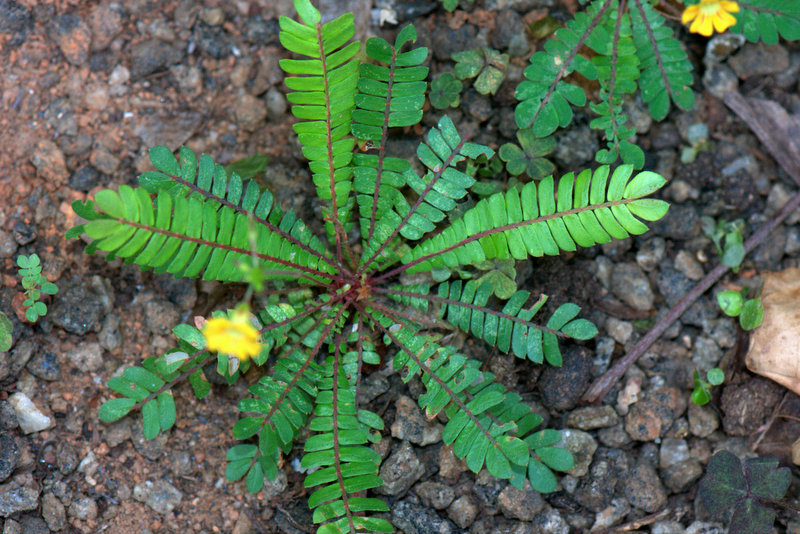
Mukkutti plant (Biophytum sensitivum) features a circular arrangement of leaves that resembles an umbrella, which is why it is called ‘Aytarachi Chattri’. Earlier, a wooden tool called ‘Musal’ was used for pounding of agricultural produce. A plant of similar shape called White water sedge (Cyperus mindorensis) is named after this tool, becasue it has an erect stem that resembles ‘Musal. Tutari (Rhamphicarpa fistulosa) is an interesting flower that blooms only after sunset until next morning. It is because of its blooming in the moonlight it is named as ‘Channe, which is a term in Konkani for moonlight.
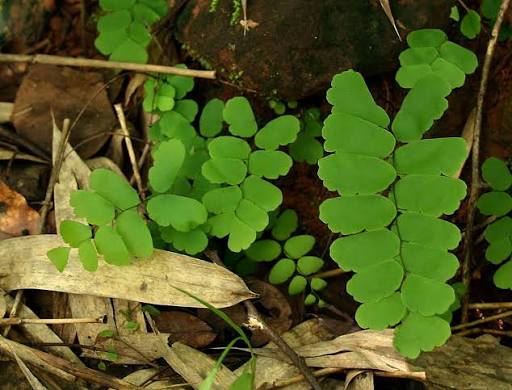
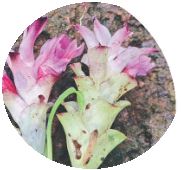
A fern called Walking maidenhair, (Adiantum lunulatum), also known as the Hamsapadi, holds a special place in the worship. In the Goa Konkan region, torn clothes are called “Bonra, and women call these ferns ‘Mhatarechi bonra, meaning ‘the torn clothes of an old woman’ Similarly, a particular moss belonging to the Selaginella genus is found alongside Hamsapadi ferns. These are called ‘Mhatarechi chinra’. Similarly a turmeric plant found in the wild is called ‘Kopali gaay’, because its red yellow flower looks like a mouth of a cow. An artillery plant that grows on the walkways is a tiny grass that bears minute red seeds resembling finger millets, leading to the local name ‘Nasano. Finger millet was widely used to make bhakari in the past and played an immense role in relieving many ailments.
Bhui Amla (Phyllanthus niruri) is a medicinal herb that grows widely even in cities. Bhui means “land” and because of the anla fruits being very close to the ground it is called ‘Bhui Amla For Aytar Pujan, it is called ‘Aytarachi pidduk.
The leaves of ‘Tadehagi triquetrum’ plant are so unique that woman call it ‘Sashyache Kaan’ which means ‘ear of a rabbit. It is because the leaves are elongated the opposite to each resembling the ears of Rabbit. The names given to these plants reflect the excellent observation of our ancestors.
A fern belonging to the Lygodium family is called ‘Ramachi bota’ meaning ‘Fingers of Rama’. ‘Cenocia bombances’ producing yellow flowers called ‘Harana’ and ‘Dev chiddo’ are delicate whitish-pink flowers known as Impatiens minor, while Impatiens major are called ‘Ran chiddo. Grating coconut was once done using a small tool called ‘Katne, As Sida Cordifolia plant has a serrated line along the edge of the leaves which looks similar to this tool, it is locally called ‘Aayatarache Katne.
During Aytar Pujan, it is mandatory for Hindu women to wear a bunch of plants in her hair. She gathers the specific plants such as Bel, Hariyali, Terda, and Chhatri wrapped in the white leaves of sherwada, and tuck them into their hair. One such bunch is also offered to the Sun God.
During the Ganesh Chaturthi, a wooden canopy decorated with leaves, fruits, and flowers from various shrubs and large trees is tied above the head of the Ganesha idol. Whereas, Aytar Pujan is celebrated on the ground using a wooden asana, likely because the herbs worshiped grow close to the ground. The representation of the Sun is seen either through pictures drawn on walls or in the song sung in front of Tulsi pedestal.
Subhadra Malik from Vante, Sattari worships the Sunday using at least 20 different herbs. “Aytar is a living being, and this personification is evident in the depiction of two cones made from different leaves on each Sunday,” she says.
On the first Sunday, Aytar is viewed as a child wearing a chain around his neck. This chain is represented by a grass that crawls on the ground, resembling a chain. The cones on this day are made from pan vel, an edible
Sundare Borkar says, “Aytar’ is of ‘Bhartaar’ meaning a husband. It is worshiped for good health of my husband.
The second Sunday is viewed as a day of Haldi ceremony, when Aytar is said to attain the age of marriage, which is why the leaves of the turmeric plant (haldi) are used to make the cones.
On the last Sunday that will be observed on September 6 this year, he is depicted as a grown up man. To reflect this, white sepals of the Mussaenda frondosa plant are used to make the cones which might be representing the white beard.
Folklorist Pournima Kerkar says, “Even today, an elderly woman who has no formal education, can easily identify at least 15 plants used for Aytar Pujan. They are aware about the timing of flowering and fruiting. There is a need to document the ecological values shared through folksongs, rituals, and festivals.”
Two of the plants used for Aytar, ‘Aytarachi Chattri’ and ‘Aytarache Katane’ are used in Kerala for preparing a porridge called ‘Karakkidakam’ to enhance the immunity.
(Adv Suraj Uttam Malik is a practising lawyer who is associated with Vivekanand Environment Awareness Brigade, Keri, Sattari.)