STEVE CORREA
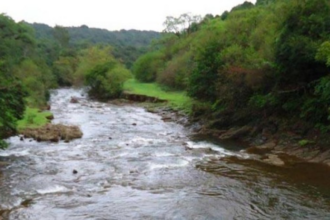
Once, not so long ago, Goa disappeared from the world during a specif ic season. It arrived with the first heavy rains, and by June, the sea turned dark and pow erful. Beach shacks were tak en down, deck chairs stored away, and tourists became scarce. The roads grew quiet, hotels closed their rooms, res taurants shuttered, and locals seemed to reclaim their town from visitors. The monsoon was more than just weather— it was Goa’s yearly pause. For a few months, the State was free to cease its constant per formance. The rain endlessly tapped on tiled roofs, moss crept over old laterite walls, wells re filled, frogs called after dark, and clothes struggled to dry. The Mandovi River swelled, muddy and slow. Village roads vanished beneath lush green canopies. Everywhere there was inconvenience, yet a strange closeness grew as well. Goa turned inward as families stayed home more, neighbours lingered over tea, repairs were made, and pick les were opened. Fish curry took on a different flavour on rainy afternoons. There were fewer strangers asking for directions and fewer cars racing through village lanes. The monsoon created a qui et off-season, granting Goa a rare luxury—permission to be unproductive. Ultimately, this timeless essence of Goa is slowly fading.

Today, even during heavy rain, Goa no longer neglects development. Construction persists through the mon soon, with sounds of drilling, cutting, concrete mixers and reversing trucks resonating across villages, hills and qui et lanes. These trucks back into plots once occupied by old houses, orchards, or wild green patches. Buildings rise under blue tarps, and villas emerge from the mud. In terestingly, new apartment complexes are named to evoke serenity, exclusivity, and nature—though many of these qualities are now lost. There is no off-season in real estate. Increasingly, there is no off-season in Goa either. Tour ism itself has become more continuous. Cafés remain busy. Cars with out-of-state regis trations crawl along narrow roads even in the rains. Week end visitors arrive throughout the year. Remote work, second homes, and investment prop erties have blurred the old distinction between residents and visitors, and between sea son and off-season. This reflects a form of pros perity where landowners real ise that their ancestral prop erty can significantly boost their wealth. Young Goans now find new opportunities in industries such as hospitality, food, wellness, design, and en trepreneurship.
Villages that once felt isolated are now inte grated into national and glob al markets. However, every advancement brings change, and Goa itself is evolving. A house that once accommodat ed three generations might now be more valuable as land. When a neighbour sells, it can lead to the development of six villas that replace the original family home. The village grocery trans forms into a gourmet store, while a small, familiar bar is replaced by a restaurant that shares reservations via Instagram. Rents increase, making it difficult for young local families to afford homes where their ancestors once lived. Land shifts from being a home to a financial asset. The language evolves: people now discuss plots, FSI, appre ciation, rental yields, gated communities, and investment prospects instead of just our field, orchard, house, and village. When a place is valued mainly for its monetary worth, a subtle shift occurs: the fo cus moves from a sense of belonging to mere posses sion. This shift influences daily life in Goa. Traffic be comes integrated into village routines.
A ten-minute trip might now be unpredictable. Narrow roads, originally built for cycles, scooters, and oc casional buses, are now con gested with SUVs, taxis, de livery vans, and construction trucks. Water shortages emerge, and electricity infrastructure becomes overwhelmed. Waste increases beyond what village systems can manage. The qui et after dinner diminishes, and darkness is increasingly dis placed as more homes, resorts, and developments illuminate the night. Most significant ly, residents start to feel like strangers in their own neigh bourhoods. The newcomer is not nec essarily the villain. Many ar rive because they genuinely love Goa. They are drawn to its trees, old houses, slower rhythms, village roads and sense of community. That is the tragedy. We come search ing for what modern life has taken from us, only to slowly recreate it in the very place where we hoped to escape it. The café needs parking. The villa needs a wider road. The second home needs air-con ditioning. The development needs water. The airport needs connectivity. The vis itor wants convenience. The investor wants returns. Each demand seems reasonable on its own. Collectively, they alter the place. Now, I view the monsoon in a new light. The rain con tinues its ancient functions— cleansing dust from leaves, filling rivers, and turning walls green. It drifts above the Western Ghats, briefly mak ing Goa seem almost primor dial. Yet, rain no longer stops progress in Goa. Behind the water curtain, cranes oper ate, concrete is poured, deals are struck, and land chang es hands. Maybe Goa is not just losing its off-season, but also the notion that a place must rest.
Human beings understand this instinctively. We need sleep. We need silence. We need intervals when nothing is demanded of us. Without them, we become exhausted, even if we remain outwardly successful. Places may not be so different. The old monsoon allowed Goa to withdraw from the world’s gaze and become itself again. I wonder what happens to a place that is nev er allowed to withdraw. Per haps development is not the opposite of preservation. Per haps the real question is sim pler and harder: Can Goa grow without being consumed by its own attractiveness? Looking out my window amid heavy rain, I feel nostal gia for a Goa that still exists, though it’s becoming harder to find. I long for the Goa that used to shut down during the rains, the Goa that knew how to embrace silence. It under stood that sometimes the most vital thing a place can do is simply be still. (Steve Correa is a Leader ship Coach and OD Consult ant, who has had over three decades of corporate experi ence. He is author of, The In dian Boss at Work: Thinking Global Acting Indian.)