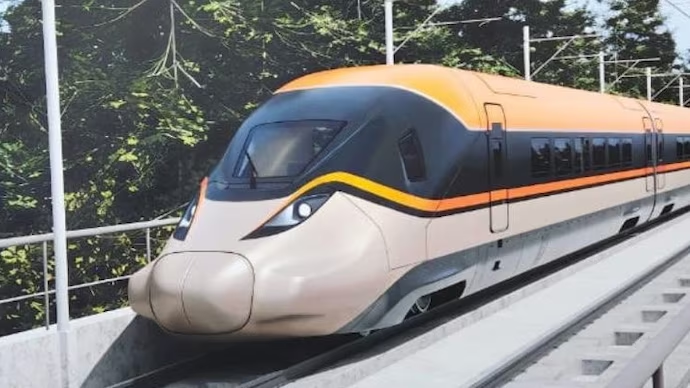
Indian Railways is preparing to upgrade the operational speed of the nation’s inaugural hydrogen-powered train to 110 kmph. While the train currently runs at a capped speed of 75 kmph along the 89-km Jind-Sonipat route in Haryana, high-speed testing up to 120 kmph has been completed successfully. Railway Board Chairman and CEO Satish Kumar confirmed during a press briefing in Indore that efforts are now focusing on achieving a consistent 110 kmph operational output. Officials are actively consulting with key stakeholders to identify suitable railway sections for deployment while evaluating necessary technical modifications and fueling infrastructure.
Eco-Friendly Hydrogen Innovation

Flagged off by Prime Minister Narendra Modi on July 17, the hydrogen train represents a shift toward sustainable rail travel. Unlike traditional electric trains that depend on external power from overhead electric lines, hydrogen fuel cell trainsets generate power internally. Electricity is created via an onboard chemical reaction combining hydrogen and oxygen. The process eliminates harmful tailpipe emissions, smoke, and fuel combustion, yielding only water vapor and heat as by-products.
Expanding the Vande Bharat Sleeper Fleet
In addition to hydrogen advancements, the Railway Board provided updates on high-speed passenger services. The country’s inaugural Vande Bharat sleeper express currently serves the Howrah-Kamakhya (Guwahati) route. Four additional sleeper trainsets have finished manufacturing and are awaiting formal inauguration. Indian Railways expects to integrate 11 more Vande Bharat sleeper trains into service within the current year. A broader plan is underway to build 200 Vande Bharat sleeper trains through a public-private partnership (PPP) model, with each train requiring approximately 12 to 18 months for complete assembly.
Infrastructure Projects and AI-Driven Upgrades
To address long-term logistics and passenger traffic, Indian Railways is making major investments in safety and infrastructure:
- Simhastha Festival Preparations: Plans are set to run between 100 and 125 special trains to handle mass travel for the 2028 Simhastha gathering in Ujjain, alongside ongoing station infrastructure upgrades.
- Enhanced Station Security: Security protocols across stations and onboard trains are being upgraded through artificial intelligence (AI) integrated directly into CCTV surveillance systems. Measures are also being enacted to address pest control and rat management onboard carriages.
- Indore-Manmad Rail Line: Progress continues on the ₹18,500-crore Indore-Manmad railway line, which received approval in the 2024–25 financial year. Land acquisition is proceeding rapidly, with complete project construction targeted within four to five years.
Following a comprehensive review of railway line construction and redevelopment projects at the Indore railway station, senior officials reassured the public that modernization and safety remain top priorities.