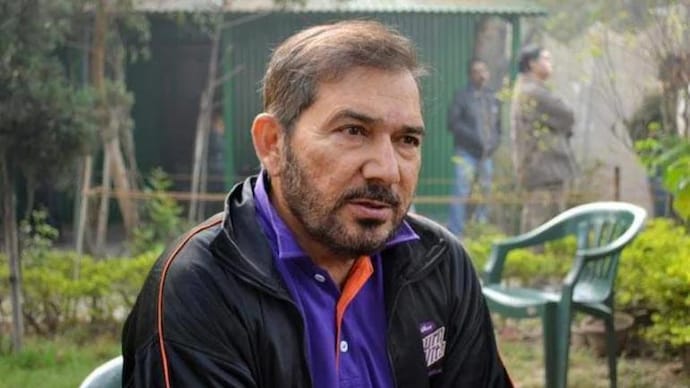
Former Indian cricketer Arun Lal is widely remembered for his stellar domestic career of over 10,000 runs, his engaging cricket commentary, and coaching Bengal to the 2020 Ranji Trophy final. Beyond his sporting achievements and his courage in overcoming jaw cancer, Lal played a transformative role in a deeply personal journey off the pitch by helping a laundryman’s son break the cycle of poverty and achieve remarkable corporate success.
From Humble Beginnings to IIM Calcutta Bikash Chowdhury grew up in Bhawanipore, Kolkata, under challenging financial circumstances. His father operated a small laundry stall on the pavement, while his family lived in an adjacent hut. Chowdhury became the first in his family to attend an English-medium school, though mastering the English language initially proved difficult.

Through his father’s work, Chowdhury came into contact with Arun Lal’s family. Lal’s first wife, Debjani, began offering the 12-year-old daily English lessons, often motivating him with simple treats like orange squash. As the childless couple took Chowdhury under their wing, the informal tutoring sessions evolved into a deep, family-like bond.
Although Chowdhury initially harbored dreams of becoming a professional footballer—having represented Bengal at the sub-junior level—Lal advised him to prioritize education due to the uncertainties of a sports career. Taking this guidance to heart, Chowdhury completed his BCom and MCom degrees before clearing the CAT exam and securing admission to the prestigious Indian Institute of Management (IIM) Calcutta in 2000.
Building a Successful Corporate Career Despite initial academic struggles with mathematics at IIM Calcutta, Chowdhury persevered with support from peers and seniors. After graduating, he entered the global finance sector, working with prominent institutions such as Deutsche Bank and Credit Agricole, including an assignment in London.
Demonstrating strong resilience during the 2008 global financial crisis, Chowdhury navigated a layoff at Deutsche Bank by securing a new position at Credit Agricole within a week. Today, he serves as a senior executive at JSW Steel.
A Lifelong Bond of Gratitude Chowdhury maintains deep gratitude for both his biological parents and the Lal family, viewing both couples as his parents. Over the years, he has expressed his appreciation through meaningful gestures, including gifting the Lals a vehicle, assisting them financially with housing, and naming his daughter Arunima in honor of Arun Lal. Lal, in turn, considers Chowdhury his son, describing him as a remarkable human being who brought immense joy into their lives.