MARCOS GONSALVES
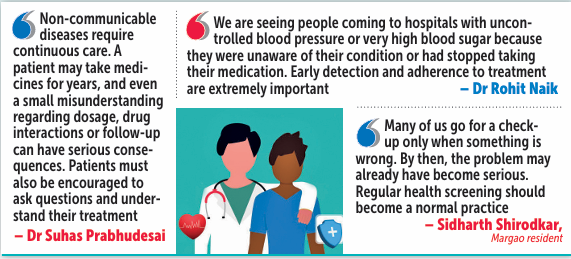
Goa’s growing bur den of diabetes, hypertension, heart disease, cancer and other non-communicable diseases (NCDs) is emerging not only as a public health concern but also as a patient-safety challenge, with doctors warning that the risks do not end with diagnosis and treatment. As World Patient Safety Day is observed on September 17 with the theme “Safe care for non-communicable diseases”, healthcare professionals have stressed that patients living with chronic conditions require accu rate diagnosis, appropriate med ication, clear medical records and uninterrupted follow-up over the years — not just episod ic care when complications arise. The concern assumes great er significance as NCD patients often move between general practitioners, specialists, di agnostic centres and hospi tals. Poor communication be tween healthcare providers, incomplete medical histories, medication errors and missed follow-ups can complicate treatment and expose patients to avoidable risks. “Non-communicable diseas es require continuous care.

A patient may take medicines for years, and even a small misunderstanding regarding dosage, drug interactions or follow-up can have serious con sequences. Patients must also be encouraged to ask questions and understand their treat ment,” said senior doctor Suhas Prabhudesai. The danger is compounded when diseases remain undetect ed until they become difficult to control. Another medical practi tioner, Rohit Naik, said regular screening could help identify problems before they develop into serious complications. “We are seeing people com ing to hospitals with uncon trolled blood pressure or very high blood sugar because they were unaware of their condi tion or had stopped taking their medication. Early detection and adherence to treatment are extremely important,” he said. Doctors have also flagged sedentary lifestyles, unhealthy diets, stress, tobacco and alco hol consumption as important risk factors. They said preven tion and periodic screening need to become routine rather than being triggered only when symptoms appear. For families, the consequenc es extend beyond medical risks. Long-term medication, repeat ed investigations and specialist consultations can impose a sus tained financial and emotional burden, particularly on elderly patients and households with limited incomes. Margao resident Sidharth Shirodkar said a lack of symp toms often creates a false sense of security. “Many of us go for a check-up only when something is wrong. By then, the problem may already have become seri ous. Regular health screening should become a normal prac tice,” said Shirodkar.
He also called for greater health education at the com munity level. “People need to know what their blood pres sure and sugar levels mean and why medicines should not be stopped suddenly. Awareness can prevent many com plications,” he said. Doctors said safer NCD care also requires better coor dination between primary healthcare centres, specialists, diagnostic laboratories and hospitals, particularly when patients are referred or move between facilities. The World Patient Safety Day message, they said, therefore extends well beyond preventing errors inside hospitals. For the growing number of people living with chronic diseases, patient safety also depends on whether the healthcare system can provide continuous, coordinat ed and understandable care from diagnosis to long-term management.