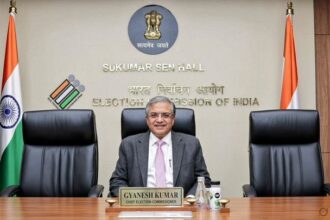
Calls for action against Chief Election Commissioner Gyanesh Kumar have brought renewed attention to Section 16 of the Chief Election Commissioner and Other Election Commissioners (Appointment, Conditions of Service and Term of Office) Act, 2023. The provision gives legal protection to serving and former Election Commissioners for certain acts connected to their official duties.
The controversy comes amid reported differences within the Election Commission over the Special Intensive Revision (SIR) of electoral rolls. Election Commissioners Sukhbir Singh Sandhu and Vivek Joshi have reportedly raised objections at least 14 times over 10 months regarding decisions and orders that they said were taken without their knowledge. Their concerns included voter registration, deletion and restoration of names, changes to Form 6 and the management of electoral-roll databases.

The Election Commission has maintained that written objections and differing views are part of its internal deliberative process and has defended the decisions taken by the Commission.
What does Section 16 say?
Section 16 states that, notwithstanding anything contained in other laws, no court shall entertain or continue civil or criminal proceedings against a person who is or was a Chief Election Commissioner or Election Commissioner for an act, thing or word done or spoken while acting, or purporting to act, in the discharge of official duty or function.
Two aspects are significant. The provision covers both civil and criminal proceedings, and its wording applies to anyone who “is or was” a CEC or Election Commissioner. The protection is also linked specifically to conduct connected with official duties.
Does it prevent arrest?
Section 16 does not expressly use the words “arrest”, “investigation” or “police investigation”. Instead, it deals with whether courts can entertain or continue specified civil or criminal proceedings.
Therefore, the provision cannot simply be described as an explicit blanket ban on arrest. The legal position in a particular case would depend on the nature of the allegations, the stage of proceedings and judicial interpretation of Section 16.
The key question would be whether the alleged conduct falls within the section’s protection because it was undertaken while the commissioner was acting, or purporting to act, in an official capacity.
Why is the provision under scrutiny?
Section 16 was added during parliamentary consideration of the 2023 legislation and subsequently became part of the enacted law. The government had said the protection was intended to allow Election Commissioners to perform their functions independently and without hindrance.
The breadth of the provision has since been challenged. In January 2026, the Supreme Court agreed to examine a petition by NGO Lok Prahari questioning Section 16. The court issued notice to the Centre and the Election Commission but did not stay the operation of the provision. The Supreme Court has not yet delivered a final ruling on its constitutional validity or precise scope.
What triggered the latest controversy?
The current dispute centres on the reported internal objections over SIR and electoral-roll management. Among the issues was a change to Form 6, the application used by people seeking registration as voters. According to the reported objections, questions relating to previous SIR electoral rolls were added to the form, with the two Election Commissioners questioning the authority for the change.
The political demands for Kumar’s removal or arrest are separate from the legal question of Section 16. Such demands do not by themselves establish criminal liability.
For now, Section 16 remains in force. Its text provides protection against specified civil and criminal proceedings arising from official conduct, but it does not expressly describe that protection as immunity from arrest. The precise scope of the provision remains a matter for judicial interpretation.