The Constitution Day observed on November 26, saw unprecedented celebrations by politicians and political parties in India one wonders that if they (the governing elite) respect and adore the Constitution of India with total dedication as they say, then why is it that the constitutional imperatives are observed more in their non-fulfilment than their fulfilment?
The constitutional imperatives are spelt out in the PART IV of the Constitution of India, known as the Directive Principles of State policy. (Art 36 to 50), these principles are fundamental in the governance of the country (Article 37)

Directive Principles are primarily concerned with socio economic development, prioritising the welfare of people by securing and protecting a social order, in which justice – social, economic and political – are meant for realising the goals of social and economic democracy in India, aimed at ensuring economic and social equality.
Primarily, the State should ensure adequate means of livelihood for its people. But according to the Global Hunger Index at a score of 28.7, India has a serious and severe hunger situation.
Secondly, the State should ensure fair distribution of the material resources of the country for the common good. But India is one of the most unequal countries in the world, with the top 10% of the population holding 77% of the total national wealth.
According to the World Inequality Report 2022, the share of the bottom 50% has gone down to 13%.
Thirdly, the State should distribute the wealth in such a way that the wealth is not concentrated in a few hands. The reality is the richest 1% of the Indian population owns 53% of the country’s wealth, while the poorer half jostles for a mere 4.1% of national wealth.
Fourthly, there should be equal pay for equal work for both men and women.
While the principle of equal pay for equal work in India is enshrined in law, the reality on the ground often falls short of this ideal. The latest World Inequality Report reveals that female employees in India earn only Rs 40 for every Rs 100 earned by their male counterparts, even though India is the world’s fifth largest economy.
The World Bank reports that Indian women earn 34% less than men for similar work. This gap widens across sectors, education levels, and experience. The International Labour Organisation estimates that it could take 223 years to achieve gender pay parity in India.
Insufficient and inefficient minimum wage regulations with weak and limited collective bargaining rights, has caused income disparities and insecurity among the working class.
As regards to education, the Constitution (86th Amendment) Act, 2002 inserted Article 21-A in the Constitution of India to provide free and compulsory education of all children in the age group of 6 to 14 years as a Fundamental Right in such a manner as the State may, by law, determine. India is home to 19% of the world’s children. That is, India has the world’s largest number of youngsters.
India also has one-third of the world’s illiterate population. The total literacy growth from 1991 to 2001 was 12.6%, it has declined to 9.21% and the pupil-teacher ratio has fallen over 20 percent (from 47.4 to 39.8). The essential components of education are availability, accessibility, acceptability and adaptability.
With the kind of government tinkering in education and the policy of privatising elementary education have paved the way for profiteering in education, resulting in a system of advertisement and puffed-up statements with no substance and often total scarcity of teachers in required numbers at all levels.
This apathy towards children and youth has increased child abuse in India. In 2022, India witnessed a staggering 8.7% increase in child abuse cases, reaching a total of 162,000 incidents, as reported by the National Crime Records Bureau (NCRB).
Also the NCRB report detailed a substantial escalation in reported crimes against women, soaring from 3,71,503 cases in 2020 to 4,45,256 cases in 2022.
As regards, the people’s right to work, the unemployment rate in India averaged 8.20 percent from 2018 until 2024, reaching an all-time high of 23.50% in April of 2020 According to the latest data from the Centre for Monitoring Indian Economy (CMIE), an independent think tank, the labour participation rate is only 41% and the employment rate 37.8%.
In the economic sphere, the State is to form its policies in such a manner that secures distribution of ownership and control of material resources of the community for common good and ensures that there is no concentration of wealth.
What worries the common man is the repeated failure of governments to fulfil these basic needs, which the country’s founding fathers dreamt will be achieved within the first 20 years of India becoming a Republic and now even after 74 years, there doesn’t seem to be any hope and worse still, there are no efforts from the governing elite to fulfil these basic constitutional imperatives.
Yet they choose to praise the Constitution and its values as if it’s some religious text, which one adores, but doesn’t practice the values and principles enshrined therein.
In this age of technology, when everyone is amazed by the possibilities of the use of Artificial Intelligence, one is rather prompted to suggest that perhaps, if the constitutional imperatives are fed into an AI system along with the present socio-economic realities of India, AI may come out with a road map as to how India could fulfil these pressing and urgent but crucial constitutional imperatives.
Adopting such an AI generated governance model may be the quickest and easiest and surest way to achieve the constitutional imperatives, rather than to depend upon the whimsical prejudice and personal preferences of elected representatives or Ministers to achieve these objectives, which may not happen even if India competes a century as a Republic.
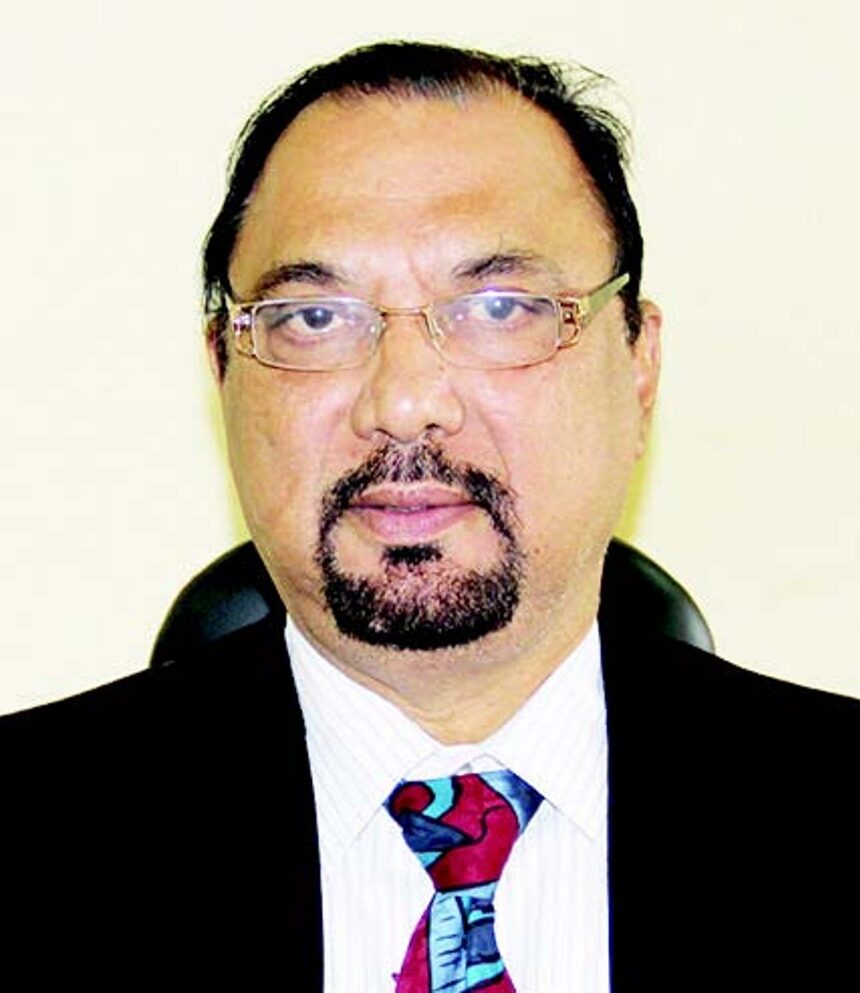
(The writer is a Professor of Law and an Education Consultant)