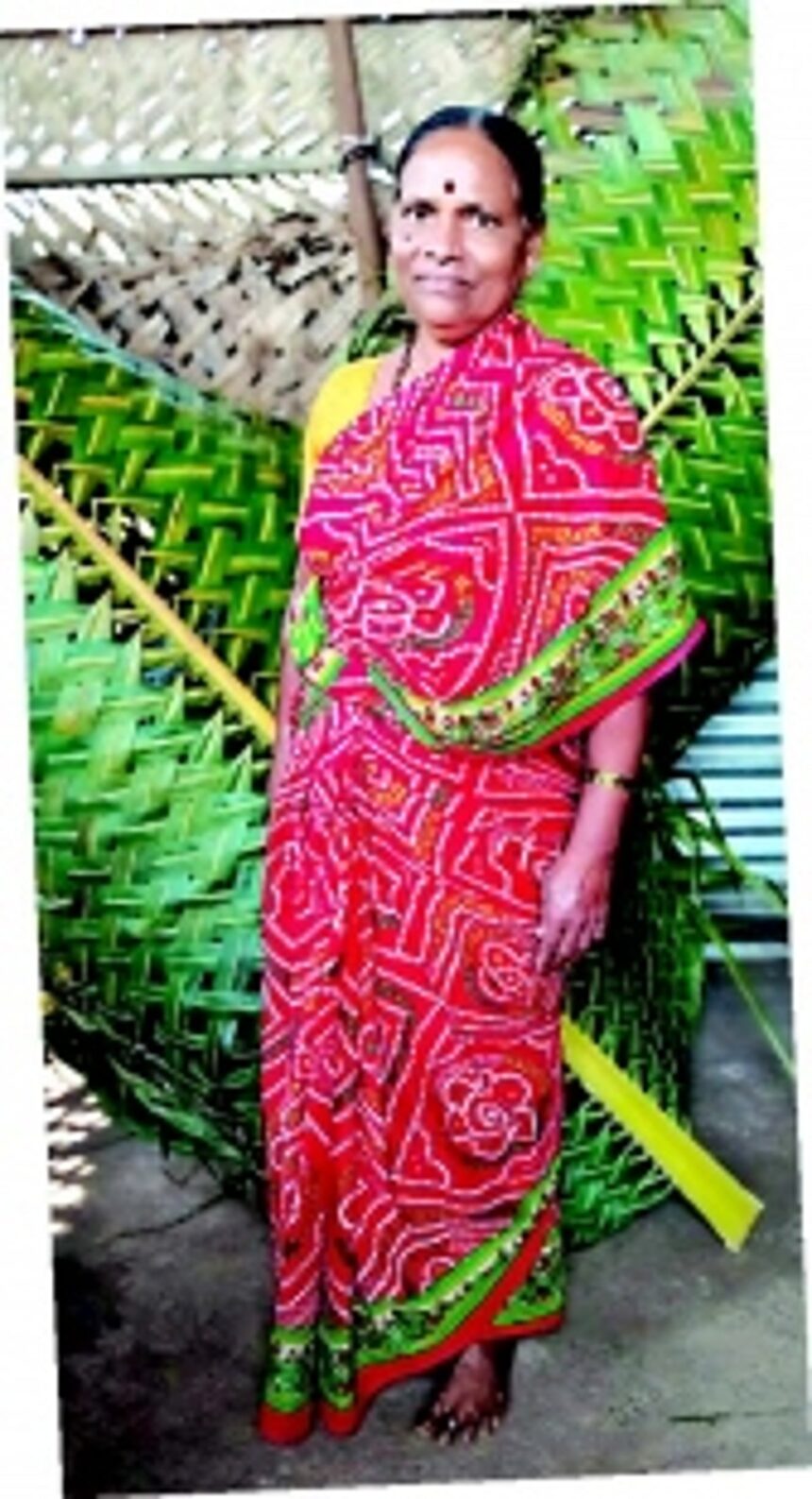
ALDONA: In most villages of Goa, the age-old tradition of coconut weaving is struggling to survive. Darshana Gadekar, a 60-year-old artisan from Cuxem-Corjuem, reminisces about the days when her family in Guirim engaged in large-scale coconut leaf weaving. During her school holidays, she would visit her uncle’s house in Guirim, where her aunt taught her the intricate art of coconut leaf weaving.
As a 10-year-old, Darshana started with the basics of weaving leaves and gradually learned the complexities of tying knots, the most challenging aspect of the craft. Over the years, she became proficient, but with marriage and settling in Corjeum, her visits to her uncle’s house became infrequent.

Despite the shift in her circumstances, Darshana’s passion for coconut weaving endured. She would pick up fallen coconut leaves from the roadside and weave them into intricate patterns. The coconut leaves were traditionally used for making huts, shades, compound walls, cow sheds, and more. The natural ventilation and durability of these woven leaves made them a preferred choice.
However, the advent of plastic materials marked a turning point. Plastic became the new choice, and the demand for coconut leaves plummeted. Darshana, now the torchbearer of a 150-year-old family business, laments the decline in demand and interest in this traditional craft.
Darshana emphasises the benefits of coconut leaves, which provide good ventilation, natural cooling, and longevity. She takes pride in continuing the family legacy despite her family members’ waning interest, as they gravitate towards office jobs and modern pursuits.
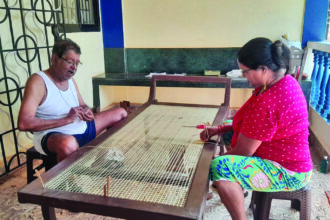
The intricacies of coconut weaving involve weaving the leaves, tightening them, and tying knots to ensure longevity. Darshana, having learned the craft through family traditions rather than formal training, showcases different designs and varieties of coconut leaves. In the old days, one woven mat cost Rs 2.50 but today, the price is around Rs 80, she adds.
While outsiders appreciate and seek out these woven coconut mats, the local Goan population seems to have lost touch with this age-old tradition. Darshana’s children are not interested in carrying on the business, and she fears the fading of this cultural heritage.
In an effort to preserve this dying art, Darshana welcomes outsiders who wish to learn the craft. “I am more than happy to teach them, so this craft does not get forgotten,” she quips. She sees it as a way to revive interest among the youth and ensure the continuity of this cultural tradition.
Darshana, who now runs a small tea stall, continues coconut frond weaving as a pastime. She hopes that by teaching others, she can contribute to the revival of this craft, which holds immense historical and cultural significance.
Despite the challenges, Darshana remains content with the unique gift of weaving that life has bestowed upon her and her family.