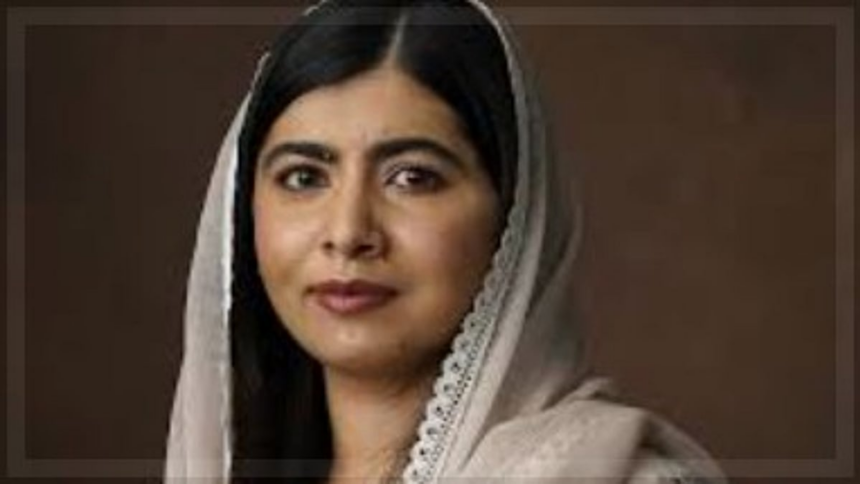
At a summit in Islamabad, Nobel Peace Prize laureate Malala Yousafzai, who herself became a symbol of resistance after surviving an assassination attempt by the Pakistani Taliban for advocating girls’ education, issued a resounding plea to Muslim leaders. Urging them not to “legitimise” the Taliban government in Afghanistan, Yousafzai called for decisive action against the regime’s oppressive policies, particularly its draconian restrictions on women and girls. Her call could mark a pivotal moment in the fight for gender equality within the Muslim world.
The Taliban’s return to power in Afghanistan in 2021 was marked by a swift and harsh imposition of what many experts have labeled “gender apartheid”. Under the Taliban’s rule, women have been systematically excluded from public life, stripped of their educational rights, and banned from holding many government jobs. Most alarmingly, Afghan girls have been denied secondary education and university access, and the repression has only intensified with the Taliban’s prohibitions against women in fields such as midwifery and nursing.

Yousafzai’s remarks at the summit were powerful and pointed. She called out the Taliban’s justification for their actions, denouncing the regime for cloaking their oppressive measures with “cultural and religious justifications”. Her words were direct: “Simply put, the Taliban do not see women as human beings.” The Nobel laureate’s challenge to Muslim leaders was equally stark. She urged them to take a stand against the Taliban’s policies and “show true leadership” by opposing their actions, which, she argues, have no basis in Islamic teachings.
This is not merely an issue of politics or national governance but a humanitarian crisis that impacts the future of an entire generation. In Afghanistan, girls are denied an education beyond the sixth grade, the only country in the world where such a ban exists. This educational deprivation not only stunts individual growth but also condemns the country’s development. Education is the key to lifting millions out of poverty and empowering women to contribute meaningfully to society. Denying it is a deliberate attempt to erase women from the public sphere and keep them dependent on patriarchal structures.
What Yousafzai highlights is the deeper cultural and religious distortion at play. The Taliban’s interpretation of Islamic law does not represent the teachings of Islam, which, like all major world religions, stresses justice, compassion, and the upliftment of all individuals, regardless of gender. By framing their laws as divinely ordained, the Taliban seeks to create a narrative of inviolability and martyrdom, which continues to justify their policies both domestically and to the outside world.
However, the response from the international community and, more specifically, from Muslim-majority nations has been mixed. While no country has formally recognized the Taliban government, some have engaged with Kabul on trade and security matters. This pragmatic engagement, driven by geopolitical and economic concerns, risks giving tacit approval to the Taliban’s treatment of women and girls. Yousafzai’s call for action at the Islamabad summit was a timely reminder that such engagement should not come at the expense of human rights.
Her call is especially urgent for Muslim leaders, who possess the moral authority and influence to challenge the Taliban’s actions from within the faith community. As the most prominent voice advocating for women’s rights in the Muslim world, Yousafzai’s appeal is not just about the Afghan women currently suffering under the Taliban; it’s about affirming the rights of women and girls everywhere. Whether in Gaza, Yemen, Sudan, or Afghanistan, girls’ education is under siege, and as Yousafzai pointed out, “the entire future of girls is stolen”.
The summit, organised by the Muslim World League and supported by the Organization of Islamic Cooperation, provided a unique opportunity for a broad coalition of Muslim leaders, scholars, and officials to come together and take a collective stand. But the effectiveness of such gatherings depends on the actions that follow. The words of leaders matter, but their deeds—whether in the form of diplomatic pressure, legal reforms, or direct engagement—will ultimately determine whether the status quo changes.
One crucial element that remains unaddressed is the international community’s role in making gender apartheid a crime under international law. Yousafzai has been an outspoken advocate for this, urging Muslim nations to push for the recognition of gender apartheid as a crime against humanity. This could pave the way for legal mechanisms to hold perpetrators accountable, strengthening the international resolve to protect the rights of women and girls.
There is no easy solution to the crisis in Afghanistan, and diplomatic complexities complicate efforts to resolve the issue. However, Malala Yousafzai’s call should not be dismissed as rhetoric; it is a critical call to action.