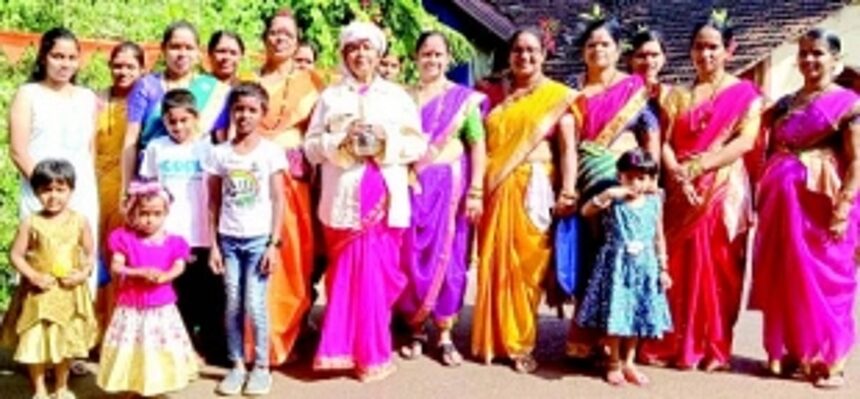
PONDA: The annual Dhalo celebrations were held in various parts of Ponda with traditional festivities. While Shigmo Festival is know as Men’s festival, the Dhalo is known as festival of and for women where they assemble to celebrate the dance at a common sacred place in village especially at the premises where a local deity is installed.
The Dhalo is and occasion for women to express and share their pain, sorrow and good times of life for which they wait eagerly. Through the festival the perform this folk dance by singing songs, and hold various other performances which showcase their various talents.

The Dhalo is especially held during late night when married and unmarried women of all age groups enjoys each others’ company. This is marked by dancing, recitation of folk songs for at least five continuous nights.
In Adpoi village the women celebrated Dhalo at various Dhalo Maands (place of celebration) at Khumnebhat, Vastawada, Tariwada, Gademaand and Kandebhat Dalo Maand. Before the start of festival the women take approval (Koul Prasad)of local deity God Ravalnath and then the Dhalo Celebrations begin and go on for four to five nights. On the first day the Dhalo begin with great enthusiasm by lighting the traditional lamp at the Dhalo Maand.
This is followed by the song Dhalo Ge Dhalani Kheluya. The women’s through their songs offers garanes, prayers to various local deities , including mother earth through invocations, urge and invite them to take part in Dhalo with them. Then various traditional songs are sung which go on till late night.
On the last night different songs, games, dances etc are performed by married women and also girls till dawn.
Also women show their acting skills by staging scenes from dramas. One woman also dresses up as male and goes to villagers asking for donation during the morning. This tradition is preserved by women since several years with great passion and they vow to continue and pass it on to future generations.