When garbage
becomes a problem, we seek a solution. The smart thing would be to prevent it
from becoming an issue. Prevention can only happen through education on proper
garbage disposal systems. Let’s look closely at how education becomes the key
role for garbage prevention
Goa’s garbage
issue has become quite a monster.
Garbage lying around, garbage unsegregated, and garbage not thrown for days;
these are our common complaints. If a place is cleaned up, it doesn’t take long
for it to be messed up again and that gets us back to complaining. If we are
fined for littering, we again complain. If those who litter are not fined,
that’s another cause for complain.

Can’t we simply
prevent these garbage problems? But in order to do so, one needs to be able to
understand the seriousness of this issue. And this understanding needs to be
developed with proper education. So it all comes down to education, doesn’t it?
Banglanatak dot com
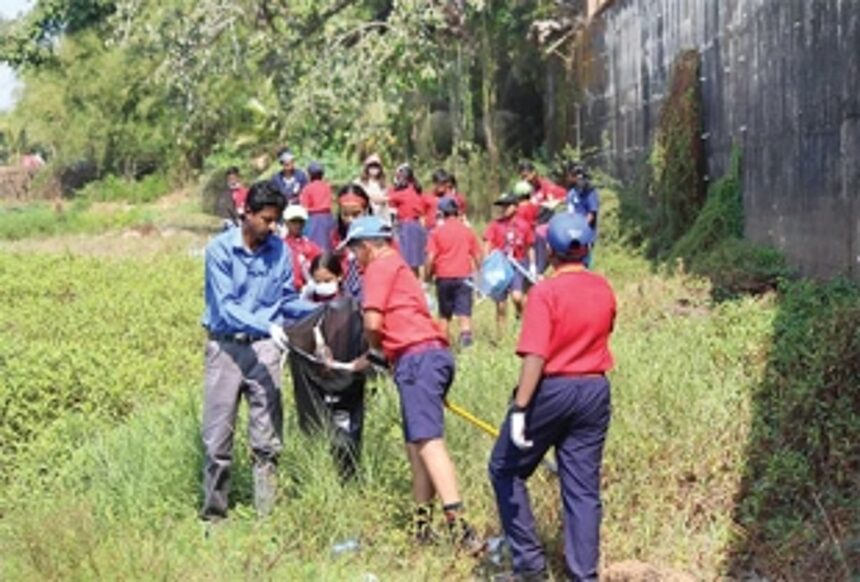
frequently organises multiple clean up drives across the North Goa beaches, in
collaboration with Earth Day Network India and with the support of other local
stakeholders. According to Rajyashree Mukherjee, of this social enterprise,
“Zero waste at source is one of the principles behind environment conservation.
Homes, schools and offices are source areas of waste. Therefore, waste
management from these source points are important. Students should be aware of
the importance of segregating garbage and a proper disposal system in the
school should be part of the education system.”
Because let’s be
honest, solving the garbage problem is not all about cleaning. Several
researches have suggested that when children are educated about something, they
pick it up in their daily habits. And the education they get should include
such practices.
Some schools have
already begun educating students on these matters. She also assures that though
positive results won’t be seen immediately and maybe not everyone will practise
it faithfully, the few who will take it seriously will pass it on to others and
the chain will continue. “Instead of grumbling all the time about the
municipality and government not doing anything about garbage, as educators, we
should take the initiative,” adds Antonet.
Education is also
necessary on an adult level, especially for uneducated people. Through
workshops in offices, demonstrations at entertainment spots and in one’s own
household, the message of healthy segregation should be passed on.
Interestingly, while
speaking to people, we learnt that there s a demand forbuins in public spaces.
Resident of Bicholim Rani Gaokar shares, “From officials to us common public,
everyone says we have to throw the waste in bins, but where are the bins in
public places? If I’m waiting near a bus stop and want to throw something,
where do I throw it when there are no provisions given?”
Hence,
while education on garbage disposal systems is necessary among all, so are the
provisions. Provisions are needed to practise the education given about garbage
disposable methods. Whether you provide bins in areas waste collection isn’t
upto the mark or have binless panchayats and towns where door to door
segregation collection has been perfected, the right education at te right
places, is non-negotiable