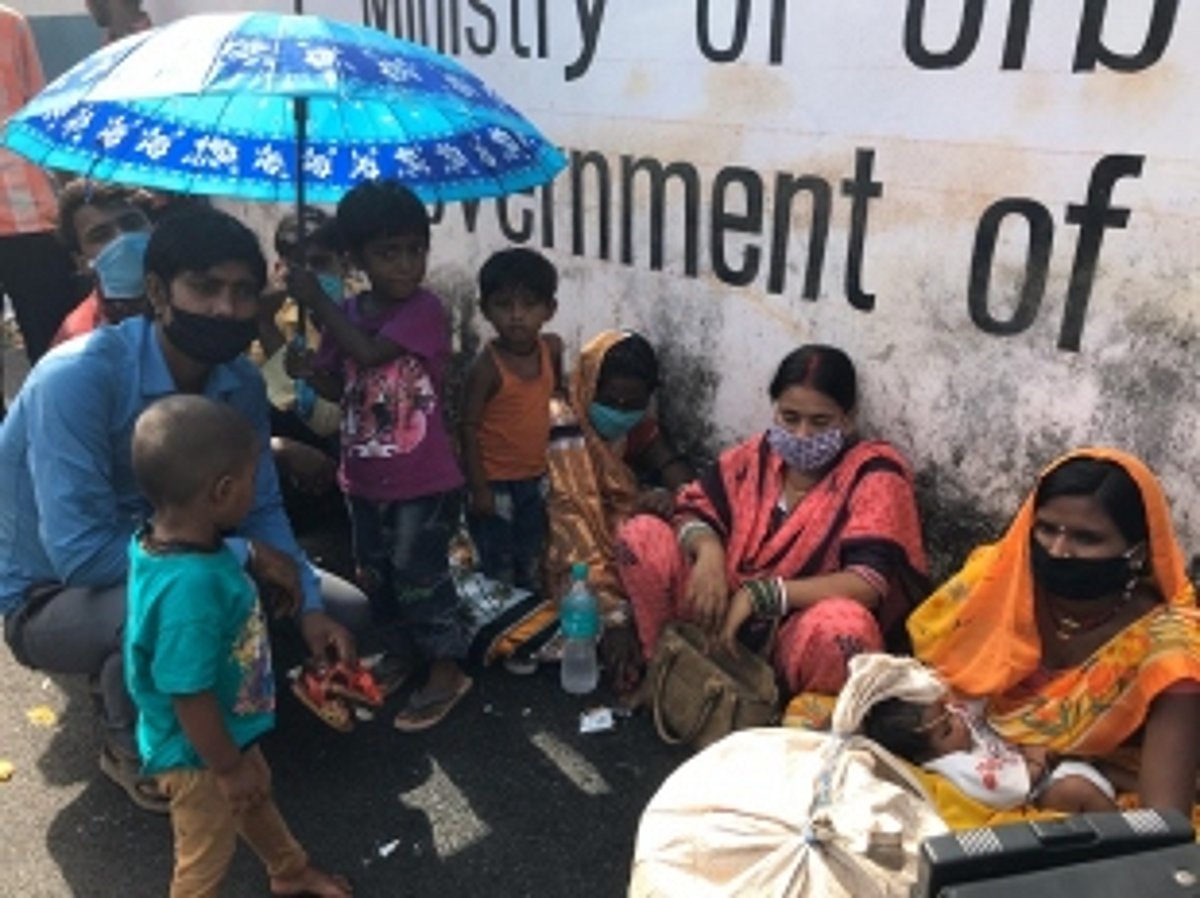
‘But this is varan-bhaat, a traditional and healthy food’, was a response to the criticism on social media of a meal served at one of Goa’s shelters for stranded workers – the pictures showed paper plates containing just rice and dal. The reaction, though, was not completely wrong. Varan-bhaat is indeed traditional among some savanas, and may even be healthy if you do little work and have access to other nutrition – as again is the case with savarnas. But does it work for all? Or does this not matter?
If this lockdown has exposed one thing, it is India’s even stronger tradition that some people just do not matter. It is because of this tradition that the lockdown – the strictest in the world – could be launched with zero thought on how daily wage earners, the majority of working people in this country, were to survive. In comparison, lockdowns in other countries saw governments targeting the poor with financial support and provision of essentials. Here the government saw its role as policing, platitudes, and Brahmanical rituals with plates, lamps and flower petals, even as desperate people started to walk home. Give money now, open the foodgrain godowns immediately, urged some observers, but the government instead spent lakhs to shower petals from the sky, sent planes to get rich Indians from abroad, and didn’t forget to write off bank loans worth Rs 28,000 crore of loans, a lockdown gift for its fat cat friends.

Such is the tradition of Brahmanism. Thus the huge delay in any official recognition of the ongoing disaster, followed by half-hearted and horribly-executed provision of food, shelter and trains to go home. Thus the Supreme Court – whose judges earn in lakhs on top of the many perks of the job – asked why migrant workers needed to be paid money if they were being given food. Thus the one consistent government response, from March till today, viz. the police lathi.
So, while savarnas relaxed at home without any worry about the future, having fun online and getting home deliveries, in touch with local authorities for every problem, getting riled up by the elephant death in Kerala and the murder of George Floyd in the US, lathis rained on bahujan heads just outside their door. Indian police are not militarised like the US police, but they still kill. When they were made an ‘essential service’ in the world’s most callous lockdown, what could result? A Muslim boy was beaten to death while trying to buy biscuits. Another youth had a police foot placed on his neck, for not wearing a mask. Many others faced similarly deadly violence, for similarly ‘breaking the law’.
Savarnas meanwhile managed to get all their work done ‘legally’, even inter-state travel in their own cars, from one home in a red zone to another in a green.
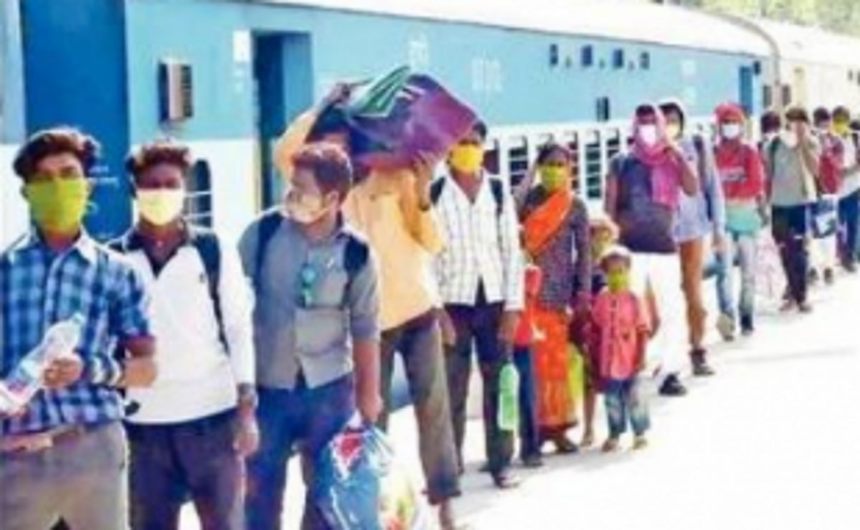
Goa too has been living up to this tradition. The special Shramik trains here have indeed been special: infrequent, announced with little notice and last-minute changes, often without provision of food, water, or functioning toilets, usually delayed, and with the ubiquitous police lathi in operation everywhere. Two travellers from Goa died on these trains, of the whopping total of 80 deaths admitted by the Indian Railways.
As for Goa’s shelters for stranded workers who are waiting for these trains to take them home, we’ve already seen the food – which itself only appeared after the Supreme Court woke up and intervened; before that, food was being provided by volunteers. The living spaces are also crowded and below par, in a state supposed to be knowledgeable about hospitality. But not for all, right?
The latest, on Sunday March 7, was the sudden eviction of shelter residents – using a lathi charge again, in which children were apparently hit as well – on the grounds that there was no more need for shelters since economic activities would resume in Goa on the morrow. Perhaps this explanation makes sense to some, like those who found nothing wrong with the varan-bhaat. Something as vague as ‘economic activities’ will resume tomorrow, so throw homeless and destitute people out on the road today. Why the hurry, pray? The shelter premises – Fatorda stadium – is hardly going to be in use soon, and even if it is, surely some of the hundreds of empty hotels in Goa could be taken over to shelter the homeless? But no. After all, they are just workers. This same government allowed Panjim’s casinos to encroach on public road space for months before action was taken. Freebies are only for fatcats; workers are lucky to even get their dues. Such is our culture and tradition.
And, before one forgets, one age-old aspect of this tradition is hypocrisy. So you have Cabinet Minister Prakash Javdekar wading into the uproar over the elephant death from eating food laced with explosives – apparently regularly used to kill wild boar who otherwise destroy crops – to declare that this was not Indian culture. Given that he also made the ‘error’ of placing the incident in Muslim-majority Mallapuram, when it actually happened in Pallakad, it is clear that he wanted to blame Muslims and also claim it as proof that Muslims do not have Indian culture. Attacking the minoritised has always been the method of choice to divert attention from the real problem, which in this case is Javdekar himself. The Minister for Environment, Forests, and Climate Change has been working overtime during the lockdown, at a time when no other Ministry was working, to clear a spate of environmentally-destructive projects, including two through Goa’s pristine Mahavir Sanctuary and tiger habitat. And that also when Section 144 was in force, and the courts were not working either, making it impossible for ordinary citizens to protest.
Which means even more wildlife robbed of their habitat and driven to clash with small farmers – who can then be punished for cruelty to animals – while Javdekar glories in his culture. Such is Brahminical tradition: social distancing, pure and savage.
(Amita Kanekar is an architectural historian and novelist.)