PANJIM: Goa promises of being a great solar energy destination. To see the light of the day, the Solar policy which has already been notified, will take nearly an year from now to have a full fledged effect on the ground.
Goa’s Minister for Power and Non-Conventional Energy, Pandurang Madkaikar told Herald, “We have notified the policy and now we are in the process of tendering document which is under preparation. It is a lengthy procedure and tendering process itself will take around 3-4 months and thereafter the plants will be installed and then the production will begin. I think at least one year will be required for its full functioning.”
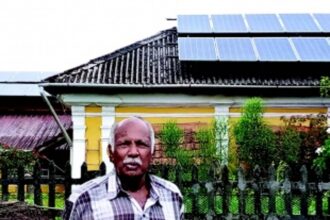
Sanjay Burman, an engineer and scientists after retiring as director of centre for artificial intelligence and robotics department of DRDO has installed a solar system in his house at Margao in his bid to reduce the carbon foot print for last five years. According to him, the issue which needs immediate attention by the Government of Goa is to have clarity on “net metering” concept especially for the prosumers (producer and consumers). Burman generates about 7.5 KW of energy but has a capacity to generate about 15 KW and this could be the largest solar plant set up at home in Goa.
Burman told Herald, “I have decided not to take any government support for setting up this and I want to get into the power purchase agreement with the Goa government, as has been done in Karnataka. I have invested on my own and have not taken or availed any incentives offered by the government. Implementation of the policy requires proper clarity on the roles of various departments within the power ministry. I had problems in getting this last mile connectivity and that is net-metering. I shall be glad if the issue is solved with state government can provide the net meters.”
Anish Sousa, founder and CEO of Sun360 who is into business of Solar energy told Herald that, “streamlining of grid connectivity, online application process by the state government is absolutely essential for the success in this field. Also the standardisation of bi-directional/solar energy meters and establishment of rate contracts for the same will be very useful for those who want to contribute to save energy program.”
Mario Abreu who owns Goa’s first solar shop since 2009, Surya Akshay Urja Shop at Margao feels that, “Goa has tremendous potential. Goa government should make solar power plant installation compulsory for all households to save energy. This can be done in every new and upcoming apartment blocks. In Karnataka it has been done and the state government only gives grid connections when they see that some solar energy plant has been installed in the complex. This will save lot of power.”