The biggest challenge the Goan IT industry is encountering today is the lack of a skilled resource pool in Goa who are equipped with latest technological expertise. Goa University still sits with a decade and a half old educational curriculum in engineering which needs drastic updating. The industry requires new technologies to be introduced in the curriculum so that the students passing out from engineering colleges are industry ready. Industry players have now taken the responsibility of bridging the gap in the curriculum.
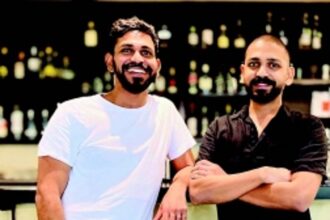
“We cannot expect big companies to come to Goa, when there is currently no source of talent which is available locally. To bridge this gap, we have now collaborated with a Pune-based Technical Training Institute ‘SSIT’, which aims to equip the students for industry which at present is lacking in their curriculum,” said Mangirish Salelkar, CEO of Umang Software Technologies.
SSIT in Goa will be a big initiative to make Goans Industry ready. It is one of its kind to introduce new edge technologies like, Perl, Python, iOS, Android, Big Data, Hadoop, Angular JS besides the basic programming languages like C/C++, Java, .NET and PHP.
SSIT does not guarantee placements, but guarantees to make the students industry ready.
“I am also proud to say SSIT will be Goa’s first Software Testing Training institute which will be having manual and automated testing for software, web and mobile applications,” added Mangirish Salelkar.
“We see a lot of students coming from Goa to Pune to do specialisation courses in Information Technology. They spend a lot of money on course fees, stay, local travel and food and I feel the tie up with Umang and setting up SSIT in Goa will save on overhead costs and we have also reduced the course fees for this region,” said Saurabh Kulkarni, director SSIT Pune.
Anjali Kamat, who head the SSIT branch in Margao says, “Within no time, we have strategic tie-ups with various IT companies in Goa like Genora, Kaavay, Inventrom, Kallows and SmartKlock to name a few. We are conducting courses which these companies demand; so definitely the job-seekers will benefit soon.” The institute has a dedicated placement cell, which coordinates with various IT and IT driven companies in Pune, Mumbai, Bangalore, Hyderabad and now in Goa.
SSIT aims to address not just to IT professionals but graduates in other engineering fields too. The institute trains on technologies and tools like MATLAB and Embedded Systems, which are useful for civil, mechanical and electronics professionals.
Also, IT professionals of Goa, led by Vincent Toscano and Sangeeta Naik have pioneered into a unique concept in Goa by taking the computer to village schools from standard 4 to standard 9. The journey to begin with, was tough as to garner sponsorships, was the biggest hurdle. But, since the intentions were noble, professionals in the IT sector started contributing for the cause.
Project GEIT (Goans Empowered with Information Technology), the flagship initiative of Goa IT Professionals (GITP), is the single most revolutionary people-driven change happening in the Goan school education system beginning last academic year. Project GEIT is now all set to reach out to as many Goan village schools as possible this new academic year with a nomination-cum-compliance based model.
GEIT also demands inclusion of the children-friendly, open-source “SCRATCH” into the Goa state board syllabus for school-level computer education from this academic year itself. The core team of GEIT had met the Chief Minister in this regard earlier and will pursue this matter again for its implementation.
“SCRATCH is a globally renowned platform used by millions of kids all over the world. Irony is that even kids in Pakistan are using it but we in India have been very late in adopting it. Also, in terms of IT education we are way behind as compared to other states in the country,” said Vincent Toscano, vice president of Goa IT Professionals.
GEIT used a cost-effective micro-computer based solution called, Raspberry Pi2 (RPi2), to fix the dead CPUs in these schools and successfully conduct their camp on MIT’s (Massachusetts Institute of Technology, USA) child-friendly “SCRATCH” programming platform. Each RPi2 kits costs approximately Rs 4500 and can completely replace the traditional bulky and delicate CPUs while reusing the existing LCD monitors, keyboards and mouse in the school computer labs.
Also, the RPi2 needs no air conditioning unlike the traditional CPUs and the open source software it uses is fully license free. For the approximately 350 schools to which the Goa government had provided 10 PCs it would cost barely Rs 1.58 crores to replace all the dead CPUs with RPi2 kits and revive the nearly dead computer Labs across Goa. This is a high returns, minimal investment for the benefit of Goan students.
“Instead of teaching just clerical stuff like Microsoft Office to our children and they whiling away so much of their time on computer games Goan kids need to be formally introduced to computer programming in order to reveal to them the true power of controlling a machine or device. For the sake of our future Goan generations prospering right here in Goa, we demand that the Goa government takes the bold step of introducing “SCRATCH” programming in the school syllabus immediately,” added Vincent Toscano.