SHANTI MARIA FONSECA
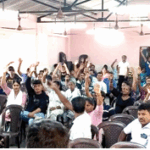
A social movement which moves the passions and gives expression to people’s anger can at best be termed as a “Revolt.” On the other hand, a movement that changes people’s collective vision and reshapes the socio-eco nomic and political institutions enjoys the hallmark of a revolu tion. Social movements have been reshaping the world for as long as civilisation has existed. In recent times, with the rise of social media, the connectivity between people is ‘one-click-away.’ Undoubtedly, so cial movements have been instru mental in bringing about profound changes in the world. From voting rights, to engendering political up heavals, change in regimes, ensur ing social equality and according recognition to the various rights in society. Movements can change well-entrenched mindsets and in stitutions. Movements for social justice, at their very core, challenge those in power. Such movements are powerful art works when vi sionary leaders and charismatic groups come together to challenge the system and solve problems which neither one person nor a single institution can singly tackle. Successful social movements make the impossible possible. Goa is small, its land is finite, its rivers, lakes, forests, and coastline are fragile. For decades, Goans nurtured this precious landscape with care, building homes and livelihoods in sync and harmony with nature. Today, that balance has been shattered. Hills are being torn apart. Traditional village set tlements are disappearing under concrete. Rivers once used for fish ing are choked with pollutants and construction debris. Fertile fields are being converted into real estate projects. While there is no single formu la for success, the essential com ponents like vision, hard work, knowledge and strategy play a sig nificant role in shaping one’s jour ney towards building a path-break ing social movement. But qualities like perseverance, discipline and resilience must endure. Having a visionary core group and a strong support network is very essential. As we study the social movements in the 21st century, one of the ex istences is the paradox between peoples’ participation and tangible results. Isn’t it easier than ever before for people to get involved in today’s era? I can send out one tweet or a viral hash-tag and hun dreds of people come out. While on the other hand, it’s much hard er than ever before to ensure their active and committed participation on the streets. A social movement without the active support and participation of the people is still-born: No matter how good one’s ideas are, unless they are incarnated in the commu nity and permeate the rank and file and blessed with a clinching strategy. The collective power of the people standing united around a common vision for change is ter rific and immeasurable. To build support, it’s imperative to speak to people’s hearts. Successful so cial movements are ecosystems, not empires. They gain power by growing and expanding their base. A movement is as powerful as the people who back it. So you need to have a strong message and a way to communicate it to those who care, listen and are inclined to fearlessly act once convinced. Many move ments experience backlash as they begin to succeed. Power-holders and those resistant to change will infiltrate such movements only to fight back to maintain the ‘sta tus-quo’ by finding fault-lines, hoisting counter-movements, launching misinformation cam paigns, and trying to discredit the leaders. On January 6, 2026, a call was given to assemble at the Menezes Braganza Hall, Panjim to protect the state from land sharks, stop the corrupt practices and bring accountability in the bureaucracy as well as hold the government ac countable to safeguard the identity of Goa. The gathering in the Hall was more than a protest against the government’s specific policies. It was also a stand against the decay of democratic values in Goa. The air carried a single, powerful chant: “Enough is Enough” – “Anik son sum nejo”. This is not the voice of a political party, nor the slogan of any election campaign. It is the col lective cry of ordinary citizens who have decided that their beloved homeland cannot afford to lose any more of its soul. A 10 point people’s charter was adopted reflecting the general consensus. The same has been presented to the Chief Min ister of the State Pramod Sawant, who has publicly assured that the government would do what the people want. Land is the bedrock of Goan identity, inseparable from who we are as people. Without our hills, forests, rivers, plains, fields, sand dunes and beaches, Goa ceases to exist. People have demanded the withdrawal of the Amendments to the Town and Country Planning Act. Goa is hurtling down a peril ous path. There will be nothing left for ‘In ter-Generational Equity,’ because there will be no Goa. A lot of social movements mistake mobilising for organising. While mobilising goes well with harnessing people’s out rage, organizing, on the other hand, is transforming peoples’ capabili ties of the “outraged” to decisively make the changes they want. Goa has spoken clearly and she must be heard. A long overdue initiative: “ENOUGH IS ENOUGH” has begun to unite people to fight to preserve Goa’s fragile land and marine ecology. Is there trans parency and accountability in Goa anymore? On 1st December 2025 the MLA of the ruling party was served a demolition order on his Hotel from the High Court. Not a stone has been touched, while the hotel continues to run in full ca pacity. When laws/rules/Court Judgments are not implemented, Goa’s green environment is under rampage. The conversion of nearly three lakh square meters of land at Arambol is not an isolated incident. The land conversion stretches along 1.5 km of a hill from a private forest to settlement zone. The unchecked development in ecologically sensitive areas of the state has impelled Goans to lodge their strong opposition to the un planned, illegal and uncontrolled land conversions. While star hotels and row-houses get uninterrupted water supply and electricity, villag es in Goa are starved of water and power supply. The tragedy of loving Goa but not standing up for it with an at titude: “Amkam kideak podlam” (Why does it matter to us)? Is precisely what is pushing Amchem bhangarachem Goem to a point of no return! Sitting in a hall full of applause does not tantamount to standing up for Goa. Actions must speak louder than words. That is what the politicians will be looking at in the next 14 months with elec tions round the corner in March 2027. Most of us look at Goa from an existential, horizontal perspective. Over the years, Goa has morphed into a global village with the atten dant trappings. A case in point is the casinos. Goa and its positioning can be linked to Gaza in Palestine. The American establishment looks at Gaza as a piece of real estate while Gazans are their victims of genocide. Goans on the other hand are subjected to similar displace ment through the machinations of their political leaders and the rul ing establishment. It is unfortunate that many Goans in Goa have not realised that the situation unfold ing in Goa is similar to the aliena tion of lands and homes of Gazans in Palestine! The displacement of Goans from their land is also an outcome of mass immigration of Goans. While ‘sorrowing lies my land’, a banquet is laid and a feast is celebrated by those in power and those who come to nestle and live on our land. Needless to assert: We need to look at the situation of Goa from a holistic and global point of view which includes migration of toilers into Goa to fill the vacuum created by Goan immigration. Let’s acknowledge and appre ciate the fact that over the dec ades there have been innumerous movements and path breaking successful struggles in Goa to save Goa’s environment, land and ma rine resources. In a recent meeting Justice Ferdinand Rebello (Retd) alluded to Gandhiji’s three mon keys: representing the principles of ‘Hear no Evil’; ‘See no Evil’ and ‘Speak no Evil”. Drawing a par allel, he likened the present day situation to the three monkeys of Mahatma Gandhi’s lore, that the politicians are deaf, the judiciary blind and the Goan people dumb/ silent. Will the existing BJP dis pensation surrender to the de mands of the movement “Enough is Enough”? Meanwhile people are eagerly awaiting the removal of the offshore casinos and repeal of amendments in the TCP Act. (The writer is a social scientist and a Sr. practicing criminal lawyer).