AAKAR PATEL
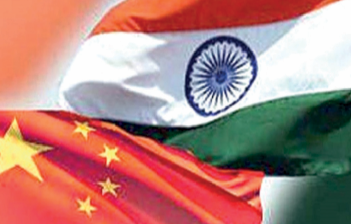
My generation (I am 56) grew up on the expectation that India would compete with China and become one of the world’s great powers in our lifetime. This confi dence was felt by us, it was spoken about in politics and it was written about by the world’s journalists. All through the 1990s, and the 2000s, for two decades, this sentiment remained. Yes, India was growing a little slower, and yes, India was not industrialising as China was, but it was only a matter of time before it caught up. One famous writer compared the two nations’ futures and said China’s road to develop ment was smooth but with one giant bump on the ho rizon, which was the tran sition to democracy. India’s road was pot-holed but it had no major obstacles to development. This turned out to be both simplistic and totally wrong. At some point, I think this happened in the last decade or so though it could be a little later, it was realised that all the forecasting was off. India would not rival China as an economic power or a great power, meaning one that is able to influence the world. We would not follow the path of other Asian nations like Japan, Korea, Singapore and China into prosperity for our citizens. We would continue as many nations do, with the majority remaining poor by the standards of the world (India’s per capita GDP is one fourth of the world’s average). The ambition fell away from my generation, which spent more than 30 years of adulthood in ‘post liberalisation’ and was in the position to arrive at conclusions based on our lived reality. The ambition fell away from politics as well, and we can see that India has returned to com peting with Pakistan and Bangladesh, and this is where we are most com fortable and where our na tionalism really blooms. The writers of the world also realised that we were not comparable to China and the cover stories that put the two nations on the covers and feature sto ries of The Economist and The Wall Street Journal no longer appear. There is a second realisa tion that dawned on those who observe India and this has also come in the last decade. All this time, it was assumed that while it may be the case that India was not delivering the ex pected economic miracle, it was still democratic and because of that fact it was distinct. The second realisation was that India has moved away from democracy and individual liberty towards a mix of electoral autocracy and straight-up authoritar ianism. As an activist and a liberal, it may be expected that I would say such things and so it is important to look at it from the perspec tive of those who study and classify states. Four years ago, the gov ernment of India took of fence when an American think-tank classified India as being ‘partly free’ and Kashmir, which it classified separately, as ‘not free’. The government’s re sponse was to put out a press release which said: ‘Many States in India un der its federal structure are ruled by parties other than the one at the national level, through an election process which is free and fair and which is conducted by an independent election body. This reflects the working of a vibrant democracy, which gives space to those who hold varying views.’ This was dishonest. The report had two parts. The first, which was given 40 per cent weightage, was on political rights. Here India got a score of 34/40, in cluding full marks for free and fair elections, Election Commission impartiality, freedom to start political parties and opportunities for the Opposition to in crease their power. In this part, India did not get full marks on whether voting was unhampered by vio lence and unaffected by communal tension. This is hardly arguable. In fact, the government even got 3/4 on transparency, which was probably overgenerous. The government response was therefore merely re peating what had anyway been conceded. Where India’s rating was hurt was in the other 60 per cent, for civil liber ties, which are also a part of freedom. Here it per formed poorly (33/60). On the issues of freedom of expression, freedom of religion, academic free dom, freedom of assembly, freedom for NGOs to work (the report named the gov ernment’s attack on my or ganisation Amnesty Inter national India specifically), rule of law, independence of judiciary and due pro cess by police, India’s rat ing was poor. But the scores merely reflected reality. When another report, this time by The Economist Intelligence Unit, down graded India to a ‘flawed democracy’, the govern ment sought details of the parameters though the re port itself clearly says that the ‘primary cause was an erosion of civil liberties’ and introduction of religion into citizenship. It should be noted that these reports are from a few years ago. After them has come the era of bulldoz er justice and the current disenfranchising crusade mounted by the Election Commission of India. Cur rent assessments of India as a democracy under rule of law will be worse than the ones the government took objection to. On the other hand the government no longer ob jects or even responds to such reports. It has become inured to criticism from outside, as it has become to criticism from inside. Like the realisation of the failure of development, we have also internalised the failure of democracy. It is what it is, as those of us who are old enough know. (Aakar Patel is a writer and columnist)