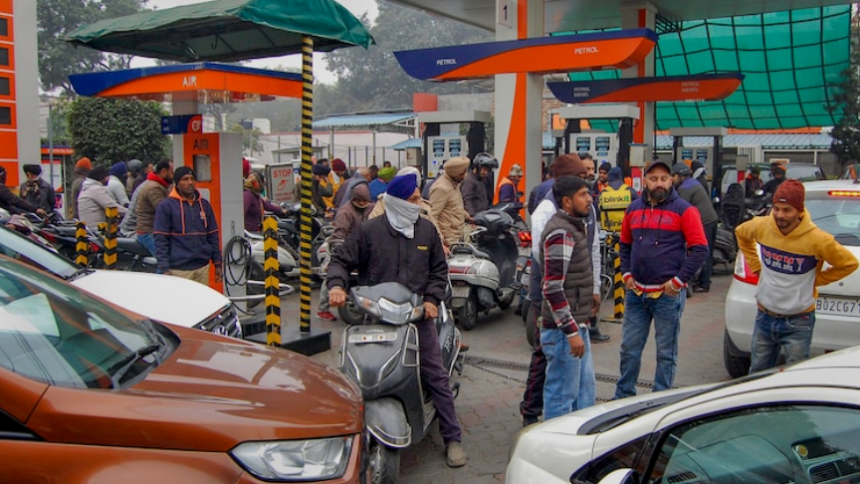
Starting October 1, vehicles across Delhi-NCR without a valid Pollution Under Control (PUC) certificate may be denied fuel under the ‘No PUCC, No Fuel’ initiative.
In Delhi, the drive will be implemented in “mission mode” at around 500 fuel stations equipped with Automatic Number Plate Recognition (ANPR) cameras. Fuel stations that fail to enforce the requirement may also face action.

The measure is intended to discourage vehicles without valid pollution certificates from continuing to operate on the roads. The fuel restriction is being implemented across the National Capital Region under Direction 101 of the Commission for Air Quality Management (CAQM).
However, questions remain over whether possession of a valid PUC certificate necessarily indicates that a vehicle is a low polluter.
According to Amit Bhatt, India Managing Director of the International Council on Clean Transportation (ICCT), a valid PUC certificate does not necessarily mean that a vehicle is emitting low levels of pollutants.
The PUC test measures specific emissions from a vehicle under prescribed testing conditions. While it serves as a mechanism to identify vehicles that exceed specified emission limits, it may not capture every aspect of a vehicle’s real-world emissions.
This raises questions about what the existing PUC system actually measures, what it may fail to detect and how those limitations could affect efforts to control air pollution in Delhi-NCR.
With the ‘No PUC, No Fuel’ rule coming into force, the effectiveness of the PUC system is likely to remain an important part of the wider debate over vehicle emissions and air quality in the region.
(This story is published from a syndicated feed)