Pio Esteves
The 5th All Goa Inter Collegiate/HSS Tiatr Competition 2025-26 organized by the Tiatr Academy of Goa (TAG) concluded with the participation of six institutions across Goa.
Three colleges from north Goa, namely St Xavier’s College, Mapusa, CDT’s Srinivassa Sinai Dempo College (Aut

onomous) Cujira and Kala Academy Goa’s College of Theatre Arts, Campal, Pana
ji and three colleges from the south, namely Parvatibai Chowgu
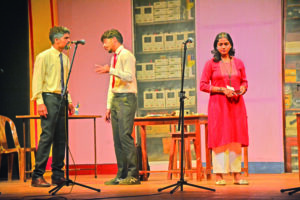
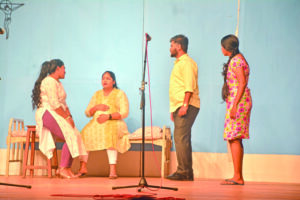
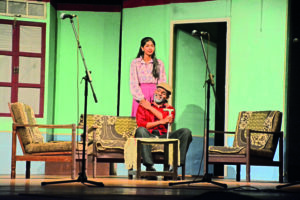
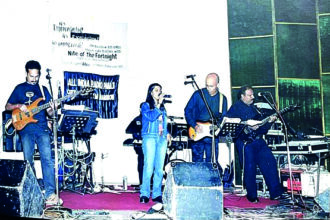
le College Arts and Science, Margao, Rosary College of Commerce and Arts, Navelim and Carmel College of Arts, Science and Commerce for Women, Nuvem actively participated in the annual competition. There was a display of varied talent on stage in the form of songs and enactment.
When tiatr competitions are organized at the school and college level, it provides a platform to showcase inborn talents, thus providing an opportunity to scale greater heights in the field of tiatr. It also gives the commercial tiatr directors to pick up raw talent and later mould the amateurs int
o good tiatrists.
Apart from mesmerizing stage sets and light effects on stage in some presentations, there was ample display of natural talent in the form of singing and acting. One of the institutions hired a director from the Marathi drama, while another institution had their own professor as their director.
Hiring a director from another field sometimes helps the institution in polishing their tiatr and giving a fine presentation on stage. Their presence and instructions provided during rehearsals help mould the artistes as per the characters provided to each of them.
In this year’s college-level tiatr competition, there were three tiatrs which were penned specifically for the competition and the efforts of the writers need to be lauded. This initiative only helps in the creation and growth of new tiatr writers, with thoughts out of the box.
But in the same competition it was noted that at least three tiatrs which were presented earlier at Kala Academy’s tiatr competition in previous years were staged again by the students. A clause in the rules and regulations listed for the college/HSS tiatr competition permits presentation of previous tiatrs, provided permission is sought from the concerned writer/director.
But when this clause continues to exist, creativity as far as writing, penning a new tiatr specifically for the competition is lost forever. It does not bring out to the fore new tiatr writers, with creative minds and theatrical art display.
This aspect needs to be encouraged by the TAG in the near future, so that students and teachers from the institutions get an opportunity to bloom as tiatr writers. Attempts in that direction will only help many to get first-hand information and knowledge about tiatr script-writing.
A workshop by the TAG for the participating institutions just before the competition would go a long way to encourage inborn talent, as far as script-writing was concerned. It would also help creativity to flourish among the participants.
As far as themes were concerned, some colleges focused on old or common subjects pertaining to family life, education and society, but the presentation and display on stage was good. Others carried good and relevant topics, but due to poor direction did not live up to the expectation of the audience and ju
dges.
Quoting Vince Lombardi ‘Perfection is not attainable, but if we chase perfection, we can catch excellence’, Fr Luis Gomes, who penned, directed tiatr ‘Purple’ and which bagged the first prize at the competition, said, “though it was a competition, but we expected from the students excellence. True success comes from doing our best, regardless of the outcome and students’ hard work, dedication and teamwork shone through every scene and every song.” “Our students didn’t just p
erform,” he continued, “they brought the story to life with passion, focus and creativity. This experience has shown that when we aim for excellence, we rise above challenges and give our best
. Let this be an inspiration to keep pushing boundaries and striving for greatness in everything we do.”
“This victory is a reflection of students’ hard work, teamwork and love for the Goan stage,” Fr Gomes said, “our aim was not merely to win, but to present a meaningful story with artistic excellence and this recognition truly belongs to every student who contributed on stage and behind the scenes. “We are grateful to TAG for providing a platform to nurture young talent and our college for its constant encouragement and support for the performing arts.”
Tiatr ‘Dennem’ presented by the Carmel College of Arts, Science and Commerce for Women, Nuvem, and written, directed by Fr Doel Dias picked up the second prize at the competition. “It was a privilege to helm a production that sought to weave together the cultural richness of Goan tiatr, with contemporary thematic relevance,” he said. “Conceived and staged under the banner of Carmel College, tiatr ‘Dennem’ was an artistic exploration of conscience, resilience and the silent strength of belief in the face of diversity.
“This tiatr was not merely a performance,” Fr Dias said, “but a reflection which crafted to provoke thought, stir emotion and honour the enduring legacy of our local theatrical tradition.” He extended his deepest gratitude to the cast, crew and the institution, whose dedication and creativity brought this vision to life.
“We faced major inconvenience due to the unavailability of the hall in the morning, despite prior allocation. This delay left very little time for stage setup, lighting, and specially the sound arrangements. As a result, the performance suffered from sound issues that affected the overall presentation. We express disappointment over the unfair and illogical results declared after the show. Poorly performed tiatrs were surprisingly rated higher than deserving ones. It was dishearteni
ng to see borrowed scripts being awarded over original creations,” says Fr Roman Rodrigues of Rosary College, Navelim, who penned Tiatr ‘Circus’.
He further adds, “While the award for direction was announced, no recognition was given to actors or overall team performance. The pattern of awards raised questions about the transparency of the judging process. Even the number of awards announced did not tally with the overall performance results. Participants felt that the entire evaluation seemed manipulated and undermining the true spirit of the competition.”