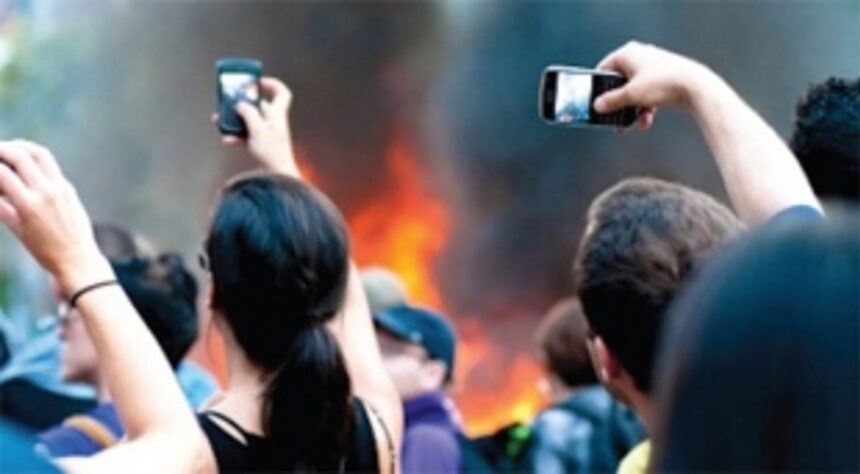
Once upon a time, to be a journalist you needed a crew with expensive and heavy equipment. Now,
everyone has a smartphone in their pocket and that pretty much makes them
technically equipped to gather news. The rise of the citizen journalist is
helping bring more information than ever to light. But it also comes with its
own risks and challenges – how do we verify what we are seeing? There have been
major changes in the field of journalism, such as the rise of social media
users, bloggers and individuals reporting as citizen journalists. Social media
has opened the door for anyone to share information with the public regardless
of their actual job or who they are.
Prajakt Barve, a journalism student from
Margao, says, “Citizen journalism, I believe, has changed things around quite a
bit. It is impossible for accredited journalists to be at the crime scene at
all times. And In a world where it is extremely important to have visual
evidence of the act of crime, capturing an incident on one’s smartphone fills
that gap. The video footage of the Sanguem cop kicking an innocent person,
captured by an individual, is the latest example.”

But what actually is journalism? Who do we
call a journalist? Until recently, the answers to these questions were clear in
that a journalist is usually a person who collects and writes news or other
current information and distributes it to the public. However, in today’s
technological world, we find a large number of people who claim to be
journalists.
On one hand, citizen journalism is changing the way news is
reported. It is obvious that not everyone, especially social media
personalities, is qualified to report on news or events, but people still
follow those on social media and believe what they say due to their quick
sharing of information. But on the other hand, citizen journalism cannot be a
source of information at all times since the citizen is reporting information
based only on his views and personal beliefs.
As
observed in abundance these days, a lot of fake news has plagued the online
world. Citizen journalism, therefore, can be extremely dangerous if left
unchecked and unverified. Deepak Correia, a digital media professional, says,
“We are living in a digital world surrounded by myriads of information. Sadly,
there is a lot of false, fabricated and untrue information circulating on the
internet. Some fabricated information is going viral on social networking sites
and people believe such information as they don’t have proper media literacy.
In such a situation, it is of paramount importance to uncover what is true, and
what isn’t. I feel that fact-checking organisations that fight fake news are
the future of journalism in India.”