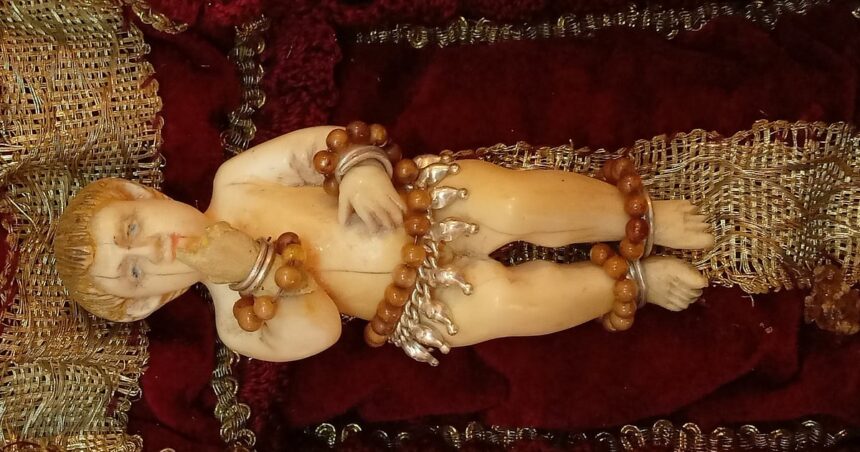
There are notable similarities between Goan and Sri Lankan Catholic Art, particularly in the context of Catholic sculpture. These similarities are deeply rooted in historical interactions and shared artistic influences.
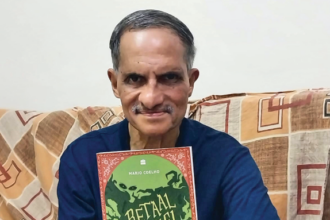
The authors of the comprehensive research book, ‘Ancient Catholic Sculptures of Sri Lanka’ are Lindamulage Romein Nimantha Silva BMS (HONS) MBA (UK) and Warnakulasooriya Thilina Yohan Rodrigo. Their dedication to documenting Catholic art and sculptural styling is evident in their comprehensive research. Mr. Romein Nimantha Silva is a Catholic art enthusiast from Sri Lanka who owns a family business. He is currently pursuing studies in European sculptural arts in Italy, which complements his expertise in the field. Warnakulasooriya Thilina Yohan Rodrigo works with the Basilica Pontificia di Sant’Antonio di Padova in Italy and is studying Renaissance art. Their experience and studies further enrich the research presented in the book. The book was compiled based on their self-directed research and the valuable knowledge provided by their teachers: Fr Giuliano Abram, Fr Adriano Zorzi, Fr Hist Salvatore Ruzza and Fr Amerigo Afonso. The process of putting together ‘Ancient Catholic Sculptures of Sri Lanka’ took over six years, which began in 2018. It was a comprehensive and meticulous project that spanned over quite some time, during which quite a few challenges were encountered, particularly during the COVID-19 pandemic. The pandemic period posed difficulties in accessing resources, conducting field research, and collaborating with others. Despite these setbacks, the project continued to progress, and the team worked diligently to overcome any obstacles and complete the book.

Statues located in museums across Sri Lanka were often found to be decayed or in poor condition. This deterioration made it difficult to obtain clear images and thus accurately assess their historical attributes and origins. Capturing clear and detailed photographs of some statues posed a challenge, particularly when the condition of the statues was compromised. These difficulties hindered the ability to determine precise details about the statues, such as their age and artistic style.
Many of the historic Catholic statues in Sri Lanka are Indo-Portuguese in origin, reflecting the significant impact of Goan and Kerala art on Sri Lankan Catholic sculpture. This influence is evident in the stylistic elements, considering the craftsmanship of the statues, which often mirrors the artistic traditions of Goa and Kerala. The implementation of Passion Play statues in Sri Lanka during the 18th century was facilitated by Goan Oratorian priests. These statues, depicting scenes from the Passion of Christ, were introduced to Sri Lanka as part of the Catholic liturgical practices and showcase the direct influence of Goan artistic traditions.
One of the major hardships faced while carrying out the research was that, many of the statues in churches were vested, and church members were often reluctant to uncover them or provide clear photographs for the sake of documentation. This limited the ability to study and document these important artifacts thoroughly
Romein Nimantha Silva