
So we finally have a book on economics in Konkani. And it’s not on the economics of Konkani.
That’s another book altogether. This is, significantly, at the cost of
reiteration, the first economics book on Konkani. And it couldn’t have been
timed better. For goans, the clutter, jargon and confusion over so many
economic terms and processes, the fundamentals on which our country runs and a
key issue in the Lok Sabha elections, will be cleared with this book written by
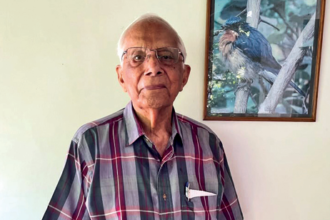
a Goan professor , eminent scholar and Principal of the ISBM College of
commerce Pune, Dr. Vaman R. Naik.
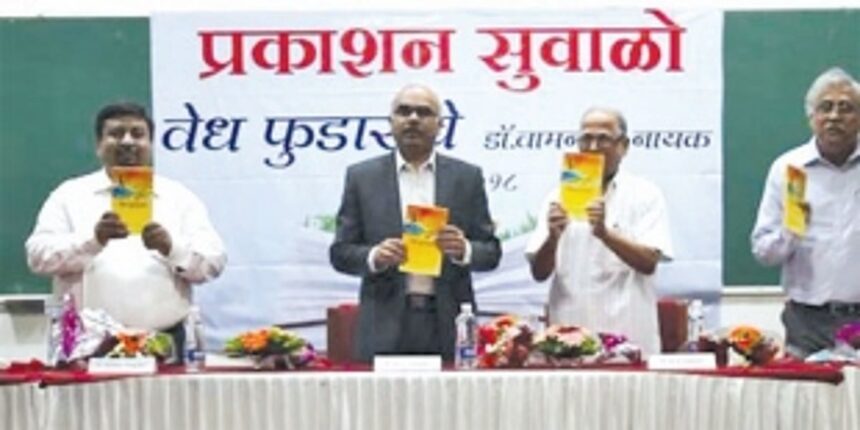
The book “VedhFudarache” was released by
Pro VC, SPPU, Pune, Dr. N.S. Umrani at the Chemistry Department of the
University. Pro VC gave number of examples to show how terminology and
knowledge provided in common language is easily understood by students and
others.
While we toast the book, the fact that it
so long for a book of this nature to be written, is itself a cause for lament.
Konkani is the official language of Goa. It is with the eighth schedule of the
constitution, for over 25 years. As official language, it needs to develop in
all spheres of official requirements at administrative level, besides in social
sciences law, administrative office procedure etc. These aspects need to get
priority. It is reliably learnt that National Translation Mission does not find
suitable writers who can translate classical books in Konkani.
Speaking to the Herald, the doctor said it
was very important for a book to be written on economics in the local language.
This book he said explained all the aspects of the Indian economy in very
simple language. The preparation of the budget which was a very important
exercise was explained which would be very helpful for everyone.
This book covers the subject of subsidies, the share market. The
book also deals with foreign investment, the process, increase flow of FDI in
India and the problems encountered in the process.
The book is not purely academic but also covers, administrative and
practical aspects like share market, its operation, how the share index is
calculated etc. Since is it first book in economics, it deals with banking and
privatization of insurance etc.
The topics like black money and measures to curb black money and
problems, subsidies, types, do they reach the deserving cases etc is analyzed.
India is the larger consumer of gold in the world. Why people invest in gold in
India and liberal gold policy is discussed.
In the socialist regime public sector was the back bone of the
economy, its importance is on the decline. Autonomy is given to some sector via
Navratnas. There is also debate on privatization and relevant issues are dealt
with. The Role of infrastructure, roads, ports, powers, railways, highways is
highlighted. Their position in India vis a vis globally is also analyzed.
Besides
issues like bank privatization, rupee convertibility, RBI autonomy, MNC, credit
rating, planning process in India, from Yojana to NITI Aayog have been dealt
with. The book also analyses the role of the different sectors of the economy
and how the service sector like IT companies, banking, insurance etc and the
role played by them.