Elsa Angel Rose
Following the footsteps of Australia, Andhra Pradesh is also planning to introduce a social media ban for children under 16 years of age. It might be beneficial and a visionary move if such an initiative could be introduced in Goa as well. Not just children, but whoever is present in social media (active or not) to a huge extent is subject to cybercrimes, including cyberbullying, identity theft, sextortion, stalking, online grooming and more. But children, being of a younger age, are more gullible and hence susceptible to such crimes.

A First in India? Andhra’s Social Media Curbs for Children
The Andhra Pradesh home minister, Vangalapudi Anitha, recently announced that the state government has constituted a group of ministers to examine the feasibility of restricting or banning access to select social media platforms for children under the age of 16. She stated that the committee, led by IT Minister Nara Lokesh and including ministers such as herself and Health Minister Satya Kumar, will review approaches adopted by other countries to implement the most suitable model. This particular step is inspired by Australia’s move to ban social media for children under 16 years of age.
In December last year, the Australian government, led by Prime Minister Anthony Albanese, imposed a ban on children under the age of 16 from accessing leading social media platforms, including TikTok, X, Facebook, Instagram, YouTube, and Snapchat. As part of this first-of-its-kind move, minors are barred from creating new accounts, while existing accounts held by those under 16 are required to be disabled. On the sidelines of the World Economic Forum (WEF) in Davos, the Andhra Pradesh IT minister said, “Youngsters below a certain age should not be on such platforms, as they do not fully understand the content they are exposed to. Thus, a strong legal framework may be required.” Should the measure be implemented, Andhra Pradesh would be the first Indian state to introduce curbs on children’s access to social media platforms.
Social Media: An Ultimate Villain for Children
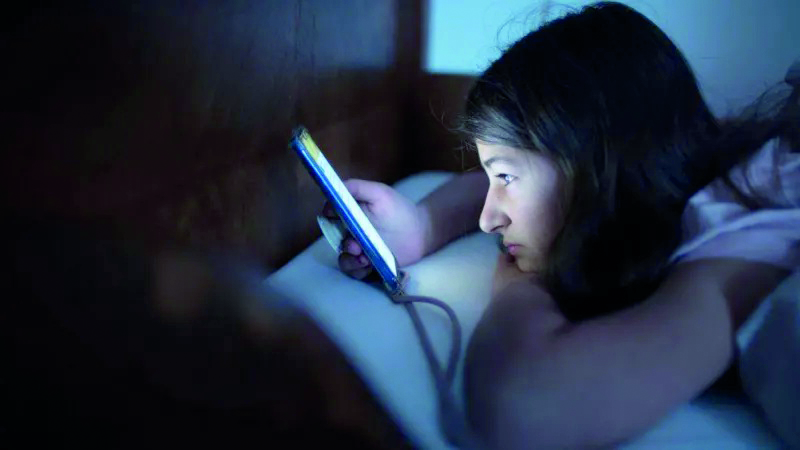
“A lot of times, social media can negatively affect children since they are still learning about themselves and the world, and constant exposure to social media can put unnecessary pressure on them. They are more likely to be influenced by what they see online and may not always understand what is right or wrong for them,” said Advocate Natasha Ramesh Kerkar from Saligao. Not just looking through another person’s life and what they are doing, but majority of crimes takes place through the online medium. The 24 year old advocate explained, “Children are exposed to many negative things on social media, such as cyberbullying, body shaming, and unhealthy comparisons with others. They may come across violent or inappropriate content that is not suitable for their age.” Children are also made to be subject to mental health issues such as increased anxiety, low self-esteem, addiction and more, which in turn disrupts their sleep and other everyday aspects of life.
Tallulah D’silva, a parent, shared her concern, “I feel that today, when younger children, especially below 16 years, use a phone or device with no limits or censorship, it becomes a window to a world where they may be too young to understand what they are exposed to. There is the dark web, gaming, gambling, substance abuse and a lot of bullying on online chat groups, making it a very vulnerable and dangerous space. That is why I think children need to be protected.”
Academic Performance Takes a Hit

Teachers were able to notice the detrimental effects of uncontrolled social media use on their students. Dr Aida Dourado, a sociology teacher from Salcete, said, “Lack of sleep disturbs their class concentration, brings more mood swings and thus lacks overall well-being. They can get into the wrong direction depending on the type of social media the child gets involved in and thus may bring disaster to the institution, family and to themselves as well.” Other negative effects with respect to academics include experiencing poor health and strained relationships with teachers and people around them, becoming disinterested in academics, and a lack of clear goals or direction.”
Will a Social Media Ban Actually Help Children?
In today’s children, something huge that is missing is that they do not want to enjoy reality, or say things that are actually three-dimensional. Tallulah said, “Children are spending less time outdoors and having fewer sensory and living experiences. More and more children are leading sedentary lifestyles, using phones, laptops and computers, and spending long hours on the internet. This is why I believe that a limitation or ban would help children experience real joy in their young lives, which is an important reference point.”
Not just parents, but even teachers think that such a ban would be impactful. Aida said, “I would be very happy if such a ban is introduced and implemented in our state as well for students under 16 years of age.” But the implementation should not be abrupt, the teacher added, “If the implementation is abrupt, it might bring negative consequences for the child, as the child might be addicted to the same.”
Bhagyashri Naik, another teacher from Curtorim, said, “Today, kids are introduced to smartphones at an early age, and it’ll be difficult to get them out of it. And even if it looks easy, practically it’ll be more challenging. Children will become more curious about phones, and they’ll eventually use their parents or friends phones.” Regarding the positive changes of a social media ban, Bhagyashri opined, “Children might focus on textbooks and stop scrolling mindlessly.” Greater emphasis should be placed on regulated usage and digital education, where students are taught how to use technology productively and responsibly.