It is that time of the year when the sounds of dhol, tashe and kasale
reverberate across the state for the annual Shigmo celebration. The traditional
Shigmo celebrations that take place in the villages of Goa actually end with
the festival of Holi, following which, the annual parades of Shigmo begin.
Shigmo marks the beginning of the spring festival and the end of the
winter season. The people of Goa celebrate it with colours, folk music and
dance. This year, the Department of Tourism, Government of Goa is celebrating the
festival at 17 centres. The parade, which commenced yesterday in Ponda, will be
held in Vasco today, and then at Valpoi on March 16, 2017 followed by Bicholim,
Panjim, Margao, Curchorem, Dharbandora, Quepem and Cuncolim from March 17 onwards.
Sanguem and Shiroda will witness the parade on March 24 and Canacona and Tivim
on March 25. The parade will then be held in Mapusa on March 26, before concluding
at Pernem and Sanquelim on March 27.

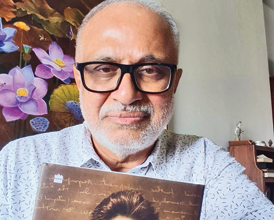
Nitin Mardolkar, an Indian classical musician from Mardol, gives
insight into the festival and how it is still steeped in tradition. He has been
a part of the festival for more than 50 years and has witnessed the inception
of the Shigmo parades by the Government of Goa. However, he is happy that more
groups are joining in the celebration every year, keeping it lively and
colourful.
On Navami, the ninth day of the Phalgun month of the Hindu calendar,
villagers gather and visit each house in the village with the Tulsi plant,
praying and invoking blessings. Traditional musical instruments are repaired
and tuned in time for the festival. The first day of Shigmo begins at the Mahalasa
Temple at Mardol and ends on the festival of Holi. As per tradition, once the
instruments are placed back in the temple, they are not to be touched again.
However, with the competitions that are attracting the youngsters towards
this traditional festival, this practice has now been altered and the
instruments are returned to the temple after being used for said competitions.
“The traditional Shigmo that is held in the villages consists of only
groups of men; women are not allowed to play any instrument or join the
procession. But for the annual parades at the centres and cities, women take
part and dance the Fugdi and other traditional dances,” says Nitin, who
will be representing the Haddiya Waddo in Mardol. Interestingly, each group
consists of hundreds of men and more than 20 groups participate in the village
of Priol itself. These groups than participate in various competitions.
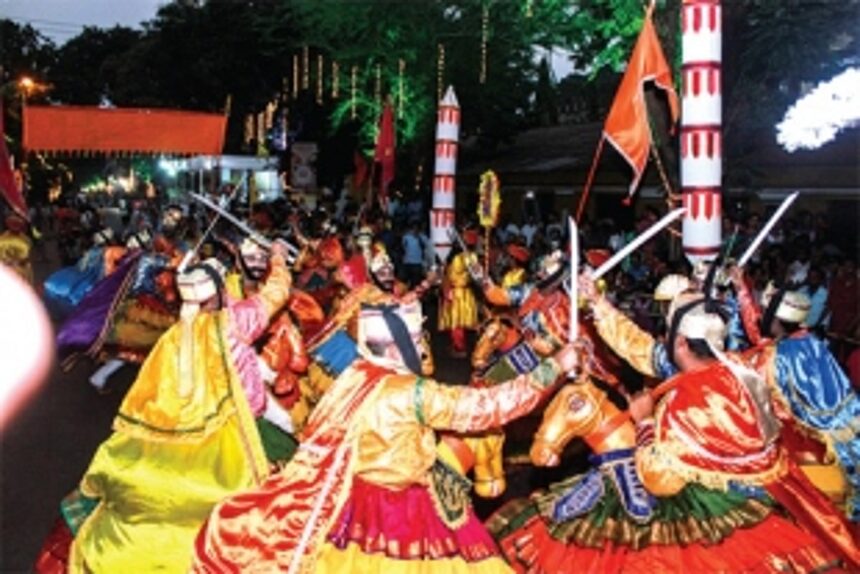
For the city parades, the festival is celebrated with folk dances like
Dhalo, Dahlo Fugdi, Goff, Ghoddemodni, etc that are danced to the
beat of dhol, tashe and kasale. Inspired by the Bhagavad Gita,
Ramayana and Mahabharata, the floats recreate the victorious fights of the Gods
against demons and other mythological stories, all brought to life with
creative effigies and light and sound effects.
Tarang or flags lead the traditional processions along with the name of the village
and the deity. They are followed by satrio (colourfully decorated
umbrellas), haftagir (heart-shaped decorations), and the men dressed in orange
fetea (turbans) playing different musical instruments. “The younger
generation follow in the footsteps of their elders and join in when they are of
age. They don’t require any formal training or practice; the beat is in their
body. All they do is observe and learn. Those who play the instruments well are
kept exclusively to play them, while the other are part of the procession,”
says Nitin.
Speaking about how Shigmo has been kept totally away from any form of
commercialisation, he says, “The festival of Shigmo is celebrated to remember
our ancestors and how these customs have been passed on from generation to
generation. From the clothes we wear (traditional dress of dhoti, kurta and
fetea, a Goan styled orange turban) to the instruments we play and
dances we practice, everything is traditional; these are things we already have
and know.”