‘We didn’t start the
fire, it was always burning’, are the lines from Billy Joel’s immortal song.
Put it in a Goa context and it was true. The fire was always burning within
Goans when it came to causes for the land and fighting for justice and what is
right for individuals. However with incidents of violence against locals and a
political betrayal of the highest order due to massive defections, greeted with
silence, we ask, has the fire gone from the hearts of Goans? Has it stopped
burning?
Where is the anger within? Where is the fire? Where is the “josh”? And this not needed to
bring about regime changes or decide on the fundamentals of Goa, like its
official language or a merger with Maharashtra, but simply standing up and
fighting for justice against violence, or corruption or against political theft
and robbery like mass defections from one party to another, butchering peoples
mandates.

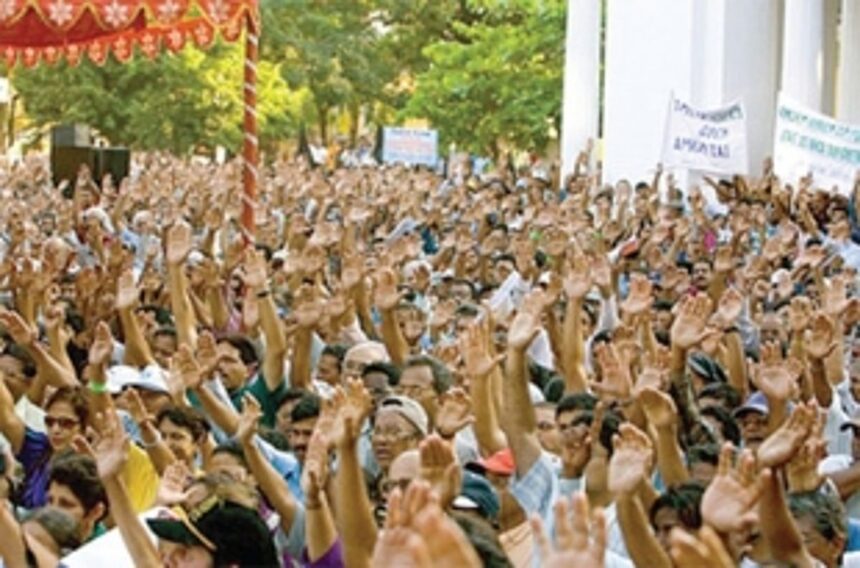
Goans remember the days when the Lohia Maidan and Azad Maidan
used to be full of people fighting for a faulty regional plan or the medium of
instruction imbroglio or to fight for Special Status in Goa. A few generations
before this will obviously remember the opinion poll, the language agitation,
the agitation against meta strips and the one fighting for bus fare concessions
for students
Once upon a time in our Goa, people were furious. Not violent or
destructive but furious to the point of sacrificing self or self-interests for
the cue of Goa. There is an absence of this positive anger. Or josh (energy)
Are we afraid? In Goa today, even if there is a protest, it goes
on for a short period, few people, a press conference, and then it’s over.
That’s how much we have changed
“Goans used to be united. It all starts with what family we come
from, earlier there were joint families, now with nuclear families in the
society, we have learnt to take care of one’s own needs. We have become
self-centred; this is why we hesitate to care about things happening in our
society,” says Vinayak Naik, editor in chief, Goa Today and a veteran who has
documented Goa for decades
But the absence of josh is not limited to just major agitations
and causes. It extends to something as little but equally important like
lending a helping hand when a fellow human being is in trouble, is attacked, or
beaten or simply in an accident
Advocate Moses Pinto reminds that there is something known as
the Good Samaritan Law. The Good Samaritan law can be plainly understood as a
circumstance that when one offers help and assistance then legal protection is
afforded in the eyes of the law to those people who give reasonable assistance
to those who are, or whom they believe to be, injured, ill, in peril, or
otherwise incapacitated.
In certain cases, when there is a violent attack taking place
amidst them, then most people would tend to mind their own business, not
because they don’t want to help, not because they are not mindful of what’s
happening, but if they do, then they would most likely become witnesses to a
crime, or might become victims themselves if their attempts to intervene as
unsuccessful.
Sometimes, there have been incidents reported to the Police,
which are later taken up before the Criminal Courts, where witnesses are
cross-examined. They are afraid that events leading to the offence may be
imputed to them, thus naming them as abettors to the crime, though they may be
entirely innocent,” says Moses.
Hence what would be an easy option for them? Stay away from
incidents which seem like they will end up in the commission of a crime.
However, the fear lingering in our society to stand up and voice
against such crimes is due to the lack of Social organisations. “Basically,
earlier a lot of social organisations and committees used to work for the
society, taking up their issues, therefore people could look up to them. Today,
that’s dead, now we have only NGO’s and NGO’s often take up only particular
issues,” says Journalist and Editor Sandesh Prabhudesai.
He also assures that people are upset, but there is no social
organisation to lead them. Long ago, there were also a lot of social movements,
“There is a difference between agitation and movement. A movement is for a long
period of time because it keeps on moving.” So there may be agitations, but no
movements.
Agreeing to that opinion, Advocate and law lecturer Cleofato
Coutinho points out factors leading to the non-reactive society we are in
today.“It is the effect of urbanisation. A lot of incidents occur which involve
third parties, and people don’t want to be involved in these matters. Strong
communities do not exist anymore in our society,” he states. And simultaneously
we have become a place where there are no movements, “even journalists are not
speaking up much as they should,” he admits.
Going deeper, social activist Abhijit Prabhudesi says, “Lands of
are being Goa being destroyed. People do protest even today, fishermen, farmers
are all fighting for their rights. Therefore they don’t have the time to
protest for individual crimes,” informs Abhijit Prabhudesai, member of Rainbow
Warriors.
But perhaps the biggest transformation that has happened in Goa,
is that many Goans have simply moved out of Goa. Sough Goa, or specially
Salcete, which was the hub of most citizen’s movements has seen a massive and
continuing exodus of people from villages to the UK and elsewhere, on
Portuguese passports. The population profile and demographics have changed
completely. And those who remain are either too old to have the ‘josh’ or too
young to remember the past and are caught with 21st-century boxes to tick-
work, career, financial stability, to actually give time to Goa. And this
disconnect is the biggest reason why the people of Goa, who forced the
government to maintain the checks and balances are not in the forefront.
So
it’s time to well and truly ask, where’s the josh, Goans? For now, it is
missing.