SAMIR NAZARETH
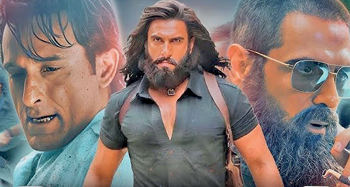
While Dhurandhar crosses Rs 1000 crore at the box office, Akshaye Khanna who earned Rs 2 crore for his much-appreciated role as Rahman Dakait was let go by the Drishyam III team because he had hiked his fees. Jaideep Ahlawat re places him. It goes to show that performance is contex tual and may not pay rich dividends. Not being a film critic, I was unable to appreciate Di rector Aditya Dhar’s ration ale, early on in the movie, of having the Ajit Doval look alike character stand alone with his hands in his pocket in front of IC 814 at Kanda har airport waiting for jeep loads of terrorists. Not be ing on this hijacked plane, I cannot say whether anyone shouted ‘Bharat Mata ki’ waiting for the terror-strick en passengers held hostage for eight days to patriotical ly roar ‘Jai’. Neither do I know wheth er the terrorist onboard said ‘Hindu bahut hi darpork kuam hai’ (Hindus are a very cowardly community). What I do know is that if this Ajit Doval based character was smart, he would have retorted that it was India that carved Bangladesh out of Pakistan and trounced Pakistan in the bargain. Will Dhar’s false claims based creative liberty have an impact on Indians in the everyday? Let’s not forget the consequences of PM Narendra Modi’s claim of Indians having a slave men tality because of 1200 years of slavery. When Indians wound each other Watching Dhurandhar brought home the reality of religious hate. The scene where Major Iqbal, Rehman Dakait, Khanani brothers and others shout slogans as they watch the 26/11 attacks took me back to slogans like ‘Desh ke gadd aron ko goli maro saalon ko’ shouted by our politicians. How different is the men tality of Major Iqbal heart lessly telling terrorists to kill Indians as they are ka firs from so-called gau rak shaks lynching Dalits and Muslims? Are such actions not just a few degrees less strident than Indians telling their fellow citizens they are anti-national. The movie also highlight ed the now forgotten role played by the electronic media during 26/11. TV re porters, trying to out-per form one another in relay ing the incident live, aided the terrorists. The perfor mance of the electronic media today is no different. Their performative report ing and language surely do not do the country good at the very least. From history to myth making Dhurandhar, is the next step after Director Vanga’s Animal. The blood and gore in Animal created the ma choistic and masochistic mood of the film. The blood and gore in Dhurandhar are the basis for nationalism. Undoubtedly, Dhar has revolutionised the art of nationalistic movie mak ing. At the very onset, he protects himself and his art, by declaring the movie is not based on facts and is neither a documentary. However, he has used news clips and audio recordings of various terrorist inci dents to give fiction a halo of veracity. The truth is art fully cherry picked, Dhar glosses over the role of the early Bharatiya Janata Par ty (BJP) government and blames other governments for weakness. He has bril liantly created the environ ment and anticipation for the coming of the ‘Messiah’ and ‘Karmayogi’. By bring ing in the counterfeit ru pee angle, Dhar provides a much-needed shield to pro tect Prime Minister Modi’s aura and legacy from the sully of his ‘demonetisation debacle’. India has progressed from WhatsApp Universi ty and one-sided news to re-education and rewriting of history through enter tainment. This is a win-win for everybody. Bollywood by kowtowing to govern ment spiel ensures they are in the government’s good books. The govern ment gets a new avenue to spread its agenda and regurgitate it ad nauseum. Finally, Indians who believe they are hampered by the ‘slave mentality’ as diag nosed by PM Modi and re iterated in these movies are pumped up by the reprieves such movies provide even as their reality remains bleak. Bollywood earns in millions; the government is further empowered to deflect accountability and gets re-elected, and citizens have reason to gloss over the quality of their lives. Self-inflicted wounds are especially lethal Ranveer Singh’s Hamza whispers ‘ghayal hoon isliye ghatak hoon’ (I am wounded therefore I am dangerous/ lethal), which we later learn is what is told to him by the Ajit Doval character. This is a form of rationalising the ob jectification and weaponisa tion of Ranveer’s experience in an earlier life in India. Something similar is cur rently happening in India. Indians have been told their psyche has been wounded by Mughal rule, a colonial past, Macaulay, Gandhis and the Congress, left-wing his torians and so on. They are being shown that the only way to heal this wound is to punish those who oppose the government or its Hin dutva ideology, and those who have nothing to do with the past but love their coun try enough to voice their concern. In the movie and in var ious online commentaries mention is made of ‘the new India’. So, what exactly, is this new India? According to what has been written, and what the last decade or so has shown, the new In dia exudes brash unapolo getic bravado. National pride corralled in religious terms has become the norm and is expressed unreserv edly. This form of pride has now reached India’s armed forces. Other expressions of this sentiment are hounded out. Interestingly and quite unabashedly, the new India points to wounds inflict ed by the weak, including nations, and then cele brates retaliation against them. However, India re mains silent on the trauma caused by those that are stronger. Perhaps today the wounds and trauma of Parti tion and communal riots are less egregious than those allegedly caused to mod ern India by what occurred hundreds of years ago when this land was ruled by Hin du kings who fought each other and finally lost to the Mughals who then lost it to the colonialists. What does the future hold for Indians when Bollywood churns out cherry-picked facts-based rage bait movies? Is this the Don Quixote-isation of the country? (Samir Nazareth is an author and writes on socio-economic and environmental issues)