Death of a Doctor – the untold IVF story
Disgraced and discredited the pioneer of IVF in India killed himself says DR GLADSTONE D’COSTA, F.R.C.S.Ed.

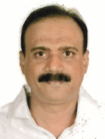
On the 19th June 1981, Dr. Subhas Mukhopadhyay hanged himself in his residence in Kolkata. At the time, the incident went unnoticed in medical and political circles. In 2002, the ICMR in the process of drafting the “National Guidelines for Accreditation, Supervision and Regulation of ART Clinics in India” acknowledged Dr. Mukhopadhyay’s contribution to the field of In Vitro Fertilization (IVF).
The recognition was challenged, but withstood scrutiny and debate, and in 2005, the claim was upheld in a public function in Bangalore. His name is now included in the Dictionary of Medical Biography published by the Welcome Trust Centre for the History of Medicine at UCL, London. This lists 1100 medical scientists from 100 countries, who have made path-breaking contributions to medical science. So who was Subhas Mukhopadhyay, and how did this tragedy unfold?
He was born on the 16th January 1931, in Hazaribag, Bihar and graduated from the National Medical College Kolkatta. There followed a brilliant academic career, with a PhD in reproductive physiology from Calcutta University in 1958. Dr. Mukhopadhyay went to the U.K. in 1960 under a Colombo Plan scholarship, worked at the Royal Infirmary, Edinburgh, and got a PhD from Edinburgh in reproductive physiology in 1967. He then joined the Nil Ratan Sircar Medical College, Kolkata from 1967 to 1975, as Lecturer, then Reader, and later Professor in Physiology. There were numerous paper presentations, orations and scrolls of honour at national and international seminars along the way.
On 3rd October 1978, he announced the birth of India’s first test tube baby; 67 days after Edwards and Steptoe announced the birth of Louise Brown in the U.K. Notwithstanding the contrary opinion expressed by Macnamee of the Edwards team at the Bourn Hall Clinic, Dr. Mukhopadhyay’s technique was independent, and differed from theirs. He used gonadotrophin to stimulate the ovary, the trans-vaginal route to harvest the ovum, and for the first time used cryopreservation techniques for the embryo.
The work was presented at the International Congress on Hormonal Steroids in New Delhi in 1978 and the Indian Science Congress in Hyderabad in 1979. Unfortunately, he was at the wrong place at the wrong time. The Left government had been in power in West Bengal for more than a year, and a Cambodian style pogrom was initiated against him.
He was labelled a fraud, and an enquiry committee set up. Curiously the committee consisted of a psychologist, a physicist, a neurophysiologist, and a gynaecologist and presided over by a radio-physicist. Whereas Edwards and his team in the U.K. got approval for their research from an Ethics Committee, Mukhopadhyay worked in an era where the culture of ethical permissions for research did not exist. The enquiry committee asked him to prove his claim.
Till date there is no test to differentiate an individual born from IVF from one born without intervention. All he had was his detailed clinical records. The committee refuted his claims and dubbed them fraudulent. When he was invited to Kyoto, Japan to present his work, the government denied him permission and revoked his passport. He suffered a heart attack in 1980, and was transferred to the R G Kar Medical College. Later he was again transferred to the Eye Department of the Calcutta Medical College in June 1981; a subject he was totally unfamiliar with. Unable to cope with the humiliation, contrived adverse publicity and disgrace, he ended his life on 19th June 1981.
The matter lay there till 1997. Professor T C Anand Kumar the Director of ICMR and former head of the Institute for Research in Reproduction, KEM Hospital, Mumbai, had spearheaded the team that produced the test tube baby of 1986. He was in Kolkatta attending a Science Congress, and was handed the papers related to Dr Mukhopadhyay’s work, which included meticulous hand-written notes.
There followed intense research, detailed analysis and reassessment of his work, including an interview with the parents of Kanupriya Agarwal (nicknamed Durga) the baby born from Dr Mukhopadhyay’s work. He concluded that the work was indeed genuine and in a supreme gesture of magnanimity expressed his convictions publicly and at professional forums.
This eventually translated into Dr. Subhas Mukhopadhyay’s reinstatement in the medical world as the pioneer of IVF in India. It remains a tribute to the greatness and courage of Kumar to research his predecessors’ findings and present them to the world with the sole purpose of restoring his honour; an honour he could have easily claimed for himself by merely keeping quiet about Dr. Mukhopadhyay.
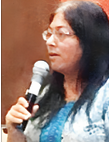
All this brought little comfort to Namita Mukhopadhyay, Subhas’ wife. Living for the past two decades in a small room crowded with books and his equipment, in a fifth floor flat in Southern avenue, Kolkata, Namita is paralysed from the waist down. Her only companion is Professor Sunit Mukherjee, a cryobiologist and the only surviving member of her husband’s team.
Namita remains very bitter about the government’s refusal to permit her husband to travel to Japan to present his work for peer scrutiny, thereby denying him the opportunity for scientific recognition. When interviewed, she stated that they postponed starting a family as he wanted to complete his research first; and when this was rejected, he was extremely depressed and withdrawn.
What of Kanupriya Agarwal or Durga, the test tube baby? She completed her MBA from Symbiosis, and is now in Delhi working as a management consultant. Durga finally broke her silence in Bangalore when Dr. Mukhopadhyay was officially recognised for his work. When interviewed, she said “I certainly do not want to be a poster girl for the IVF industry which undermined Dr. Mukhopadhyay’s achievement for 30 years. I am not a trophy but I am proud to be the living example of the work of a genius”. The family had been caught in the crossfire and had to tolerate tremendous humiliation and pressure, from which her parents fortunately shielded her. There were insinuations and innuendo of the worst kind; but the family held together, and Durga grew up into a responsible, mature individual. “I feel truth has prevailed” she said.
The events of Dr Mukhopadhyay’s life formed the theme of an award winning film by Tapan Sinha entitled Ek Doctor Ki Maut based on a story written by Ramapada Choudhury a journalist.
History is replete with tales of scientific genius being hammered down by ignorance and bias. But today the pendulum in medical science seems to have swung to the other extreme. There is a perpetual race to parade patients before the media; and claim expertise in surgical procedures that have been around for decades, based on one case. Let us hope we can mature to a happy medium between such grossly unethical behaviour and driving a genius to suicide.
(The author is a member, National Executive Committee, Voluntary Health Association of India)
++++++
How I saved the Games
By Anthony J Simoes
What is it about sporting venues in Goa that they always get bogged down in controversy? That is the question I put to our Sports Minister Babu. “What are you talking about?” he asked. “You have heard of my all-encompassing formula – PPP?” PPP is public-private participation, he told me, but some uninformed people think ‘PPP’ is encouraging a child to drink its milk, or do the old Sooo!
Now there was no stopping Babu. You know I am building a sports city in my constituency, Dhargal, using the PPP route, he said. Just hang-on, I replied. I thought 2011 was a non-starter. You are really slow, he said. I am looking at the 2019 Asian Games and the 2020 Olympics. You’ve got to be joking, I said. Your Pernem colleagues in the House oppose the Sports City. The farmers in your constituency are up-in-arms, because they are to get irrigation water from Tillari…
Don’t worry about that, he said. Politics, after all, is the art of the im-possible. It’s about wheeling, dealing and stealing. I earlier opposed the Mopa airport, while the other two MLAs opposed the Sports City. Now I support the Mopa airport, and they support the Sports City.
What about the farmers, I asked. Babu looked at me pityingly. In politics, he said, it’s called ‘give and take’. We ‘give’ the farmers a couple of kicks on their butts and ‘take’ away their land…
Hang on a minute, I said. The 2019 Asian Games and the 2020 Olympics are going to be held in New Delhi, using Commonwealth Games (CWG) infrastructure. Babu had a good, long laugh. You are obviously not aware of what went on behind the scenes in the preparations for the CWG. Just when nothing seemed to be working, I helped Suresh Kalmadi to salvage at least some of his reputation, what with all those scams, frauds, misappropriation, falling roofs, loose tiles, leaky walls, toilet rolls @ Rs4132 each…
What did you do sir, I asked breathlessly. He started counting his successes on his fingers. This is what he said:
(1) There were at least 40 young, strong Goan weightlifters in New Delhi who had failed to qualify. I asked them not to come back. They were at the main stadium holding up the roof which was threatening to collapse.
(2) A number of old heritage Portuguese houses in Goa were being demolished to hand over land to our fearless builders. We salvaged the tiles to send to CWG for their swimming pools.
(3) Our PWD contract labour was deployed in Delhi to fill all the potholes. They were not needed in Goa because the roads here have become an extension of the potholes.
(4) To soften the financial impact of the expensive CWG toilet rolls at the CWG, we sent GMC staff to New Delhi, to show the Delhi-wallahs how to make use of both sides of the toilet paper.
(5) Our cricket administrators taught the CWG organisers how to print and sell duplicate tickets to increase their revenue.
Here, I changed tack and asked Babu how he could be so sure of having things under control in 2019/2020, since he may not be around. Oh, that is no problem he said. Lots of land has been bought up in Dhargal. Suresh Kalmadi and his cronies will build huge gated communities and five-star hotels with Olympic-size swimming-pools, stadium-sized jogging tracks and 18-hole golf courses.
Where will you get the water for all this, I asked. Oh that, Babu said, will come from Tillari. There will be no farming. Farmers all over the country are committing suicide. You think our Goan farmers want to join them?
Some of the people coming from Delhi will be Lucky to own Farmhouses. With this kind of Lucky Farmhouse ‘gotala’, our people can forget Atala. Ravi Naik will be at peace. The Crime Branch will be disbanded, and Digambar will go to Apollo Victor for world-class surgery to separate him from his chair.
That’s why Goa is the No: 1 state in India. Everyone benefits, because we cover all angles; like Sunita Sawant did during the Mickky / Nadia fiasco.