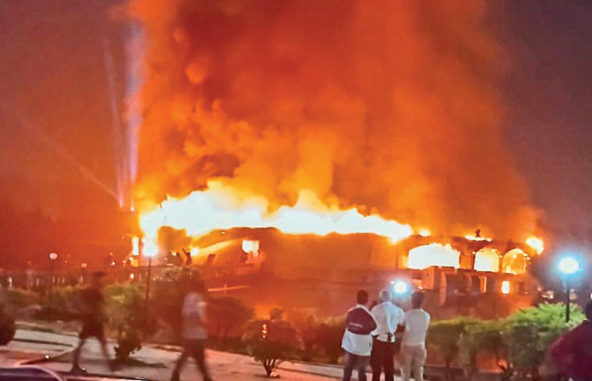
The inferno that tore through Birch by Romeo Lane, killing 25 people, has forced Goa to confront an uncomfortable truth: This was not simply a tragedy caused by one irresponsible establishment. It was the culmination of a deeper collapse in governance, oversight, and the very foundations on which the state’s tourism economy now rests. A nightclub without a fire NOC, without basic safety systems, operating in a wooden structure under a demolition order, should never have been able to welcome a single guest. That it functioned openly, profitably, and with impunity until the night it turned into a death trap shows how dangerously hollow our regulatory framework has become.
In the aftermath, the Chief Minister announced a state-wide safety audit of all night-time establishments. The decision is correct, but the timing is damning. Why did it require the worst man-made tourism disaster in Goa’s history for such a basic measure to be initiated? A safety audit — annual, predictable, and mandatory — should have been a cornerstone of tourism regulation long ago. Announcing it only after lives have been lost makes it appear less like a policy decision and more like a reflexive response to public outrage. Safety cannot be treated as an afterthought activated by tragedy; it must be embedded in everyday governance.
Equally troubling is the decision to seal Romeo Lane, another establishment run by the same owners, immediately after the Arpora blaze. The question is not why it was sealed — an inspection of its record shows previous controversies and violations. The question is why it was spared for so long. Why did regulatory mechanisms that remained inert for years suddenly swing into action only after a catastrophe at a different venue? And why do legal processes that seemed insurmountable earlier pose no obstacle now? Such selective enforcement raises legitimate concerns about whether rules apply consistently or only when politically convenient.
This is why Goa’s tourism policy requires more than incremental tightening; it needs a comprehensive re-imagination. Acting against violators will certainly cause short-term losses, and some operators will argue that the industry cannot survive stricter norms. But the truth is the opposite. Tourism built on illegality and neglect is unstable and damaging in the long run. A temporary dip in numbers is a small price for a safer, more credible, and more sustainable tourism model — one that protects not just visitors but the state’s own people.
In many ways, the fire is only the most brutal manifestation of a deeper breakdown in how tourism is regulated in Goa. Unplanned growth, uneven enforcement of environmental and construction norms, and a licensing system whose credibility has eroded all point to structural failure. This dysfunction is also reflected in the everyday experience of tourists. The long-running hostility of taxi operators towards app-based ride-hailing services — often resulting in visitors being overcharged, intimidated, or left stranded — has damaged Goa’s reputation far beyond what officials admit. When vested interests override public interest, and the state fails to enforce rules fairly, both residents and tourists suffer. Sustainable tourism cannot coexist with a governance vacuum.
The erosion of Goa’s coastlines, mounting waste-management pressures, increasing congestion in tourism belts, and the growing resentment among local communities only deepen the sense that the model has drifted far from balance. Beaches are shrinking, public infrastructure is strained, and environmental damage is accelerating — even as new ventures mushroom with little regard for carrying capacity. These stresses diminish the very qualities that made Goa an international name: clean beaches, natural beauty, cultural character, and a sense of ease. A tourism economy that degrades its own assets is not sustainable; it is self-defeating.
The Arpora fire must therefore become a turning point — not a headline that fades once the inquiries conclude. Accountability must extend beyond the owners of one establishment to the officials who enabled, ignored, or normalised non-compliance. The state must commit to transparent licensing, routine audits, enforceable penalties, and the political will to stand up to powerful interests when public safety is at stake. Goa owes this not only to the victims who died in the blaze but to its own future.
If Goa acts with courage and clarity now, this tragedy can reshape the state’s tourism model for the better. If it settles for cosmetic measures, then Arpora will not remain an exception — only the most recent warning.
Fire, failure and the long-overdue tourism reset