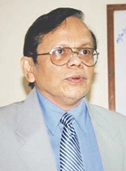
Kandolkar’s move is politically important as he was among the contenders from the BJP for the Mapusa ticket for the by-elections. He quit the party a day after BJP announced that Joshua D’Souza would be their nominee in Mapusa, to retain the seat held by his father for almost two decades. While there is no confirmation that Kandolkar would get the Congress ticket from Mapusa, the heavyweight delegation of the Congress that welcomed him on Sunday evening indicates that his new party would not be averse in fielding him to challenge the young D’Souza.
If it does, then the by-elections in the State are going to have a rather farcical quality to them. BJP has already announced two Congress defectors – Subhash Shirodkar and Dayanand Sopte – as their candidates in Shiroda and Mandrem. Though Congress has not announced their list yet, former BJP MLA Mahadev Naik is the likely candidate in Shiroda and now there is the possibility of Kandolkar getting the Congress ticket in Mapusa. What happens to the loyalists in the parties, if new entrants are rewarded with party tickets? Can the parties – both in this case – expect their workers to shoulder the responsibility of keeping the party afloat at all times, but then be ignored when it matters most?
This, however, is not a new phenomenon in Goa, or even in India. Across the nation there are reports of individuals changing sides as the country enters the elections phase. Last week Sujay Vikhe Patil, the son of Congress leader and Maharashtra leader of the Opposition Radhakrishna Vikhe Patil had defected to join the BJP. This prompted the senior Vikhe Patil to resign as leader of the opposition. Before him there was Tom Vadakkan, who was a spokesman for the Congress and was considered to be close to Sonia Gandhi, quit and joined the BJP. These are just two examples, where there are many more.
Politicians over the years have proved that defection does not lead to a loss, but to a victory. They have proved that as individuals in their particular constituency they are bigger than the party and the symbol, which leads to more politicians seeking to end ties with their parent party and switch sides, in the hope of a better deal once re-elected. If this trend does not end, then politics in Goa and India is going to be soon marked by a series of defections, as politicians change sides on the offer of a reward.
Once, Goa smirked at the ‘Aya Ram, Gaya Ram’ politics of the other States. Today it can’t, for as defections are beginning to spread across the country, Goa is receiving the short shrift on this in the national media. A senior journalist commenting on the defections across the country recently wrote, ‘The Goa model of fractious, fluid coalition governments is set to spread over a larger swathe of India as democracy takes roots and interest group politics and local issues begin to override deeper issues of ideology, national-level posturing or big party organisations.’
Goan politics is indeed fractious, and at the present moment of time there appears to be no manner of changing this for the better. Politicians will go where they believe the grass is greener, and even return if once there they find that the green of the grass was only a mirage. When political parties promote defections by rewarding the defectors with tickets to the elections, the trend will not stop. A more stringent law and heightened awareness among the voters will ensure that defections are stopped.