Reservations have certainly come to rule our elections and the ones announced for the municipal elections make it evident – if evidence was indeed needed – that the future of our towns and cities is a distant blip on the development road map, compared to politics, which is destination number 1.
The reason why reservations have dominated so much attention and space is because they assume extreme political significance. As we have commented earlier, the shift towards giving more political space to OBC’s to win back the BJP’s diminishing OBC support is clear. 20 wards in the general reservation category are blocked for OBC’s in addition to 16 wards reserved for OBC women. It should come as no surprise too that the maximum number of OBC’s wards in any municipality is in Mapusa, the Urban Development Minister Francis D’ Souza’s constituency.
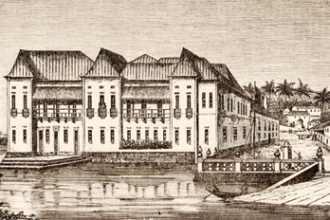
While the politics of reservations will be played out, and there is plenty to play for – has any politician cutting across political lines wondered, deliberated, debated or – horror of horrors – demanded putting out a pre-poll white paper on the state of our cities, mapping the urban decay and putting together a firm deadline oriented road map? Has any ruling team in any of the municipal bodies going to the polls, ideated on a future vision of their respective cities, not grandstanding a plan prepared by a consultant who has billed Rs 50 crores for a cut and paste job, but a genuine grass-root level plan? And most importantly, has any council ever discussed and planned how the remnants of glory of their respective towns get protected, especially heritage sensitive sites and not allow “progress” to stymie the old glory of our cities?
These questions are never the narrative of events leading upto to the municipal polls. Sadly, we in the media will soon fall prey to the seat selections, the factions in the fray as contenders for seats, whether respective MLA’s controlling specific wards have managed to dominate and pull out political victories and whether these elections are a referendum for this government. And this narrative, as opposed to the real narrative of actual planning for our cities, will take centre stage because this is what the people will talk about, this is what people will want to know. Sadly the municipal elections in October will be seen as just another political election in a smaller geographical space.
While there are social reasons and compulsions for carving out reservations, shouldn’t there be a comprehensive audit to analyse performances of councilors over the years, especially of those who have contested on the basis of reservations. For instance, how many women who have been elected on the basis of reservations have contributed to women-oriented and women-specific urban programme and projects? Similarly have the SC, ST and OBC councilors and corporators contributed towards civic activity which has empowered not just citizens of their town but also their own sections, who they represent. The big ask is, whether the beneficiaries of reservation take advantage of this opportunity for the good of the town and the good of their caste or gender group or are they mere puppets, fronting for a political master. And this is not to single them out. The audit should cover all general category councilors and corporators as well.While we know that there will be no significant turnaround, can we at the very least hope that issues that matter to the daily life of urban citizens be the force driver in the coming municipal polls. True progress and development of the city, cannot be measured on the basis of buildings and constructions but on the basis of vision-based planning. That doesn’t seem to be on the anvil at all.