Some of those who had registered and were called up to make their intervention kept to the point and then there were others who sought to give political overtones to their speeches. Demands to cancel the public hearing and have it at a later date, demands to give speakers more time, demands for a lunch break, demands for early end to the hearing as the sun set on the horizon were all met with studied silence from the authorities. The message was clear, if you want to convert the hearing into a drama, we will not be amused.
At the end of a long day and night, for all official and legal purposes, the government had completed the public hearing on the Coastal Zone Management Plan. It had done what it was tasked to do. The loser, unless the legal system again comes to the aid of the people, will be Goa and the Goans. As they walked out of the enclosure, there were some who spoke of approaching the courts on the hearing. Yet, on the same day as this was happening, the Supreme Court had dismissed a petition by Goa Foundation for extension of time for the public hearing. The odds of any further extension are therefore stacked against the people.

Among relevant issues raised by the people were, why the authorities, including the Chennai-based agency that prepared the maps, did not visit their villages even once in the past months to verify village-specific issues. Another relevant question was why the draft maps submitted by the villages were not incorporated in the final plan. Speakers were clear that the map doesn’t contain information on critical features unique to the State, such as salt pans, bird sanctuaries, sluice gates, areas where shellfish are found. The demand put forth at the hearing was that Goa Coastal Zone Management Authority visit the villages to crosscheck all the issues. Given that the authority has already decided to verify objections and suggestions with ground truthing, the visits could still take place, but a very relevant point is whether all those who had registered to intervene at the hearing got the opportunity to have their say.
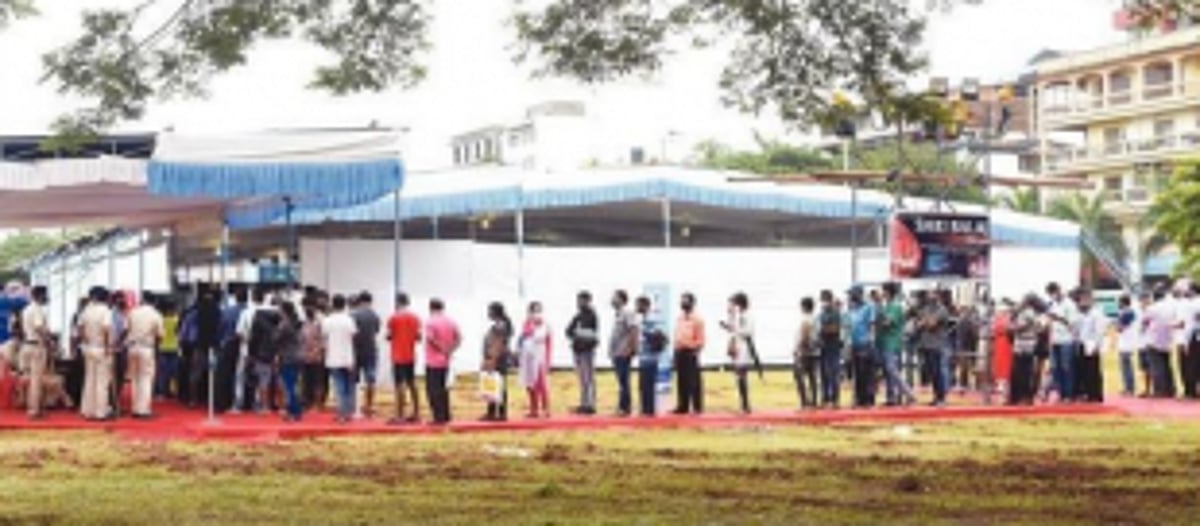
After a slow start, the hearing gathered pace during the lunch hour when token numbers of those who had registered were called out and they were not present in the enclosure. They were skipped and the chair moved on to the next person who had registered. While this occurred in Panjim, the meeting in Margao saw an even stranger occurrence when people streamed out of the enclosure where the meeting was being held at 6pm, citing they had to return to their homes, and the chair continued the meeting calling out the token numbers for the people to come forward and make their intervention. The meeting continued until the last name was called out after which it ended.
It wasn’t just the maps and plans that drew the ire of the people at the public hearings. The arrangements that had been made too came under fire. The discomfort of sitting in an enclosure where rain water dripped in is understandable, and this definitely met with the disapproval of the people. But the more important issue was getting the right plan for Goa. If oral submissions were not possible, written ones could have been placed before the authorities. In that respect, Goa Foundation took the right decision in sending in their submission in writing. The authorities cannot ignore the points that have been raised there.