TOLENTINO ANTÓNIO COLAҪO
I refer to the article ‘We will make a difference for the sake of our children’ by Deepa de Sá (O Heraldo, 16 March). The author has spoken her mind out and brought out issues central to Goa, affecting Goan children and vehemently objected to the forced idea of academic year starting in April.

Inter-alia, the author has attempted to open the eyes of the concerned authorities touching upon a very striking aspect regarding the ‘local language’ which has been in use in Goa for centuries and still in use. Needless to mention, the language she refers to obviously is the Portuguese language. As she rightly pointed out, Goa’s heritage and history cannot be denied.
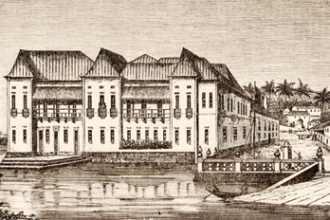
Portuguese is the language of our forefathers, hence it goes without saying that it is our own language too. Our parents and forefathers spoke, studied, and dealt with the Portuguese language. It was the official language for four-and-a-half centuries in Goa, and even after 1961 for many years till the 1970s, many legal documents both in courts and in government offices like the Sub-Registrar’s Office, Mamlatdar’s Office, etc, were drawn up in Portuguese. Our children therefore, as the writer rightly emphasises, have every right to learn the language spoken by their parents and forefathers which undeniably is their own language. I would rather say that every Goan child ought to be taught the language of their forefathers. We see and hear the ‘local language all around us. For me, and I am sure for many others, it is the Câmara Municipal de Margão instead of Margão Municipal Council. The board of Penguim restaurant on east of the Câmara, displaying ‘Casa de Gelados’, ‘Novo mercado’ adorning the wall of the New Market on the west, “Barbearia Nova”, etc, on the south and the iconic architectural edifice housing the Câmara itself reminds us of our unique heritage. The old Margão bus stand still today is the Praҫa of Margão for many. ‘Margão’ itself is in Portuguese. We see names like Menezes & Cia, Farmácia, Drogaria, Joalharia etc. in and around us. Towards the southern end at Borda we have Rua Abade Faria, Escola de Música, Casa de Saude and not forgetting the Igreja do Spirito Santo to mention a few. The list is endless. All this lends credence to the assertion that Portuguese is our local language.
Again, without any iota of doubt, our children have every right to learn the language used in archival records by their ancestors i.e. Portuguese. A large number of documents written in Portuguese lie archived in the Department of Archives and persons who know how to read and decipher them in the genuine sense of the expression are slowly becoming extinct and sooner or later a stage may come wherein Goa may have to requisition translators from Portugal. Way back in July 2021 the Department of Archives empanelled a few translators to translate documents from Portuguese to English and vice versa, by following the proper procedure and conducting a written exam with the help of the Department of Portuguese of the Goa University. The minimum qualification prescribed to be eligible to answer the exam was 4th year of Lyceum or BA / MA in Portuguese literature. Those who passed the exam, mostly senior citizens bearing a few youngsters, were empanelled as private translators by way of a gazette notification.
It is therefore imperative that Portuguese essentially ought to be in the choice of languages and included in the curriculum at the secondary and higher secondary level and even thereafter at the undergraduate level as is presently followed. Goa being on a different pedestal both historically and culturally cannot be equated with other parts of the country at least in this respect. The Portuguese language needs to be continued in schools and colleges and preserved at all costs.