

Going by the sheer weight of mail and messages, it would appear God is at war in the Levant. My friends, colleagues and acquaintances are about equally divided. The devil is quoting from the Scriptures, as if there is no next Sunday.
The more enthusiastic ones cite Genesis 15:18-21, which promise Abraham and his descendants the land of Canaan. And Deuteronomy 7:1-6, in which the said progeny is told to drive out the other nations from that land. Not everyone agrees, especially those who suddenly found themselves refugees in their motherland in the times of the Old Testament, and in the last century.

Much water has flown down the Jordan since then. The children of Abraham have suffered much, repeatedly being taken into captivity by alien invaders far from their borders. The worse was under the Bavarian dictator Adolf Hitler. In his rule over Germany in the Third Reich, and as housewives, artistes and the leaders of Europe watched, 60 lakh Jews children, women and men — and a few million Poles, Central Asians and the sick and mentally challenged of Germany, no less — were marched to the concentration camps, shot, or starved to death, and then consumed in huge ovens.
With that cumulative guilt, the Western powers have bent backwards to overlook violations of international law and the worst tyranny that any people, with their own memories as victims quite fresh, can inflict on others.
Israel was born in 1948, the same decade as India attained independence from the British colonial rule. Indians, despite a peaceful Satyagraha independence struggle led by Mahatma Gandhi, saw the bloody violence of Partition. In 1947, the United Nations General Assembly voted to partition the British Mandate of Palestine into two states, one Jewish and one Arab. The British Mandate expired in 1948, and the state of Israel was declared, leading to a full-scale war between Israel and its Arab neighbours. The war ends in 1949. Israel was victorious, but the suffering was immense. Millions of Palestinians were suddenly homeless.
The current conflagration in Israel, Palestine, and the Gaza Strip, with side flares in Lebanon and the West Bank, has already taken a heavy toll. Over 1,200 people have been killed this month on both sides of the border in the ongoing conflict between Israel and Hamas.
Israel has recorded more deaths this week than in any other attacks in decades. The earlier 15 years, according to the United Nations Office for the Coordination of Humanitarian Affairs in the occupied Palestinian, from 2008 till September 2023, saw 6,407 Palestinians killed. During the same period, the UN recorded the death of 308 Israelis. B’Tselem, an Israeli human-rights organisation, says 10,712 Palestinians and 1,330 Israelis had been killed since 2000 till this year, before the start of the current violence
India, once the major non-aligned champion of the Palestinians, is now a major industrial and military hardware partner of Israel, apart from being in the US camp in the Indo-Pacific region. The photographs of Palestinian Liberation Organisation chairman Yasser Arafat – a Muslim married to a Christian wife – shaking hands with Prime Minister Indira Gandhi have given way intimate to the many posters and hoardings of Prime Minister Narendra Modi embracing his Israeli counterpart, Benjamin Netanyahu.
Delhi was once home to countless Palestinian students. Today, Israel is cheered by millions of BJP supporters in the capital and elsewhere. Israeli security apparatus guard important installations throughout the country. Its drip irrigation brings greenery in Rajasthan, and in rocky lands in the Telugu states.
India has declared its solidarity with Israel, criticising the permeative attacks by Hamas and other Palestinian groups from Gaza and Lebanon. Only old timer Left group, and some Muslim organisations, have shown any solidarity with the Palestinians. The Christian community is sharply divided between those praying for a quick Israeli victory and those urging an early peace for all. Pope Francis has called for peace.
Lost in this absolute polarisation is the core question of how an early ceasefire, and resumption of the long stalled peace process helps everyone incited, Israel and the Palestinians of course, but also Iran, currently the visible supporter of the Palestinians, whose oil and gas are a major currency in open and clandestine trade, and India.
Peace in the Gulf helps India by continuing the peaceful environment so conducive to its major export, manpower to the middle east, whose remittances underwrite not just the economy of Kerala and other southern states, but of the national exchequer.
In fact, while war with its textbook Israeli air and land victories in desert wars and surgical strikes led by iconic commanders such as Moshe Dayan with his black eye patch have been in the public imagination in the west and in India, it is the long-drawn peace process with tis many behind the scenes initiatives that has kept the Mid-East from exploding.
The Arab Peace Initiative led by Saudi Arabia was endorsed by the Arab League in 2002 at the Beirut Summit and re-endorsed at the 2007 and at the 2017 Arab League summits. The initiative offered normalisation of relations by the Arab world with Israel, in return for a full withdrawal by Israel from the West Bank, the Golan heights that overlook Syria, the Gaza Strip and a just settlement for the refugees.
Gaza, by the way, has honourable mention in the war honours of the Indian Army. It had helped liberate the region, including Jerusalem, in 1918 as part of the British Expeditionary forces.
The Saudi Initiative was initially overshadowed by the Passover massacre, a major Palestinian attack that took place on 27 March 2002, the day before the Initiative .Yasser Arafat immediately embraced the initiative. Mahmoud Abbas, the next head of the Palestinian regime, plan and officially asked US President Barack Obama to adopt it as part of his Middle East policy.
Israeli Prime Minister Netanyahu eventually rejected the initiative after showing an initial support for it.
In the crazy history of the region, each war has led to a fresh, possibly stronger, impetus for peace. This includes the 1973 Yom Kippur War launched by Egypt and Syria in an unsuccessful effort to regain territories lost in the Six-Day War. It eventually did lead to the Camp David Accords between Israel and Egypt and led to the withdrawal of Israeli forces from the Sinai Peninsula and the establishment of diplomatic relations between the two countries. Similarly, the 1993 Oslo Accord between Israel and the Palestine Liberation Organization and established the Palestinian Authority and generated hopes of a permanent peace in the region.
In the last few months of his current tenure as Prime minister, it remains to be seen if Prime Minister Narendra Modi may like to be part of a group of peacemakers. It may not help the elections but could strengthen his place in history.
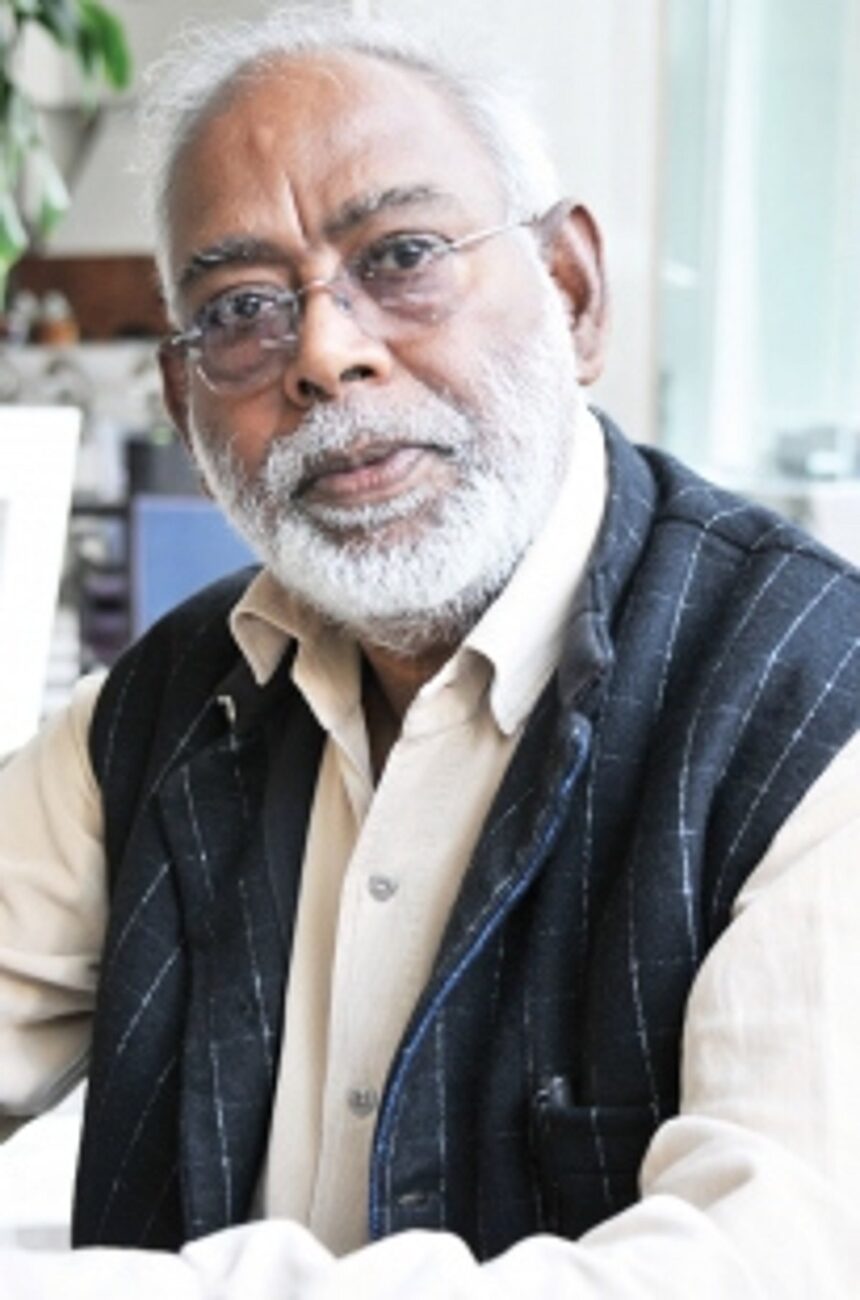
(John Dayal is an author, editor and activist who lives in New Delhi)


